
This article's table of contents introduction:
- Core Specifications & Meaning
- How a Backward Curved Fan Works & Why it Matters
- Common Applications for a 75kW High Pressure BC Fan
- Key Selection Considerations
- Pros & Cons Summary
- Leading Manufacturers (for this size/power)
- Price & Where to Buy
- Critical Maintenance Point: Vibration
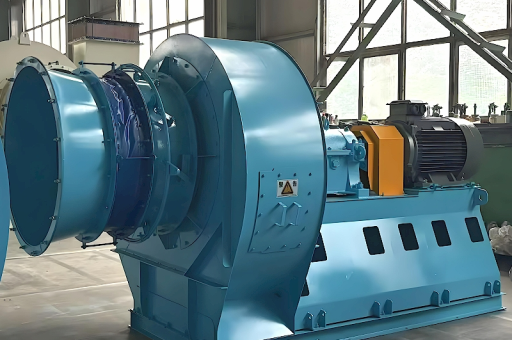
This is a specific piece of industrial equipment. A 75kW High Pressure Backward Curved Centrifugal Fan is a high-power, heavy-duty air mover designed to generate significant static pressure (resistance) while moving large volumes of air or gas. The "backward curved" blade design is the key differentiator.
Here is a comprehensive breakdown of what this fan is, its applications, pros, cons, and how to source one.
Core Specifications & Meaning
- 75 kW (100 HP): This is the motor power. This is a very large fan, requiring a substantial electrical supply (typically 380-480V 3-phase).
- High Pressure: Designed to overcome high system resistance (measured in Pa, kPa, or inches w.g.). This is not for open-air ventilation; it's for pushing air through ducts, filters, scrubbers, or long pneumatic conveying lines.
- Backward Curved (BC): The fan blades curve away from the direction of rotation. This is the most efficient centrifugal blade design.
- Centrifugal Fan: Air enters axially (along the shaft) and is discharged radially (at 90 degrees) towards the volute casing.
How a Backward Curved Fan Works & Why it Matters
- Non-Overloading Power Curve: This is the most critical operational advantage. If your system's resistance (static pressure) drops unexpectedly (e.g., a filter blows open, a damper fails), a forward-curved fan motor can draw excessive amperage and burn out. A backward-curved fan's power draw peaks at its design point and drops as resistance decreases. The motor is inherently protected from overloading.
- Highest Efficiency: BC fans typically achieve 75-85% static efficiency. This is 10-20% higher than forward curved or radial blade fans. For a 75kW motor, a 10% efficiency gain saves 7.5 kW/hour, which is a significant operational cost saving.
- Higher Speed: They run at higher RPMs (e.g., 1500-3000 RPM for this size) compared to forward-curved fans. This allows for a more compact impeller for a given duty.
- Clean Air Requirement: The air must be relatively clean. The backward curve design means dust and sticky materials can build up on the blades, causing imbalance.
Common Applications for a 75kW High Pressure BC Fan
You will find these fans in demanding industrial processes:
- Dust Collection: The primary fan for a large central baghouse or cartridge dust collector in a woodworking plant, cement factory, or metal fabrication shop. It provides the suction to capture dust and the pressure to push it through the filter media.
- Pneumatic Conveying: Moving bulk materials (cement, grain, plastic pellets, powders) through a pipeline. The high pressure is essential to overcome the friction of the material in the pipe.
- Fume Extraction: For large-scale welding booths, chemical processing, or lab exhaust systems where corrosive or toxic fumes must be moved with high static pressure.
- Industrial Boiler / Kiln Draft: Used as an Induced Draft (ID) fan to pull combustion gases out of a boiler or furnace. This requires high temperature and often abrasive/erosive conditions.
- Process Drying: For high-volume drying systems (e.g., in paper mills, food processing) where air must be forced through deep beds of material.
- Mine Ventilation: Booster fans for secondary ventilation in underground mines.
Key Selection Considerations
If you are specifying or purchasing this fan, you must know these parameters:
- Airflow (Volume): What is your target? For a 75kW high pressure fan, expect a range like 20,000 to 40,000 CFM (depending on the specific pressure).
- Static Pressure (SP): What resistance must it overcome? Typically 15" to 30" w.g. (3.7 to 7.5 kPa) or higher.
- Air/Gas Temperature & Density: The 75kW rating is typically at standard air (20°C, sea level). For high temperatures (e.g., 200°C+), the fan will move the same volume but the motor will be less loaded (air is thinner). The material of construction (carbon steel, 304 SS, 316L SS) depends on corrosiveness or temperature.
- Arrangement: Most common for this size is Arrangement 3 or 8 (bearing pedestals outside the housing) to handle high temperatures and heavy shafts. Arrangement 1 (bearings in the housing) is for lighter duty.
- Drive Type:
- Direct Drive (D): Impeller and motor share a shaft. Lower maintenance, higher efficiency, but more expensive initial cost (motor must be custom-spec'd).
- Belt Drive (B): More common and flexible. Allows sheave changes to adjust the fan speed and performance if system conditions change.
Pros & Cons Summary
| Pros | Cons |
|---|---|
| High Efficiency (Low Operating Cost) | Higher Initial Cost than forward-curved |
| Non-Overloading Power Curve | Not for Dirty Air (dust loading) |
| Quieter Operation than radial/radial tip | High RPM requires robust bearings |
| Stable Performance across its range | Large Physical Footprint |
| Wide Flow Range | Motor Starting Current (requires star-delta or VFD start) |
Leading Manufacturers (for this size/power)
- New York Blower (USA) - LS Series, HRS Series
- Howden (Global) - Centrifugal Fans
- Greenheck (USA) - BISW, BCSW Series
- Chicago Blower (USA) - Series 30, Series 509
- Cincinnati Fan (USA) - HP Series
- Sofasco, ValvTechnologies, Munters (Various)
- Chinese Manufacturers: Shanghai Fan, Nanjing Fan, CTC FAN (Often more budget-friendly but require careful specification of material and balancing).
Price & Where to Buy
- New: Expect a significant investment. A 75kW BC fan with motor, base, and drive can range from $15,000 to $50,000+ USD depending on materials (e.g., stainless steel, special coatings), manufacturer, and custom features.
- Used: Check used industrial equipment marketplaces (e.g., Surplus Record, eBay, GovDeals, Industrial Exchange). Price might be $3,000 - $15,000, but ensure you can get performance curves and inspect for cracks, worn blades, and shaft condition.
- New from Distributor: Find a local industrial fan distributor. They can help you properly select the fan based on your system curve (airflow vs. pressure). This is strongly recommended over buying blind online.
Critical Maintenance Point: Vibration
For a 75kW high-speed BC fan, vibration is the enemy. The high RPM means a tiny imbalance (e.g., from dust build-up or blade wear) can create huge forces, leading to:
- Rapid bearing failure (the most common failure).
- Overspeed sensor tripping.
- Cracked shaft or housing.
Expect to use:
- Proximity probes or accelerometers for continuous monitoring.
- Alignment of motor and fan to within 0.002" tolerance.
Bottom Line: A 75kW High Pressure Backward Curved Centrifugal Fan is a high-efficiency, high-power machine for demanding industrial processes where you need reliable pressure and low operating costs, but you must keep the air clean and manage vibration closely.
If you have a specific application static pressure or airflow volume, I can help you narrow down the exact impeller diameter or model range.





