
This article's table of contents introduction:
- Core Component Breakdown
- The Critical Difference: ID Fan vs. FD Fan
- "Anti-Explosion" Details
- Typical Applications
- Key Technical Specifications You Should Ask For
- Common Challenges & Solutions
- Is a 660V ID Fan Right for You?
- Summary
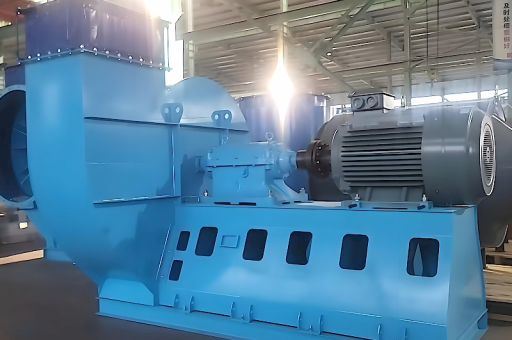
This is a very specific industrial equipment specification. An "Industrial Anti Explosion 660V Boiler Id Fan" refers to an induced draft (ID) fan designed for use in boiler systems, built to operate safely in hazardous environments.
Here is a detailed breakdown of what that term means, its applications, and key specifications.
Core Component Breakdown
- Industrial: Designed for heavy-duty, continuous operation in power plants, chemical processing, or large manufacturing facilities.
- Anti-Explosion (Ex): The motor, fan housing, and all components are built to prevent the ignition of flammable gases, vapors, or dust in the surrounding atmosphere. This is critical for boiler environments where fuel (gas, oil, coal) leaks can occur.
- 660V: The motor is specifically wound for a 660-volt, 3-phase AC power supply. This is a common voltage in heavy industrial environments, especially in regions following IEC standards (e.g., China, India, parts of Europe, Middle East). It provides higher efficiency and lower current over long cable runs than lower voltages.
- Boiler: The fan is integral to the combustion system of a steam or hot water boiler.
- ID Fan (Induced Draft Fan): This is the fan located after the boiler (downstream). It pulls (sucks) hot flue gases and combustion products through the boiler, economizer, and dust collector, creating a negative pressure (draft) inside the furnace.
The Critical Difference: ID Fan vs. FD Fan
- ID Fan (This product): Handles hot, dirty, and potentially corrosive flue gas. The fan impeller and housing must be made of high-temperature and wear-resistant materials (e.g., Corten steel, stainless steel, or with hard-facing). It is the high-risk fan because it handles hot gases containing unburnt fuel particles.
- FD Fan (Forced Draft Fan): Located before the boiler. It pushes fresh, cool, clean air into the furnace. It is less demanding on materials.
"Anti-Explosion" Details
This is the most critical safety feature. The fan must comply with international explosion-proof standards, typically ATEX (Europe), IECEx (International), or GB (China standards like GB/T 3836).
- Explosion-Proof Type: Usually d (Flameproof enclosure) for the motor and c (Increased safety) or d for the fan casing.
- Gas Group: Typically IIB (ethylene) or IIC (hydrogen/acetylene) depending on the fuel used. For coal/wood boilers, IIB is common. For gas/oil boilers, IIC might be required if hydrogen is a concern.
- Temperature Class: Must be lower than the auto-ignition temperature of the surrounding atmosphere. Common classes are T3 (200°C) or T4 (135°C).
- Construction Features:
- Shaft Seal: Non-sparking seal to prevent leakage of hot gas into the motor area.
- Clearance: Tight clearance between the impeller and casing to prevent sparks from rubbing.
- Motor: Motor terminals are in a flameproof enclosure. The motor is rated for the environment.
Typical Applications
- Coal-Fired Power Plants: Handling abrasive fly ash and SOx/NOx gases.
- Industrial Boilers (Oil/Gas): Handling hot exhaust in refineries, petrochemical plants, and large factories.
- Waste-to-Energy Plants: Handling corrosive flue gases from burning municipal waste.
- Biomass Boilers: Handling high-moisture, dusty exhaust.
Key Technical Specifications You Should Ask For
When sourcing or specifying this fan, ensure the following parameters are clear:
| Parameter | Typical Value for a 660V Boiler ID Fan |
|---|---|
| Power | 100 kW - 1000+ kW (depending on boiler size) |
| Voltage | 660V / 3-Phase / 50Hz or 60Hz (specify frequency) |
| Flow Rate (Air Volume) | 50,000 m³/h to 500,000 m³/h |
| Static Pressure | 2000 - 8000 Pa (to overcome boiler, duct, and scrubber resistance) |
| Temperature | Inlet: 150°C - 400°C (peak up to 450°C for emergency bypass) |
| Impeller Type | Backward-curved blades (high efficiency) or radial blades (for high dust load). |
| Material | Impeller: Corten steel or Stainless Steel 316L (for corrosion). Housing: Carbon steel with lining. |
| Motor Enclosure | Ex d IIB T4 (or similar ATEX/IECEx rating) |
| Drive Type | VFD (Variable Frequency Drive) is almost mandatory for modern ID fans to control draft and save energy. The VFD must also be explosion-proof or located in a safe room. |
| Cooling | Motor is typically IC 411 (self-cooled) or IC 416 (forced cooling via external fan) to prevent overheating at low VFD speeds. |
| Bearings | Heavy-duty spherical roller bearings with grease relief. External cooling fins (or water cooling) for high-temperature applications. |
Common Challenges & Solutions
| Challenge | Solution |
|---|---|
| Erosion from fly ash | Use hard-faced impeller blades (e.g., Stellite or ceramic coating). Install a cyclone/ESP before the fan. |
| Corrosion from condensing acids | Maintain gas temperature above acid dew point (typically >150°C). Use stainless steel or fiberglass-reinforced plastic (FRP) for specific parts. |
| High noise | Install silencers on the inlet/outlet. Use acoustic enclosures (which must also be explosion-proof). |
| Mechanical Vibration | Use real-time vibration monitoring with automated shutdown. Ensure a rigid base and flexible duct connections. |
| Motor overheating at low speeds | Use a forced cooling fan (IC 416) on the motor. |
Is a 660V ID Fan Right for You?
Pros:
- Efficiency: Lower current draw means lower I²R losses in cables.
- Reliability: Standard voltage for many heavy industrial grids.
- Availability: Widely available in markets like China, India, and other 50Hz regions.
Cons:
- Compatibility: If your plant uses 380V or 690V, you will need a transformer. 660V is less common in North America (which uses 460V/575V).
- Cost: 660V switchgear and VFDs can be more expensive than standard 380V.
Summary
An Industrial Anti Explosion 660V Boiler Id Fan is a high-performance, safety-critical piece of equipment for moving hot, dirty, and potentially explosive flue gases from a boiler. The 660V rating is a specific electrical requirement, while the anti-explosion certification is non-negotiable for hazardous locations. When purchasing, prioritize Ex-certification, wear-resistant materials, and a VFD drive for optimal control and safety.





