
This article's table of contents introduction:
- The Components Defined
- Why Stainless Steel? (The Critical Requirement)
- Why "Single Suction"?
- Common Applications in CFB Plants
- Typical Specifications & Selection Criteria
- Common Failure Modes (Why quality matters)
- Conclusion
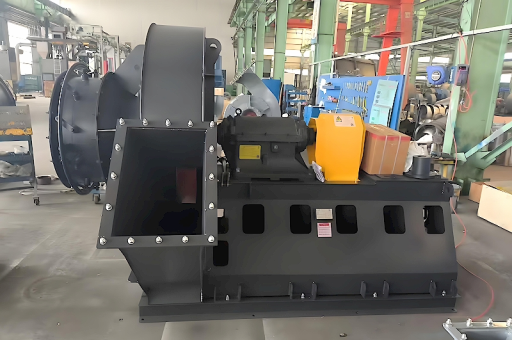
It appears you are referring to a specific type of industrial fan used in Circulating Fluidized Bed (CFB) boilers. Here is a breakdown of what a Stainless Steel Single Suction CFB Boiler Induced Draft (ID) Fan is, its purpose, and why the specific materials and design are chosen.
The Components Defined
- Induced Draft (ID) Fan: This fan is located at the "end" of the boiler system (between the boiler and the chimney). It pulls (induce negative pressure) the flue gas through the boiler, economizer, and dust collector to maintain the furnace pressure slightly below atmospheric. This prevents hot gas and ash from leaking out of the boiler casing.
- Circulating Fluidized Bed (CFB) Boiler: A boiler technology where solid fuel (coal, biomass, waste) is suspended in an upward flow of air. It operates at lower temperatures (800-900°C) but produces highly abrasive flue gas filled with fly ash and bed material (sand/limestone).
- Single Suction: The fan has a single air inlet (intake) on one side. This is standard for most large industrial ID fans (as opposed to double-suction which is used for very high airflow).
- Stainless Steel: The fan's impeller (wheel) and often the casing are made from stainless steel (e.g., 304L, 316L, or Duplex 2205) rather than standard carbon steel.
Why Stainless Steel? (The Critical Requirement)
This is the most important part of the specification. ID fans in CFB boilers face extreme erosion and corrosion.
- Erosion Resistance: CFB flue gas is a sandblaster. It carries high-velocity particles of ash and unburned bed material (silica/alumina). Carbon steel would erode very quickly.
- Solution: Stainless steel impellers are harder and more resistant to erosive wear. Some manufacturers use Stainless Steel 304 for the shroud and Stainless Steel 316 for the blades, or HARDOX / AR steel for extreme cases, but SS is the baseline for longevity.
- Corrosion Resistance: CFB fuels (especially high-sulfur coal or biomass) create acidic flue gas (sulfuric acid, hydrochloric acid). When the fan handles gas near the dew point, condensation forms, causing rapid corrosion. Stainless steel offers superior resistance to this chemical attack.
- High Temperature: While ID gas is cooler than furnace gas (usually 130°C - 180°C), it is still hot. Stainless steel maintains its strength at these temperatures better than carbon steel.
Why "Single Suction"?
- Efficiency for High Pressure: Single suction fans are very efficient at generating the medium-to-high pressure drop required to pull gas through the CFB's extensive ductwork, cyclones, and baghouses.
- Ease of Maintenance: The shaft and bearings are accessible on one side, making inspection and repair simpler than a double-suction design.
Common Applications in CFB Plants
This specific fan is used for:
- Main ID Fan: The primary gas mover after the baghouse/ESP.
- Baghouse / ESP Fan: A dedicated fan pulling gas through the filtration system.
- Recycle Gas Fan: In some CFB designs, a booster fan recirculates flue gas for bed fluidization.
Typical Specifications & Selection Criteria
If you are quoting or designing such a fan, these parameters are critical:
| Parameter | Typical Range (CFB) |
|---|---|
| Flow Rate | 100,000 – 1,000,000+ m³/h |
| Static Pressure | 4,000 – 12,000 Pa |
| Gas Temperature | 130°C – 200°C (peak 250°C) |
| Gas Content | Fly ash, SO2, NOx, HCl, moisture |
| Dust Load | 20 – 100 g/Nm³ (highly abrasive) |
| Material | Impeller: SS304 / SS316, Casing: SS304 or Wear-Lined SS |
Common Failure Modes (Why quality matters)
- Blade Erosion: The leading edge of the backward-curved blades erodes first. A stainless steel fan lasts 2-3x longer than carbon steel.
- Shaft Wear: The shaft seal area (where the shaft passes through the casing) erodes, causing dust leaks.
- Rotor Imbalance: Uneven ash buildup on the blades causes vibration.
Conclusion
A Stainless Steel Single Suction CFB Boiler Induced Draft Fan is a heavy-duty, erosion-resistant piece of equipment designed to handle the dirty, hot, and corrosive flue gas from a CFB boiler. The stainless steel construction is not a luxury; it is a necessity to achieve an acceptable operational lifespan (typically 3-5 years between major blade overhauls vs. 6-12 months for carbon steel).
Do you need help with a specific selection, a failure analysis, or a supplier for this type of fan?





