
This article's table of contents introduction:
- The Core Meaning
- Detailed Breakdown of Each Component
- Summary: A Perfect Example of Heavy-Duty Engineering
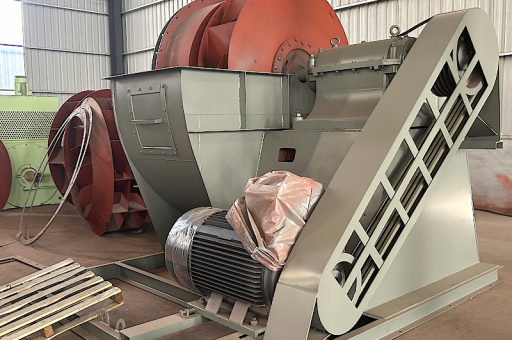
This is a highly specific technical term that appears to be a composite description of an industrial fan system. Let's break down exactly what this phrase means, component by component, and why this specific combination of materials and design is used in heavy industry.
The Core Meaning
The phrase "HG785 Alloyed Steel Heat Dissipation Coupling Driven Induced Draft Fan" describes a large, high-power induced draft fan used in extremely hot and demanding industrial environments (like steel mills, power plants, or cement kilns). The key features are:
- Induced Draft Fan (ID Fan): This is the fan's job. It sits at the end of a system (like a boiler or furnace) and sucks hot flue gas out, creating a negative pressure (vacuum) inside the system.
- Coupling Driven: The fan is not directly connected to the motor. It is driven through a coupling, a mechanical device that connects the motor shaft to the fan shaft.
- Heat Dissipation Coupling: This is a specialized coupling designed to handle and radiate away the intense heat conducted from the fan shaft (which is exposed to hot gas) before it reaches the motor.
- HG785 Alloyed Steel: This is the material used for the fan's critical components (impeller, shaft, housing). HG785 is a high-strength, low-alloy structural steel known for its excellent strength-to-weight ratio and good weldability.
Detailed Breakdown of Each Component
Induced Draft Fan (ID Fan)
- Function: To pull hot, dirty, and often corrosive flue gases (combustion byproducts) through a system (e.g., boiler, furnace, kiln) and exhaust them up a chimney or to a pollution control system.
- Challenges:
- High Temperatures: Gases can range from 150°C (300°F) to over 400°C (750°F).
- Abrasion & Erosion: Dust, ash, and unburned particles in the gas stream wear down the fan blades.
- Corrosion: Gases can contain sulfur, chlorine, or other corrosive compounds.
- Why HG785 is chosen: The high strength of HG785 allows the impeller to spin at high speeds without being excessively heavy. A lighter impeller reduces stress on the bearings, shaft, and foundation. Its good weldability also allows for repairs to the blades, which is common due to erosion.
Coupling Driven
- Function: A coupling transmits torque from the motor to the fan. It also acts as a mechanical fuse. If the fan jams (e.g., from a broken blade or debris), the coupling will break or slip before the expensive motor is destroyed.
- Types commonly used with ID Fans:
- Flexible Couplings: Allow for slight misalignment between the motor and fan shafts.
- Fluid Couplings: Used for large, heavy-start applications. They allow the motor to start unloaded and then smoothly ramp up the fan speed.
- Limited-Torque Couplings: Designed to slip or disengage if the fan load exceeds a safe limit.
Heat Dissipation Coupling
- The Critical "Heat Dissipation" Feature: This is the most important engineering detail.
- The Problem: The fan shaft is connected to the impeller, which is sitting in a gas stream that can be 300-400°C. Heat conducts along the shaft toward the motor bearings. Standard couplings are poor at removing this heat.
- The Solution: A heat dissipation coupling is specifically designed to act as a heat sink and radiator.
- Design Features:
- Fan Blades/Fins: The coupling outer body is machined with radial fins or blades.
- Spacer Section: It has a longer, thinner center section that creates a thermal break.
- Material: Often made of a high-conductivity material (like cast iron or specific steel alloys).
- How it Works:
- Heat travels along the fan shaft toward the coupling.
- The heat goes into the coupling's body.
- As the coupling spins (often at 1500-3000 RPM), the fins act like a centrifugal fan, pulling cool air from the motor side across the hot coupling surface.
- This forced convection rapidly transfers the heat to the surrounding air, keeping the motor-side bearing housing cool.
- Design Features:
HG785 Alloyed Steel
- What is it? A Chinese standard for a high-strength structural steel. Its equivalents are:
- European: S690QL
- US/International: A514 Grade Q / ASTM A514
- Properties:
- Yield Strength: ~690 MPa (100,000 psi) - significantly higher than standard structural steel (e.g., A36 at 250 MPa).
- Tensile Strength: ~770-940 MPa.
- Weldability: Good, but requires preheating and controlled heat input to maintain its high strength in the heat-affected zone (HAZ).
- Why it's used for the entire fan (housing, impeller, shaft):
- Impeller: Allows for thinner, lighter blades that can withstand high rotational stresses and the impact of flying debris.
- Shaft: Smaller diameter shafts can transmit the same power, reducing cost and weight.
- Housing: Can be thinner, lighter, and more resistant to deformation from the negative pressure inside the fan.
Summary: A Perfect Example of Heavy-Duty Engineering
Imagine a coal-fired power plant:
- Exhaust gas from the boiler, laden with fly ash and at ~350°C, enters the ID fan.
- The HG785 steel impeller spins at high speed, creating suction. Its high strength allows it to handle the mechanical stress and keep spinning safely.
- The HG785 steel shaft transmits this torque from the coupling to the impeller.
- Critical Heat Transfer: As the hot gas heats the impeller, heat conducts along the shaft.
- The Heat Dissipation Coupling spins rapidly. Its fins draw cool air from the motor room across the coupling body, removing that heat before it reaches the motor bearings. This prevents the motor from overheating and failing.
- The coupling also absorbs the shock of any power surges or minor fan stalls, protecting the expensive motor.
In short, this phrase describes a robust, purpose-built machine designed to survive the worst conditions a power plant or steel mill can throw at it.





