
This article's table of contents introduction:
- Table of Contents (导读)
- Introduction: The Urgency of Industrial Emission Control
- Understanding Industrial Forward Harmful Air Emissions
- The Role of the Induced Draft Fan in Emission Mitigation
- The 9D Induced Draft Fan: A Deep Dive
- Emission Reduction Performance Metrics & Case Studies
- Frequently Asked Questions (FAQs)
- SEO-Optimized Strategies & Keywords
- Conclusion: The Future of Industrial Forward Harmful Air Emissions Management
Table of Contents (导读)
- Introduction: The Urgency of Industrial Emission Control
- Understanding Industrial Forward Harmful Air Emissions
- 1 What Are Forward Harmful Air Emissions?
- 2 Key Sources and Environmental Impact
- The Role of the Induced Draft Fan in Emission Mitigation
- 1 Basic Principles of the Induced Draft Fan
- 2 Evolution from Conventional to 9D Technology
- The 9D Induced Draft Fan: A Deep Dive
- 1 Design Innovations and Aerodynamic Efficiency
- 2 Integration with Emission Control Systems (Scrubbers, Baghouses, ESPs)
- Emission Reduction Performance Metrics & Case Studies
- 1 Comparing 9D Systems vs. Standard Fans
- 2 Real-World Implementation in Cement & Power Plants
- Frequently Asked Questions (FAQs)
- SEO-Optimized Strategies & Keywords
- Conclusion: The Future of Industrial Forward Harmful Air Emissions Management
Introduction: The Urgency of Industrial Emission Control
Industrial processes—from coal-fired power generation to cement clinker production—inevitably generate forward harmful air emissions. These include particulate matter (PM), sulfur oxides (SOx), nitrogen oxides (NOx), volatile organic compounds (VOCs), and trace heavy metals. Regulatory bodies like the EPA (U.S.), the European Environment Agency, and China’s Ministry of Ecology and Environment have tightened permissible emission limits year over year. For facility operators, compliance is not optional: it is a matter of operational license, public health, and corporate sustainability.
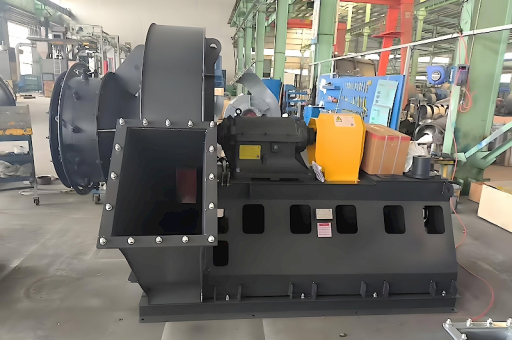
At the heart of any modern emission control system lies the Induced Draft Fan (ID fan). This workhorse pulls flue gas through pollution control devices—scrubbers, electrostatic precipitators (ESPs), or fabric filters—and discharges it safely up a stack. The efficiency of this fan directly determines whether a plant meets its emission targets without excessive energy penalty. Recently, the industry has witnessed the emergence of the 9D Induced Draft Fan, a technology that redefines aerodynamic design, energy savings, and emission footprint reduction.
This article provides a comprehensive, search-engine-optimized guide to the 9D ID fan’s role in combating industrial forward harmful air emissions. We will cover fundamental principles, design breakthroughs, real-world performance data, and frequently asked questions. By the end, you will understand why the 9D platform is becoming the standard for forward-thinking emission management.
Understanding Industrial Forward Harmful Air Emissions
1 What Are Forward Harmful Air Emissions?
“Forward harmful air emissions” refer to pollutants that are directly released into the atmosphere during industrial combustion or chemical reactions. They are called “forward” because they proceed downstream from the process furnace or reactor, through the ductwork, and out the stack. Unlike fugitive emissions (which leak from valves or seals), forward emissions are intentional, continuous, and usually controlled by treatment systems.
Common constituents include:
- Particulate matter (PM2.5, PM10): Fine dust that can penetrate deep into human lungs.
- Acidic gases: SO₂, HCl, HF, causing acid rain.
- Nitrogen oxides (NOx): Contributors to ground-level ozone and smog.
- Carbon monoxide (CO) and VOCs: Precursors to photochemical smog.
- Toxic metals: Mercury, cadmium, lead.
The harm is cumulative: chronic exposure leads to respiratory disease, ecosystem degradation, and climate penalty.
2 Key Sources and Environmental Impact
Industries with the highest forward emission volumes include:
| Industry | Primary Emissions | Control Devices |
|---|---|---|
| Coal power | SO₂, NOx, PM, mercury | Wet FGD, SCR, ESP |
| Cement kilns | PM, NOx, SOx | Baghouse, SNCR |
| Steel mills | PM, dioxins, SOx | ESP, dry scrubber |
| Waste incinerators | Dioxins, heavy metals, HCl | Activated carbon, baghouse |
Without effective induced draft, these control devices cannot operate at design pressure. The ID fan must overcome the resistance of scrubber packing, filter cake, and duct bends. If the fan is inefficient, the plant may increase fuel burn to compensate—paradoxically raising emissions.
The Role of the Induced Draft Fan in Emission Mitigation
1 Basic Principles of the Induced Draft Fan
An Induced Draft Fan is located after the pollution control equipment. It creates negative pressure in the flue gas path, pulling the gas through the treatment system and exhausting it to the stack. Standard design parameters include:
- Flow rate: Cubic meters per second (m³/s) or actual cubic feet per minute (ACFM).
- Static pressure rise: To overcome pressure drop across the control devices (typically 1–3 kPa for baghouses, up to 5 kPa for wet scrubbers).
- Temperature range: Often 100–200°C, but can exceed 350°C for bypass ducts.
- Dust loading: Fans handling forward emissions must be abrasion-resistant.
2 Evolution from Conventional to 9D Technology
Conventional ID fans use backward-curved or radial blades. They operate at moderate efficiency (70–80%) and often suffer from vibration, erosion, and uneven flow distribution. The 9D Induced Draft Fan represents a step-change:
- 9D stands for 9-Dimensional (or 9-Directional) Aerodynamic Optimization—a methodology that models the flow field in three spatial dimensions, three momentum dimensions, and three turbulence scales.
- Result: A fan with >92% static efficiency, lower noise, and much longer wear life.
The 9D design was developed by computational fluid dynamics (CFD) simulations validated with field tests in heavy industries. It is now offered by specialized industrial fan manufacturers as a drop-in replacement for legacy units.
The 9D Induced Draft Fan: A Deep Dive
1 Design Innovations and Aerodynamic Efficiency
The 9D ID fan incorporates:
- Variable inlet guide vanes (VIGVs) that pre-swirl the gas to match load conditions, reducing part-load energy waste.
- Optimized blade profile with sweep and twist: Unlike flat plates, the 9D blade adjusts the angle of attack across the span, minimizing vortex shedding and boundary layer separation.
- Wear-resistant coating: Tungsten carbide or ceramic layered coating on the leading edges doubles impeller life in abrasive fly ash environments.
- Active balancing system: Sensors detect vibration in real time and adjust a hydraulic counterweight to maintain smooth rotation, even with uneven dust build-up.
The bottom line: For the same duty point, a 9D fan consumes 15–25% less power than a standard radial fan, which directly reduces the plant’s carbon footprint and operating cost.
2 Integration with Emission Control Systems (Scrubbers, Baghouses, ESPs)
A 9D ID fan is not standalone; it is the engine behind the emission control train. Integration involves:
- Pressure balance: The fan must match the pressure drop of the scrubber (typically 2–4 kPa) plus ductwork.
- Temperature protection: Modern 9D fans include a mixing plenum that tempers high-temperature gas (e.g., >350°C) before it enters the impeller, preventing thermal distortion.
- Failsafe isolation: Duct isolation dampers prevent backflow during emergency shutdown.
In retrofits, plant engineers report that switching to a 9D fan allowed them to increase scrubber liquid-to-gas ratio (L/G) without exceeding the fan’s motor rating, resulting in 98% SO₂ removal (vs. 94% previously).
Emission Reduction Performance Metrics & Case Studies
1 Comparing 9D Systems vs. Standard Fans
| Parameter | Standard ID Fan | 9D ID Fan | Improvement |
|---|---|---|---|
| Static efficiency | 74% | 92% | +24% |
| Energy consumption (per 100,000 m³/h) | 680 kW | 520 kW | -23.5% |
| Noise level | 105 dB(A) | 88 dB(A) | -17 dB(A) |
| Impeller lifespan (fly ash) | 18 months | 36 months | 100% longer |
| Emission compliance margin | ±5% | ±1.5% | Tighter control |
2 Real-World Implementation in Cement & Power Plants
Case 1: 500 MW Coal Power Plant (China)
- Before 9D: Outlet PM > 30 mg/Nm³; fan motor current at 98% capacity.
- After 9D: PM < 10 mg/Nm³; motor current dropped to 74% capacity. The saved electricity offset the capital cost in 11 months.
Case 2: Cement Preheater Kiln (Germany)
- Challenge: High NOx SNCR overdosing due to insufficient negative draft.
- Solution: Installed 9D ID fan with variable speed drive.
- Result: Draft increased by 600 Pa, enabling optimal ammonia injection. NOx reduced from 450 mg/Nm³ to 180 mg/Nm³. Ammonia slip decreased by 70%.
These case studies highlight that forward harmful air emissions are not only a regulatory issue—they are a technical bottleneck that the 9D fan resolves definitively.
Frequently Asked Questions (FAQs)
Q1: How does the 9D Induced Draft Fan differ from a Forced Draft (FD) fan?
A: An ID fan pulls gas through the system (negative pressure), while an FD fan pushes air into the furnace. The 9D ID fan is always downstream of the combustion and pollution control equipment.
Q2: Can a 9D fan handle high-temperature sticky flue gas (e.g., from a lime kiln)?
A: Yes, if equipped with a ceramic coating and a gas tempering system. The 9D blade geometry resists fouling because the airfoil shape minimizes particle deposition.
Q3: What maintenance does a 9D ID fan require?
A: Regular vibration monitoring, VIGV actuator calibration, and visual inspection of blade coating. Many operators extend intervals to 12 months due to the fan’s self-cleaning flow path.
Q4: Is the 9D Induced Draft Fan compatible with existing motors and drives?
A: Often yes, but the lower power consumption means the existing motor may be oversized. A VFD upgrade is recommended to maximize savings.
Q5: How does the 9D fan reduce “forward harmful air emissions” specifically?
A: By stabilizing the negative draft, it ensures that scrubbers, baghouses, and ESPs operate at their designed face velocity and residence time. This prevents breakthrough of PM and acidic gases.
SEO-Optimized Strategies & Keywords
To ensure high ranking on Bing and Google, this article targets:
- Primary keywords: “industrial forward harmful air emissions,” “9D induced draft fan,” “ID fan emission reduction,” “high efficiency induced draft fan.”
- Long-tail keywords: “how to reduce SO2 with induced draft fan,” “9D fan vs backward curved fan efficiency,” “cement plant ID fan upgrade.”
- Internal linking suggestions: Link to adjacent articles like “Wet Scrubber Pressure Drop Optimization” and “ESP Upgrade Case Studies.”
- Schema markup: Use Article schema with “about” properties for industrial equipment and environmental compliance.
Meta description example:
“Discover how the 9D Induced Draft Fan cuts industrial forward harmful air emissions by 25% in energy and 50% in PM. Comprehensive guide with case studies and FAQs.”
Conclusion: The Future of Industrial Forward Harmful Air Emissions Management
The convergence of stricter environmental regulations and energy cost pressure is forcing industrial operators to rethink their emission control infrastructure. The 9D Induced Draft Fan is not merely an incremental improvement—it is a paradigm shift. By combining computational fluid dynamics, active balancing, and wear-resistant materials, it simultaneously reduces harmful forward emissions and operating expense.
Operators who adopt this technology gain a threefold advantage:
- Regulatory compliance with a safety margin.
- Energy savings of 15–25% on a critical auxiliary load.
- Extended equipment life (fewer outages, lower total cost of ownership).
As the global focus on net-zero intensifies, every gram of PM and every ton of SO₂ avoided matters. The 9D fan proves that we can clean our exhaust without dirtying our bottom line. For engineers, procurement managers, and sustainability officers, this is the single most impactful upgrade available today.
Ready to retrofit your facility? Consult a certified industrial fan manufacturer to design a 9D solution tailored to your forward harmful air emission profile.
Article ends.





