
This article's table of contents introduction:
- Breakdown of the Terminology
- Typical Applications in Metallurgy
- Key Design & Material Considerations for Q235 ID Fans
- Technical Parameters (Typical for a Metallurgy ID Fan)
- Advantages & Disadvantages of Q235 for This Application
- Conclusion for Your Sourcing
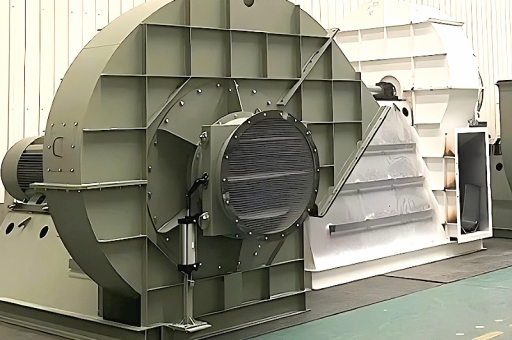
It appears you are looking for a specific type of industrial fan: a Q235 Heavy Duty Metallurgy Centrifugal Induced Draft Fan.
This is a specific combination of material (Q235 steel), application (Metallurgy/Heavy Duty), configuration (Centrifugal), and function (Induced Draft).
Here is a detailed breakdown of what this specification means, its typical applications, and key technical considerations.
Breakdown of the Terminology
- Q235 (Material): This is a Chinese standard grade of carbon structural steel (similar to ASTM A36 or S235JR). It indicates the fan housing, impeller, and base are made from standard carbon steel. For heavy-duty metallurgy, this is often the base material, and may be lined or treated for extra protection.
- Heavy Duty: This implies a robust design with thicker gauge steel, reinforced bearings, a stronger shaft, and a larger safety factor to handle continuous operation, high temperatures, and vibration.
- Metallurgy: This indicates the fan is designed for the steel, aluminum, or non-ferrous metal production industry. This environment involves high temperatures, dust (scale, ore dust), and corrosive gases (SO2, CO).
- Centrifugal: This describes the fan type. Air enters axially and is discharged radially (usually at 90 degrees). Centrifugal fans generate high pressure, making them ideal for overcoming the resistance of ductwork, baghouses, scrubbers, and heat exchangers.
- Induced Draft (ID): This is the most critical function term.
- ID Fan is located after the combustion or process equipment (e.g., furnace, kiln, boiler).
- Function: It pulls (sucks) exhaust or flue gas through the system, creating negative pressure (vacuum) inside the furnace or ductwork.
- Challenge: ID fans handle hot, dirty, and often corrosive gas, not clean, cold air.
Typical Applications in Metallurgy
A Q235 Heavy Duty Centrifugal ID Fan is used in these specific scenarios:
- Steel Smelting & Converting: Drawing fumes from Electric Arc Furnaces (EAF), Basic Oxygen Furnaces (BOF), or AOD converters.
- Sintering Plants: Extracting hot, dusty exhaust from the sintering machine (often the most abrasive application).
- Blast Furnaces: Handling top gas (after cleaning) or combustion air for hot stoves.
- Coking Plants: Extracting volatile gases and steam from coke quenching or pushing operations.
- Non-Ferrous Smelting: Fume extraction from copper, aluminum, or zinc furnaces (e.g., reverberatory furnaces, rotary kilns).
- Gas Cleaning Systems: Pulling gas through a Venturi scrubber, electrostatic precipitator (ESP), or baghouse filter.
Key Design & Material Considerations for Q235 ID Fans
Since the fan is "Heavy Duty" and used in "Metallurgy," standard Q235 alone may not be sufficient. You need to ask the manufacturer about these specific modifications:
A. Temperature Resistance
- Standard Q235: Safe for continuous operation up to 200°C - 250°C (392°F - 482°F) . Above this, the steel loses structural integrity (creep).
- Solution: For higher temperatures (300°C - 450°C), the impeller and shaft are often made of 16Mn (Q345) or Q390 alloy steel, while the housing remains Q235. For very high temperatures (>500°C), a cooling shaft or water-cooled bearings are required.
B. Abrasion Resistance (Erosion)
- Problem: Metallurgy dust (iron oxide, coke, sinter) is highly abrasive. Q235 will wear out quickly.
- Solution: Wear Lining. The fan housing (especially the cut-off/volute tongue) and the impeller blades must have replaceable wear plates. Common materials:
- Q235 + ceramic lining (best for extreme abrasion)
- Hardox or NM400 steel plate lining
- Tungsten carbide spray on leading edges of blades
C. Dynamic Balancing
- Critical for ID fans. Dust build-up on the impeller causes imbalance, leading to bearing failure. A heavy-duty fan requires a high balance grade (G2.5 or G6.3) and an access door for cleaning.
D. Shaft Seal
- Must be gas-tight. Standard labyrinth seals are insufficient.
- Solution: Carbon ring seals, or air-purge seals to prevent hot, corrosive gas from leaking into the bearing housing.
Technical Parameters (Typical for a Metallurgy ID Fan)
When specifying this fan (e.g., for procurement), you need to provide these parameters:
| Parameter | Typical Value for Metallurgy ID Fan | Notes |
|---|---|---|
| Flow Rate (Q) | 100,000 m³/h – 1,500,000 m³/h | Very high volume for large furnaces |
| Static Pressure (P) | 2,000 Pa – 8,000 Pa | Moderate pressure (ID fans handle system resistance) |
| Gas Temperature | 150°C – 400°C (or higher with special design) | Crucial for material selection |
| Gas Content | Dust: 50-500 mg/Nm³; CO, SOx | Affects material and safety (explosion proofing) |
| Motor Power | 200 kW – 3000+ kW | Large motors, often with Variable Frequency Drive (VFD) |
| Speed (RPM) | 580 – 1450 RPM | Heavy rotors at lower speeds for stability |
Advantages & Disadvantages of Q235 for This Application
Advantages:
- Cost-effective: Q235 is significantly cheaper than stainless steel or alloy materials.
- Weldable: Easy to manufacture thick, complex volute housings.
- Readily Available: Standard steel grade in China.
Disadvantages:
- Corrosion: Prone to rust in humid or acidic gas conditions (e.g., SO2 + H2O = sulfuric acid).
- Mitigation: Epoxy or rubber lining, or switching to Q235 + Glass Flake Coating.
- High-Temperature Softening: Unsafe above 300°C without alloy reinforcement.
Conclusion for Your Sourcing
If you are sourcing a Q235 Heavy Duty Metallurgy Centrifugal Induced Draft Fan:
- Verify the gas temperature at the fan inlet. If >250°C, confirm the impeller material (likely Q345 or 16Mn, not just Q235).
- Check the dust content. Request a hard-facing or ceramic lining on the blades and casing.
- Ensure a VFD drive. For metallurgy ID fans, variable speed control is standard to match the varying furnace pressure.
- Look for a reputable Chinese manufacturer. Brands like YINENG, Nantong Zhichu, or Shanghai Sanneng are known for heavy-duty metallurgy fans in Q235.
In short: This is a standard carbon steel, high-volume, high-reliability fan designed to pull hot, dirty exhaust from a metal production process. Its success depends entirely on the thermal and abrasion protection applied to the base Q235 steel.





