
This article's table of contents introduction:
- The Core System: PCI (Pulverized Coal Injection)
- Breakdown of Each Component
- How They All Connect (The System Flow)
- Summary for an Engineer/Operator
This is a description of a specific, complex industrial system. It appears to be a sequence of equipment or processes commonly found in an Iron and Steel Plant, specifically in the Blast Furnace area, but could also apply to cement or power plants.
Here is a breakdown of what each term means, how they connect, and the overall system function.
The Core System: PCI (Pulverized Coal Injection)
The primary system being referenced is Pulverized Coal Injection (PCI) . This is a method used in blast furnaces to reduce the consumption of coke (a more expensive fuel) by injecting finely ground coal directly into the furnace.
The phrase you provided describes the ancillary systems (cooling, dust collection, air handling) that support the PCI process.
Breakdown of Each Component
Let's dissect the string of words into its logical groups:
Coal Injection (The Main Process)
- What it is: Finely ground coal is injected into the tuyeres (nozzles) of a blast furnace. This coal provides heat and carbon for the iron-making process, reducing the need for metallurgical coke.
- Why it's needed: Cost saving (coal is cheaper than coke) and efficiency.
Circulating Water (The Cooling System)
- What it is: A closed-loop water system that cools the injection lances, the furnace tuyeres, and other hot equipment.
- Why it's needed: The injection area is extremely hot (over 1000°C). The lances and nozzles would melt or fail immediately without cooling.
- "Circulating" implies a system with pumps, cooling towers, and heat exchangers. The water picks up heat, is cooled in a tower, and then returns to the furnace.
Air (The Conveying & Combustion Medium)
- What it is: Compressed air (or sometimes nitrogen) is used.
- Two Key Functions:
- Conveying: It carries the powdered coal from the storage silo to the injection lances on the furnace.
- Combustion: It provides the oxygen needed for the coal to burn inside the furnace.
- Connection: The injection system relies on high-pressure Fans (blowers) to provide this conveying air, or the "Hot Blast" from the furnace's hot stoves.
Dust Collector (The Pollution Control System)
- What it is: A high-efficiency filtration system (typically a baghouse or a cyclone) attached to the coal grinding and injection system.
- Why it's needed: The process of grinding coal creates extremely fine, flammable coal dust. This dust must be captured to prevent:
- Air Pollution (Particulate Matter): Coal dust is hazardous to health.
- Explosion Risk: Coal dust is explosive.
- Product Loss: Valuable coal is recovered and re-injected.
- Where it's located: Usually on the coal mill (grinder), conveying system, and storage silo vents.
Fans (The Driving Force for Air & Dust)
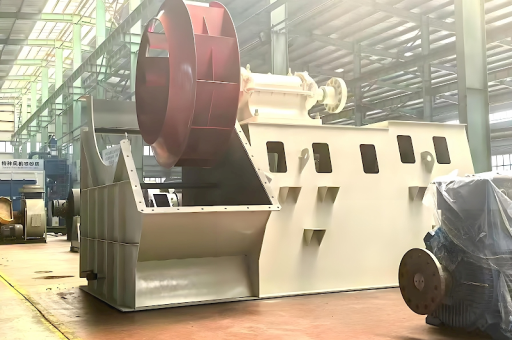
- What they do: Large industrial fans (both centrifugal and axial) provide the motive force for the entire system.
- Types of Fans in this system:
- Primary Air Fans (PA Fans): Provide the hot air to the coal mill to dry and carry the coal.
- Induced Draft (ID) Fans: Pull air through the dust collector (baghouse) to create a vacuum, ensuring no dusty air escapes.
- Cooling Tower Fans: Pull air through the circulating water to cool it down.
- Blast Furnace Blowers (Turbo Blowers): Provide the immense volume of hot air (blast) into the furnace, which includes the injected coal.
How They All Connect (The System Flow)
- Coal Grinding: Raw coal enters a mill. The Primary Air Fan blows hot air into the mill, drying the coal and carrying the fine coal powder out.
- Dust Collection: The air/coal mixture passes through a Dust Collector. The Dust Collector Fan (ID Fan) maintains negative pressure, so clean air is released, and the captured coal dust is returned to the system.
- Conveying & Cooling: The clean coal powder is stored in a pressurized vessel. Compressed Air (from Fans/Blowers) pushes the coal through pipes to the furnace. These injection lances are protected by Circulating Water.
- Injection & Combustion: The coal and air are injected into the hot blast of the furnace, where they burn.
Summary for an Engineer/Operator
If you are reading this on a drawing, a manual, or a tag, it describes the auxiliary systems that support the safe and efficient injection of coal into a blast furnace.
- Critical Safety Issue: The Dust Collector Fan is vital for preventing coal dust explosions and fires. The Circulating Water system is critical to prevent a blow-back of hot gas or a lance failure.
- Maintenance Focus:
- Dust Collector: Check for bag leaks (visible dust plumes), differential pressure across the filter, and proper fan isolation.
- Circulating Water: Monitor for scale buildup in pipes and lances, and ensure adequate flow and temperature.
- Fans: Check for bearing wear, vibration, and belt tension (if belt-driven).
In short, you are looking at a safety-critical, energy-intensive subsystem of a modern blast furnace.





