
This article's table of contents introduction:
- Understanding the Core Components
- Critical Analysis of "150 mg/m³"
- Typical Applications (where this spec is needed)
- The "Coupling" & "Building Ventilation" Conflict
- Key Specifications You MUST Define (Checklist)
- Potential Problems & Solutions
- Direct Answer to the Query
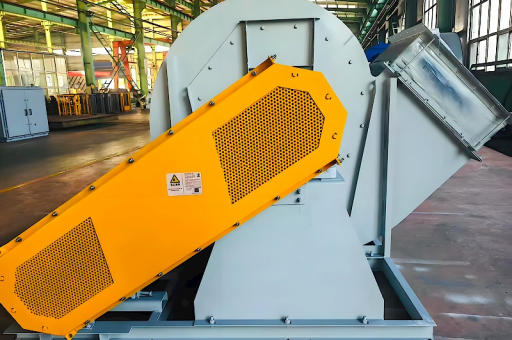
This looks like a specific query for an industrial ventilation system design or troubleshooting. You are specifying a High Pressure Centrifugal Fan for a Coupling Driving (direct or belt-driven via coupling) system for a Building Ventilation application where the air contains 150 mg/m³ of a contaminant.
Let us break down what this specification means, the critical engineering considerations, and potential questions you might have.
Understanding the Core Components
-
High Pressure Centrifugal Fan:
- Purpose: Used for systems with high static pressure resistance (long ducts, small filters, or dense dust collectors). This is not a standard low-pressure HVAC fan.
- Wheel Type: For 150 mg/m³ (which is a "moderate" to "heavy" dust load), a Radial (Paddlewheel/Paddle Blade) or Backward Inclined wheel is typical.
- Radial: Ideal for sticky or heavy dust (self-cleaning). Good for high pressure.
- Backward Inclined: More efficient, non-overloading power curve.
- Pressure Class: Likely > 2,500 Pa (10" w.g.) up to 15,000 Pa (60" w.g.).
-
Coupling Driving:
- Direct Drive (via Coupling): The fan impeller is mounted on the motor shaft or connected via a flexible coupling. No belts.
- Pros: No belt slippage, constant speed ratio, no belt dust.
- Cons: Motor speed is fixed (e.g., 1500/1800 RPM). High-pressure requires high RPM.
- Belt Drive (via Coupling & Pulleys): Motor drives a shaft via pulleys and a belt.
- Pros: Variable fan speed via pulley ratio. Faster fan speed for high pressure.
- Cons: Belts can wear; need tensioning.
- Direct Drive (via Coupling): The fan impeller is mounted on the motor shaft or connected via a flexible coupling. No belts.
Critical Analysis of "150 mg/m³"
This is a dust load (concentration) of 150 milligrams per cubic meter of air.
- Classification: This is a heavy dust load (Typical industrial ventilation (welding, woodworking, cement handling).
- Implications:
- Erosion: High velocity + 150 mg/m³ particles will erode the fan wheel and housing quickly if it's not abrasion-resistant. You need Abrasion-Resistant Construction (e.g., AR steel liners, Hardox, or thicker impeller blades).
- Wheel Selection: A "High Efficiency" fan (Airfoil blades) will clog and wear out immediately. You must use a Radial Paddlewheel fan.
- Is the fan before or after the filter?
- Pre-Filter (Dirty side): Fan handles the 150 mg/m³. Needs abrasion-resistant coating, reinforced shaft, and large housing clearance.
- Post-Filter (Clean side): Standard fan is acceptable, but 150 mg/m³ is too high for post-filter (means the filter is failing).
Typical Applications (where this spec is needed)
This isn't a standard office HVAC fan. You are likely specifying for:
- Welding Fume Extraction (150 mg/m³ is typical for heavy production welding).
- Cement/Concrete Batch Plant Venting.
- Woodworking Dust Collection (though 150 mg/m³ is lower than typical chip load, it's high for fine dust).
- Chemical/Bulk Material Transfer (pneumatic conveying vent).
The "Coupling" & "Building Ventilation" Conflict
- Building Ventilation usually implies low pressure (rooftop units).
- High Pressure Centrifugal Fan implies industrial process.
Check: Is this for General Building Ventilation (e.g., a warehouse with a dusty process) or Local Exhaust Ventilation (LEV) for a specific machine?
If it's a General Building Ventilation Fan: High pressure is unusual. You probably have a long duct run with high friction loss or a highly restrictive filter (HEPA/ Baghouse).
Key Specifications You MUST Define (Checklist)
To ensure the fan works correctly, you must provide these to the supplier/manufacturer:
- Airflow (m³/h or CFM): What volume of air needs to be moved?
- Static Pressure (Pa or in.w.g.): What is the total resistance of the system (ducts + filters + hoods)? This determines if "High Pressure" is sufficient.
- Gas Temperature: Is the air hot (e.g., >40°C)? This affects shaft cooling and impeller material.
- Particle Type & Size:
- Example: "150 mg/m³ of fine silica dust (5-10 microns)." -> High abrasion risk.
- Example: "150 mg/m³ of welding fumes (sub-micron)." -> Sticky, risk of wheel imbalance.
- Motor Power (kW): Based on Fan Absorbed Power + Safety Factor.
- Coupling Type:
- Flexible Coupling: For direct drive (e.g., grid, jaw, or disc).
- Spacer Coupling: For belt-driven (needs spacer for belt removal).
- Housing Direction: Top Horizontal, Bottom Horizontal, Up Blast? (See Standard Arrangements like Arrangement 1, 4, 9).
Potential Problems & Solutions
| Problem | Cause | Solution |
|---|---|---|
| Wheel Clogging | 150 mg/m³ of sticky or fibrous dust cakes on backward-curved blades. | Switch to Radial or Paddlewheel fan design (self-cleaning). |
| Vibration | Dust build-up on impeller creates imbalance. | Add inlet cone for self-cleaning; balance ports; clean-out doors. |
| Coupling Failure | High torque from heavy start-up. | Use laminated steel disc coupling (Spider coupling) or torque-controlled coupling. |
| Low Airflow | System resistance exceeds fan pressure capability. | Verify fan selection curve. Ensure filter isn't blocked. Check duct sizing. |
| Noise | High pressure + high speed = high noise. | Install silencers (duct-mounted) or acoustic enclosure. |
Direct Answer to the Query
If you are sourcing this fan:
- Search for: "Radial High Pressure Centrifugal Fan", "Industrial Exhaust Fan for Dust", "AR (Abrasion Resistant) Fan".
- Avoid: "HVAC Centrifugal Fan", "Backward Curved", "Plug Fan" (unless clean side).
- Material: Carbon steel (coated) for 150 mg/m³ of mild dust; AR 235/400 steel for abrasive dust.
- Drive: "Arrangement 4" (Belt drive) is standard for industrial variable speed. "Arrangement 1" (Direct drive) is for fixed speed.
To give you a precise specification: I need to know:
- Airflow (CFM/m³/h)?
- Static Pressure (in.w.g./Pa)?
- Particle description? (Sticky? Abrasive? Hygroscopic? Explosive?)
- Temperature?
- Is the fan for a specific machine or for general building air change?
Example of a valid spec you could write for a supplier:
"I need a High Pressure Radial Centrifugal Fan for building ventilation (local exhaust hood). System has 150 mg/m³ of general industrial dust. Required airflow: 5,000 m³/h at 4,000 Pa static pressure. Belt-driven (Arrangement 4) with abrasion-resistant impeller and cleaning access door. Ambient temperature: 25°C. Coupling: Belt drive with sheaves and tensioning base."
If this is for a specific calculation (duct sizing, motor power): Tell me the Airflow rate and Duct length, and I can calculate the exact Static Pressure and Motor kW required.





