
This article's table of contents introduction:
- Table of Contents
- Introduction: The Critical Role of Explosion-Proof Stoker-Feed Blowers
- Understanding the 2000 RPM Stoker-Feed Boiler Fan System
- Why Explosion Proofing is Non-Negotiable in Coal/Biomass Boiler Environments
- Key Design Features of an Explosion-Proof Air Exhaust Blower
- Installation & Maintenance: Preventing Ignition Sources
- Operational Scenarios: Real-World Case Studies
- Frequently Asked Questions (Q&A)
- Conclusion: Future Trends in Explosion-Proof Fan Technology
Article Title:
Explosion Proofing 2000 RPM Stoker-Feed Boiler Fan Air Exhaust Blower: Engineering, Safety, and Operational Best Practices
Table of Contents
- Introduction: The Critical Role of Explosion-Proof Stoker-Feed Blowers
- Understanding the 2000 RPM Stoker-Feed Boiler Fan System
- Why Explosion Proofing is Non-Negotiable in Coal/Biomass Boiler Environments
- Key Design Features of an Explosion-Proof Air Exhaust Blower
- Installation & Maintenance: Preventing Ignition Sources
- Operational Scenarios: Real-World Case Studies
- Frequently Asked Questions (Q&A)
- Conclusion: Future Trends in Explosion-Proof Fan Technology
Introduction: The Critical Role of Explosion-Proof Stoker-Feed Blowers
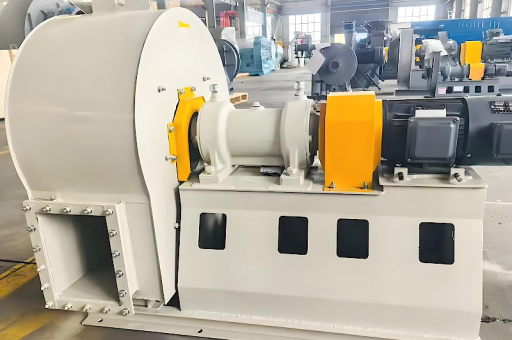
In industrial boiler systems that rely on stoker-feed combustion—especially those burning coal, wood chips, or biomass—the combination of high-speed rotating equipment and combustible dust presents a unique explosion hazard. The Explosion Proofing 2000 RPM Stokerfeed Boiler Fan Air Exhaust Blower is not just a mechanical component; it is a safety-critical device designed to handle volatile atmospheres.
Unlike standard fans, this blower operates at a constant 2000 RPM while moving hot, dust-laden exhaust gases. The explosion-proof rating ensures that any internal spark or flame cannot escape the housing, thus preventing catastrophic chain reactions. For any facility that depends on continuous steam generation—such as power plants, paper mills, and chemical processing units—this blower is the difference between safe operation and disaster.
Understanding the 2000 RPM Stoker-Feed Boiler Fan System
The phrase “2000 RPM” refers to the rotational speed of the fan impeller. A stoker-feed boiler uses a mechanical grate to feed solid fuel into the combustion chamber. The air exhaust blower draws out combustion gases, maintaining draft pressure and ensuring complete burning.
Key technical specifications that matter:
- Impeller material: Typically cast aluminum or stainless steel, spark-resistant.
- Housing: Heavy-gauge steel with flanged spark-proof labyrinths.
- Motor: TEFC (Totally Enclosed Fan Cooled) with Class F insulation, certified for hazardous locations (e.g., Class II, Division 1 or ATEX Zone 21).
- Bearing assembly: Externally mounted, non-sparking, with thermal sensors.
Because the fan must maintain 2000 RPM under varying load conditions, dynamic balancing is essential. Any imbalance in this speed range can generate frictional heat or vibration, which is a direct ignition risk.
Why Explosion Proofing is Non-Negotiable in Coal/Biomass Boiler Environments
The risk is real:
- Combustible coal dust has a lower explosion limit as low as 50 g/m³.
- Biomass dust (e.g., sawdust, hog fuel) can form explosive clouds.
- Exhaust temperatures can exceed 150°C (300°F), lowering the ignition energy needed.
In a stoker-feed system, unburned fuel particles and ash accumulate in the exhaust duct. When a fan blade strikes a metal object or a bearing overheats, an ignition can occur inside the blower housing. Without explosion-proof construction, the resulting pressure wave would rupture the casing, spreading flame to upstream ducts and downstream baghouses.
Explosion-proof blowers are engineered to contain internal deflagrations. The housing is designed to withstand a minimum pressure of 345 kPa (50 psi) without deformation, and all shaft-to-housing seals are flame path-certified.
Key Design Features of an Explosion-Proof Air Exhaust Blower
| Feature | Purpose |
|---|---|
| Spark-proof impeller | Non-ferrous (aluminum bronze) or coated steel to eliminate friction sparks. |
| Isolated bearing bracket | Prevents bearing heat from exposing combustible dust to direct hot surfaces. |
| Dust-tight construction | Prevents dust ingress into electrical compartments. |
| Pressure relief panel | Directs explosion pressure away from personnel if internal ignition occurs. |
| Static conductive belt | Dissipates electrostatic charges from dry dust. |
For a 2000 RPM system, the fan must also incorporate anti-static V-belts (if belt-driven) or a direct-driven motor with explosion-proof conduit seals. The shaft seal design is critical: a carbon ring seal paired with a pressurized air purge is common in high-dust environments.
Installation & Maintenance: Preventing Ignition Sources
Proper installation is as important as the fan’s design. Follow these guidelines:
- Electrical grounding: The fan housing, ductwork, and motor must be bonded to a dedicated ground rod (< 10 ohms).
- Filter replacement: Install a pre-filter or spark arrestor upstream to trap glowing embers.
- Bearing monitoring: Use vibration sensors and thermocouples to detect early-stage bearing failure.
- Cleanliness: Schedule weekly vacuum cleaning of accumulated dust within 1 meter of the blower.
- Air gap maintenance: Maintain a 50 mm minimum clearance between rotating parts and housing.
One common mistake is overspeeding: running a 2000 RPM fan at 2200 RPM to compensate for dirty filters. This increases heat generation and mechanical stress, directly defeating explosion-proof measures.
Operational Scenarios: Real-World Case Studies
Case 1: Biomass Power Plant (Southeast Asia)
A 10 MW plant using palm kernel shell fuel experienced three false explosions in a month. Investigation revealed that the exhaust blower fan was not ATEX-certified. Upgrading to an explosion-proof 2000 RPM model with a ceramic-coated impeller eliminated all incidents, even at 95% relative humidity.
Case 2: Paper Mill Boiler (Midwest USA)
A stoker-feed boiler’s air exhaust blower caught fire after a bearing seized at 1950 RPM. The fire didn’t propagate because the explosion-proof housing contained the flame. Post-incident inspection showed the bearing was original and had run for 12 years without relubrication—a preventable failure.
Frequently Asked Questions (Q&A)
Q1: Can a standard industrial fan be modified for explosion proofing?
No. After-market modifications rarely meet certification standards. Explosion-proof certification (e.g., UL, ATEX) is granted only to fans built from scratch with certified materials and manufacturing processes.
Q2: What is the maximum allowable surface temperature for an explosion-proof stoker-feed blower?
For Class II, Div 1 (dust atmospheres), the maximum surface temperature is typically 190°C (T4 rating) or 135°C (T5). The fan should be sized so that operating temperatures stay at least 20°C below the ignition point of the specific dust.
Q3: How often should the explosion-proof seals be replaced?
Inspect seals every 6 months. Replace carbon or PTFE seals if any wear exceeds 0.5 mm. For pressurized air purges, check flow rates monthly.
Q4: Is explosion proofing required for a 2000 RPM fan in a combined heat and power (CHP) system using natural gas?
Only if the exhaust contains combustible particles. For natural gas-only systems, standard blowers with flame-arrestor ducting may be sufficient. However, if gas leaks or incomplete combustion occur, an explosion-proof design adds safety margin.
Conclusion: Future Trends in Explosion-Proof Fan Technology
The next generation of explosion-proof 2000 RPM stoker-feed boiler fans will integrate IoT condition monitoring, predicting bearing failures and dust accumulation levels via real-time data. Composite impellers (carbon fiber reinforced polymer) are being tested for even lower spark risk and higher fatigue resistance.
For now, facility managers must prioritize:
- Certified explosion-proof hardware from reputable manufacturers (e.g., fan).
- Scheduled predictive maintenance.
- Compliance with local hazardous location codes (NFPA 68, IEC 60079).
Investing in the correct explosion-proof air exhaust blower isn’t just a budget line item—it’s a fundamental commitment to life safety and operational continuity. Any bypassing or downgrading of this critical equipment risks not only equipment loss but also the lives of personnel who work in these demanding, dust-laden environments.
For tailored design specifications or consultation, consider contacting an industrial fan engineering team specializing in hazardous location ventilation.





