
This article's table of contents introduction:
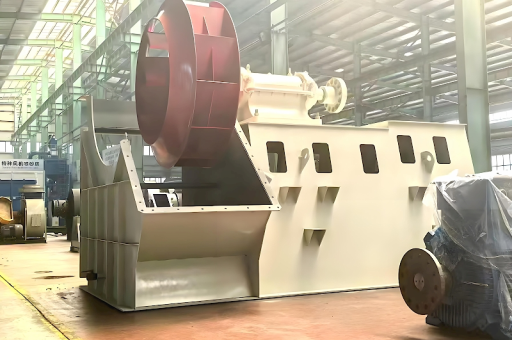
- The Core Concept: The Fan's Role in a Coal Plant
- Key Strategies for High Efficiency & Energy Saving
- Summary Table: Impact of Efficiency Measures
- The "High Efficient Energy Saving" Fan in 2023/2024
- The Bottom Line
Here is a detailed breakdown of how coal powder delivery fans in power plants can achieve high efficiency and energy savings.
The Core Concept: The Fan's Role in a Coal Plant
In a coal-fired power plant, the fan system is not just one fan. It's a series of critical components, often consuming 5% to 3% of the plant's total electricity output. The two most crucial fans for coal powder delivery are:
- Primary Air (PA) Fans: These provide the hot air that dries and transports the pulverized coal from the mill to the burner.
- Forced Draft (FD) Fans: These supply the main combustion air to the furnace.
High Efficiency & Energy Saving means delivering the precise amount of air (and pressure) required for optimal combustion without wasting energy on throttling, recirculation, or running at excessive speeds.
Key Strategies for High Efficiency & Energy Saving
Here are the proven technologies and operational methods:
Variable Frequency Drives (VFDs) - The #1 Game Changer
- The Problem: Old-school fans use inlet guide vanes, dampers, or a coupling to control air flow. This is like driving a car with one foot on the gas and the other on the brake. You're consuming full power (or close to it) even when you need less air.
- The Solution: A VFD precisely controls the fan motor's speed to match the exact air flow demand.
- The Saving: According to the Fan Affinity Laws: Power is proportional to the cube of the speed.
- Reducing fan speed by just 20% reduces power consumption by nearly 50% .
- Typical Savings: 25% - 40% reduction in fan energy use.
- Why it's High Efficient: The fan only uses the energy needed. No wasted energy fighting against dampers or recirculating air.
High-Efficiency Fan Blade & Impeller Design
The physical design of the fan is critical.
- Backward-Curved (or Airfoil) Blades: These are the most efficient for modern power plants (85-90% peak efficiency). They are less prone to dust buildup and have a non-overloading power characteristic.
- Forward-Curved Blades: Older, less efficient (60-75% peak efficiency). They are smaller but consume more power for the same task.
- Aerodynamic Optimization: Modern Computational Fluid Dynamics (CFD) design allows blades to be shaped for minimum turbulence and maximum air movement.
- The Saving: Replacing an old forward-curved fan impeller with a modern, backward-curved airfoil design can yield 10-15% efficiency gains on its own.
Minimizing System Resistance (Ductwork & Mill Optimization)
A high-efficiency fan is useless if the system it's pushing against is full of friction.
- Smooth Ductwork: Reduce sharp bends, sudden expansions/contractions, and rough internal surfaces. These cause pressure drops that the fan must work harder to overcome.
- Clean Coal Mills & Classifiers: Fouling inside the coal mill or a poorly adjusted classifier increases resistance. Energy is wasted trying to push air through a clogged or restrictive system.
- The Saving: Reducing system pressure drop by just 5% can lead to a 3-5% reduction in fan power consumption.
Advanced Control Systems (Optimization, not just Regulation)
- Combustion Optimization: Using an O₂ or CO sensor in the flue gas, the control system can precisely determine the exact amount of primary and secondary air needed. This prevents "over-venting" (cooling the furnace) or "under-venting" (incomplete combustion).
- Automatic Control Loops: Instead of operators manually adjusting fan settings (which is slow and imprecise), a modern DCS (Distributed Control System) can make micro-adjustments every second to maintain the perfect air-to-fuel ratio.
- The Saving: Optimizing the combustion process can save 1-3% of the unit's total fuel costs, which is far larger than the fan energy savings alone.
Maintenance & Monitoring (The "Low-Hanging Fruit")
- Belt & Coupling Alignment: Misalignment causes vibration and friction, wasting up to 10% of the motor's energy.
- Bearing Health: Proper lubrication and monitoring reduce friction losses.
- Impeller Cleaning: Coal dust buildup on fan blades throws them out of balance and reduces their aerodynamic efficiency. Regularly cleaning the impeller can restore 2-5% efficiency.
- Leak Prevention: Air leaks in the ductwork between the fan and the mill/burner mean the fan is working to push air that never reaches its destination.
Summary Table: Impact of Efficiency Measures
| Strategy | Typical Energy Savings | Primary Mechanism | Implementation Cost |
|---|---|---|---|
| Variable Frequency Drive (VFD) | 20% - 40% | Reduces motor speed to match demand | High (but best ROI) |
| High-Efficiency Impeller | 10% - 15% | Better aerodynamics (backward-curved) | Medium (retrofit) |
| Ductwork Optimization | 3% - 8% | Lowers system resistance (pressure drop) | Medium-High |
| Online Cleaning (Sootblowers) | 2% - 5% | Removes fouling, reduces resistance | Low-Medium |
| Combustion Optimization Control | 1% - 3% (fuel) + 3% (fan) | Precise air-to-fuel ratio | Medium |
The "High Efficient Energy Saving" Fan in 2023/2024
The state-of-the-art system would be:
A Backward-Curved Airfoil Fan directly driven by a Permanent Magnet Synchronous Motor (PMSM) or high-efficiency IE4/IE5 motor, controlled by a VFD, with a digital twin software that monitors bearing vibration, motor current, and duct pressure in real-time, automatically adjusting speed to maintain the lowest possible power consumption for any given load.
The Bottom Line
For a 500 MW power plant, a comprehensive fan efficiency upgrade (VFD, improved impeller, controls) can easily save 5 - 2.5 million kWh per year. At a typical industrial electricity price, that's a direct cost saving of $100,000 - $200,000 per year, often with a payback period of less than 2 years.
Key takeaway: The biggest single step is replacing fixed-speed operation with VFD-based speed control. All other measures are valuable, but VFDs provide the largest, most reliable, and most easily realized savings.





