
This article's table of contents introduction:
- The Critical Design Requirements
- Fan Type Recommendation
- Recommended Features for Biomass Smoke Exhaust
- Sourcing / Manufacturers
- The "Gotchas" for Biomass
- Critical Calculation for Selection (Do not skip)
- Summary of a Proper Specification
This is a highly specialized piece of industrial equipment. Let's break down what you are looking for, the critical specifications required for a Biomass Power Plant, and how to source the correct unit.
You have combined four critical requirements:
- Low Noise: Typically <85 dBA at 1m, or specific NRR (Noise Reduction Rating) compliance for worker safety.
- Smoke Exhaust: Handles hot, moist, particulate-laden air (often corrosive) at 150°C to 250°C+.
- Explosion Proof (Ex): Certified for flammable dust (biomass dust, e.g., wood/agricultural pellets) and potentially combustible gases (CO, H2 from gasification).
- Biomass Power Plant: High static pressure demands (to overcome scrubbers, baghouses, ductwork) and variable flow needs.
The Critical Design Requirements
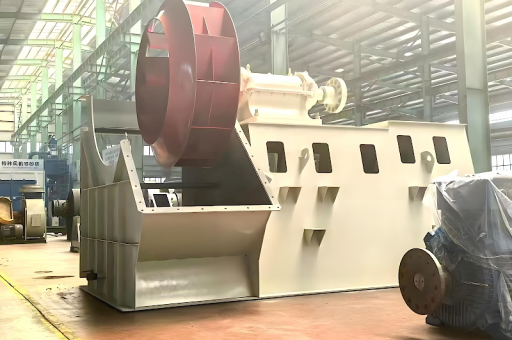
For this application, you are likely specifying the Induced Draft (ID) Fan or a Forced Draft (FD) fan located after the boiler/gasifier. Standard "exhaust fans" will fail within weeks.
| Requirement | Why It Matters for Biomass | Typical Specification |
|---|---|---|
| Explosion Proof (Ex) | Biomass dust (ATEX Zone 22/21 or NEC Class II, Div 1/2) is highly explosive. Hot surfaces can ignite it. | *ATEX II 2D/3D Ex tb IIIC T°C or NEC Class II, Div 1, Groups E, F, G** |
| Low Noise | Plants often operate near open doors or in enclosed mezzanines. ID fans are very loud. | Acoustic enclosure OR Silencer in-line Airfoil blading <85 dBA @ 1m. |
| High Temp Smoke | Exhaust is not clean. Contains steam, fly ash, and acidic condensates. | Casing: Corten/SS304/316, fully drainable, with inspection door. Wheel: High-temp alloy (Inconel 601 or SS316L), reinforced. |
| Variable Speed | Biomass fuels vary in moisture content, requiring precise air control. | VFD (Variable Frequency Drive) ready motor (IEC 60034-25). |
Fan Type Recommendation
The best fan type for this application is almost always a Backward-Curved (BC) Centrifugal Fan or an Airfoil (AF) Fan.
- Why not Axial? Axial fans cannot generate the high static pressure (typically 8-20 in.w.g. / 2-5 kPa) needed to push through the baghouse, scrubber, and stack.
- Why Backward-Curved? They are non-overloading (motor won't burn out if damper closes), highly efficient (lowest power draw = lowest noise), and handle particulate better than forward-curved fans.
Specific Model Types:
- Radial Tipped (for high particulate)
- Backward Inclined Airfoil (for highest efficiency/lowest noise in clean-ish streams after baghouse)
Recommended Features for Biomass Smoke Exhaust
To meet your "Low Noise" and "Explosion Proof" requirements simultaneously, specify these features:
- ATEX / IECEx Certified Motor: Must be matched to the gas/dust zone. Usually Zone 2 (Gas) or Zone 22 (Dust).
- Atex Certified Fan: The fan housing itself must be grounded, have a spark-tight construction (no ferrous-to-ferrous contact), and use anti-static belts if belt-driven.
- Acoustic Silencer: A splitter silencer on the inlet (and possibly discharge) of the fan is the most effective way to reduce duct-borne noise.
- Acoustic Enclosure: If the fan is in a worker-occupied area, a fully enclosed, ventilated, explosion-proof acoustic shroud is needed. This is custom-engineered.
- Variable Speed Drive (VFD): Running the fan at 45Hz instead of 60Hz reduces noise by 6-10 dBA and power consumption exponentially.
Sourcing / Manufacturers
You need a Heavy Industrial Fan Manufacturer, not a general HVAC supplier. Look for:
- New York Blower (NYB): Excellent for custom-engineered, high-temp/Ex applications.
- Chicago Blower: High-quality centrifugals for process industries.
- Howden / Colfax: (More for large utility-scale biomass).
- Cincinnati Fan / Aerovent: (Mid-range, good for ATEX solutions).
- European Specialists: Nicotra Gebhardt, Ziehl-Abegg, Soler & Palau (S&P) – they are far more advanced with ATEX standards for biomass.
The "Gotchas" for Biomass
- Cleaning System: Ensure the fan has a NI-hard or ceramic lining on the housing at the cut-off point, and a access door for cleaning. Biomass ash cakes up.
- Condensation: If the smoke temperature drops below the acid dew point (e.g., <120°C), you get sulfuric acid corrosion. Carbon steel will rot in 6 months. You MUST specify Corten steel or Stainless 316L.
- Shaft Seal: A purged labyrinth seal (with pressurized air) prevents smoke and dust from leaking out and damaging the bearings in the explosion-proof bearing housing.
Critical Calculation for Selection (Do not skip)
You cannot buy this "off the shelf." You must provide:
- Airflow (CFM / m³/h): Actual operating condition volume.
- Static Pressure (in.w.g. / Pa): Total system resistance.
- Gas Temperature (°F / °C): Max and Normal.
- Gas Composition: Is it wet? High CO? High dust?
- Altitude: (Density correction).
- Motor Voltage/Phase: e.g., 460V/3ph/60Hz.
Summary of a Proper Specification
"Item: Induced Draft, Explosion-Proof Centrifugal Fan. Type: Backward Curved Airfoil. Rating: 20,000 CFM @ 15 in.w.g. Static Pressure @ 350°F. Construction: Housing – Stainless 316L, Internally coated for acid resistance. Wheel – Inconel 601. Safety: ATEX Zone 22 certified (Dust) with spark-tight construction & earth bonded. Noise: <85 dBA @ 1 meter with inlet/outlet silencer. Motor: 75 HP, Explosion Proof, Class F, VFD compatible."
Recommendation: Contact New York Blower directly or a Systemair distributor specializing in ATEX fans. Provide them with the above specification. They will engineer the correct wheel diameter, casing, motor, and acoustic treatment. Do not try to undervalue this – a fan failure in a biomass plant causes a hot shutdown and potential explosion risk.





