
This article's table of contents introduction:
- Table of Contents
- 1. Introduction: The Critical Role of Flue Gas Fans in High-Temperature Environments
- 2. Why Carbon Steel? Material Properties and Performance in Extreme Heat
- 3. High Temperature Centrifugal Fans: Design Principles and Thermal Challenges
- 4. Customization in Industrial Fan Engineering: Why One Size Does Not Fit All
- 5. Key Technical Parameters When Ordering a Customized Carbon Steel Flue Gas Fan
- 6. Common Industry Applications: Power Plants, Cement Kilns, and Petrochemical Facilities
- 7. Maintenance, Lifespan, and Safety Considerations for High-Temperature Fans
- 8. Frequently Asked Questions (FAQ)
- 9. Conclusion: Choosing the Right Fan Manufacturer and Long-Term Value
Article Title:
The Ultimate Guide to Carbon Steel Flue Gas Fans: High Temperature Centrifugal Fan Customization for Industrial Efficiency
Table of Contents
- Introduction: The Critical Role of Flue Gas Fans in High-Temperature Environments
- Why Carbon Steel? Material Properties and Performance in Extreme Heat
- High Temperature Centrifugal Fans: Design Principles and Thermal Challenges
- Customization in Industrial Fan Engineering: Why One Size Does Not Fit All
- Key Technical Parameters When Ordering a Customized Carbon Steel Flue Gas Fan
- Common Industry Applications: Power Plants, Cement Kilns, and Petrochemical Facilities
- Maintenance, Lifespan, and Safety Considerations for High-Temperature Fans
- Frequently Asked Questions (FAQ)
- Conclusion: Choosing the Right Fan Manufacturer and Long-Term Value
Introduction: The Critical Role of Flue Gas Fans in High-Temperature Environments
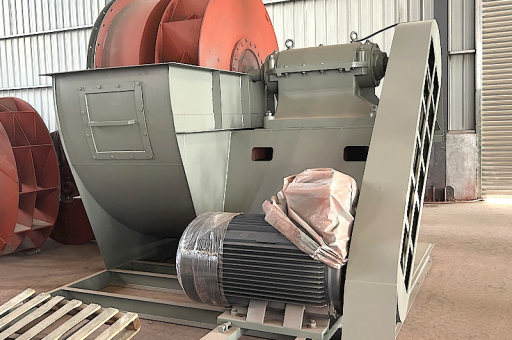
In any industrial process that involves combustion, the management of flue gas is not just an operational detail—it is a safety and efficiency necessity. Carbon steel flue gas fans, specifically engineered as high temperature centrifugal fans, are the workhorses that move corrosive, particulate-laden, and extremely hot exhaust gases from boilers, furnaces, incinerators, and kilns to emission control systems or directly to the atmosphere.
These fans must withstand temperatures that can exceed 400°C (752°F), while maintaining structural integrity against thermal expansion, vibration, and chemical attack. When off-the-shelf products fail to meet these extreme demands, customized solutions become the only viable path. This article provides an in-depth, SEO-optimized examination of why carbon steel is chosen, how high-temperature centrifugal fans operate under stress, and what factors drive successful customization.
Why Carbon Steel? Material Properties and Performance in Extreme Heat
Carbon steel is not the only metal available for fan construction—stainless steel and alloys exist—but it remains the most common choice for high-temperature flue gas applications for specific reasons.
- Cost-Effectiveness: Carbon steel offers a superior strength-to-cost ratio. For large industrial fans handling continuous operation, material savings can be significant.
- Thermal Conductivity: Carbon steel dissipates heat more efficiently than many alloys, helping to reduce local hot spots that could cause warping.
- Weldability and Repairability: Field modifications and repairs are easier with carbon steel, which is critical when a fan must be retrofitted or serviced on-site.
- Limitations Treated with Coatings: While standard carbon steel suffers from oxidation at continuous temperatures above 400°C, modern fans use sacrificial coatings, ceramic linings, or heat-resistant paints that extend operational limits to 600°C or more.
How does carbon steel compare to stainless steel for flue gas fans?
Answer: For applications below 400°C, carbon steel with a coating is often more cost-effective than stainless steel. For corrosive gases or temperatures above 500°C, stainless steel or specialty alloys are recommended, but carbon steel remains the baseline for general high-temperature flue gas handling.
High Temperature Centrifugal Fans: Design Principles and Thermal Challenges
A centrifugal fan accelerates air radially outward, generating static pressure. In high-temperature flue gas service, the primary engineering challenge is thermal expansion.
- Shaft and Bearing Cooling: Bearings cannot directly contact hot gas. Custom designs integrate external cooling fins, water jackets, or forced-air cooling plenums to maintain bearing temperatures below 180°F.
- Expansion Joints and Flexible Couplings: Impeller shafts and housings expand at different rates. Custom fans incorporate bellows expansion joints and flexible disc couplings to prevent misalignment and bearing failure.
- Impeller Material and Construction: Impellers are often fabricated from wear-resistant alloys or coated carbon steel. For extreme heat, forward-curved blades are less common; backward-inclined (backward-curved) blades offer better thermal efficiency and lower particle accumulation.
- Housing Insulation: External housings are often insulated to protect personnel and reduce heat loss, but internal clearances become tighter due to expansion—engineers must calculate radial and axial growth at the target operating temperature.
Question: What happens if a standard fan is used for high-temperature flue gas?
Answer: Shaft seizure, bearing meltdown, impeller cracks, and catastrophic failure typically occur within hours due to unaccounted thermal expansion.
Customization in Industrial Fan Engineering: Why One Size Does Not Fit All
Customization is the core differentiator between a fan that operates for 10 years and one that fails in 6 months. For a carbon steel flue gas fan high temperature centrifugal fan customized project, the following elements are tailored:
- Flow Rate and Pressure: Exact CFM and static pressure requirements are matched to the ductwork system, with a safety margin of 10–15%.
- Temperature Range: Design temperature (continuous) and peak temperature (transient) must be specified. Custom fans often include thermal barriers.
- Gas Composition: If the flue gas contains sulfur dioxide, chlorides, or fly ash, the fan must be built with wear lining, corrosion-resistant coatings, or special blade angles.
- Drive Arrangement: Direct drive (motor coupled directly) versus belt drive. Belt drives allow speed changes but require more space; direct drives are more efficient for high temperatures.
- Mounting and Vibration Control: Custom baseplates with isolation pads or spring dampers are designed to minimize resonance.
Real-World Example: A cement plant required a fan handling 800°F exhaust with 30% particulate load. The customization involved a carbon steel housing with ceramic fiber lining, a high-alloy impeller, and a water-cooled shaft system. The fan operated for 8 years before major service.
Key Technical Parameters When Ordering a Customized Carbon Steel Flue Gas Fan
When you approach a manufacturer, provide these specifics to ensure the quote is accurate:
- Gas flow rate (m³/h or CFM) at actual operating temperature.
- Static and total pressure requirements (Pa or in. w.g.).
- Gas temperature at fan inlet (minimum, normal, maximum).
- Gas composition (presence of abrasive particles, corrosive elements, moisture).
- Ambient conditions (altitude, ambient temperature, humidity).
- Space constraints (fan size, inlet/outlet orientation).
- Noise limitations (dB limits at 1 meter).
- Material specification: carbon steel grade (e.g., Q235B vs. Q345R for heat resistance).
Table: Typical Temperature Limits for Carbon Steel Fans with Coatings
| Coating/Modification | Max Continuous Temp |
|---|---|
| Standard Carbon Steel (no coating) | 350°C (662°F) |
| Ceramic-filled Epoxy Coating | 450°C (842°F) |
| Plasma-Sprayed Ceramic | 600°C (1112°F) |
Common Industry Applications: Power Plants, Cement Kilns, and Petrochemical Facilities
- Power Plants (Coal, Biomass, Gas): Induced draft fans handle hot, abrasive flue gas. Custom carbon steel fans are used in both primary and secondary air systems.
- Cement and Lime Kilns: Exhaust fans must manage very high temperatures plus dust loads exceeding 50 g/Nm³. Reverse-air and direct-flow designs are custom-built.
- Petrochemical and Refining: Flue gas from fired heaters contains corrosive hydrogen sulfide. Carbon steel with a proprietary acid-resistant coating is standard.
- Waste Incineration: Rapid temperature fluctuations and corrosive combustion byproducts require robust custom designs with reinforced blades.
FAQ: Can a carbon steel fan handle wet flue gas?
Answer: Only if the gas remains above the acid dew point (approx 120–150°C). Below that point, condensation forms, leading to severe corrosion. For wet/foul gas, stainless steel or fiber-reinforced plastic (FRP) is preferred.
Maintenance, Lifespan, and Safety Considerations for High-Temperature Fans
- Inspection Frequency: Monthly visual inspections for vibration, noise, and bearing temperature. Quarterly borescope inspections of the impeller through access doors.
- Bearing Replacement: Custom high-temperature bearings with synthetic grease or oil-mist lubrication may last 2–3 years in continuous service.
- Impeller Balancing: Even small erosion or dust buildup can cause significant imbalance. On-site balancing kits are recommended.
- Fire and Explosion Safety: If the fan handles flammable vapors, spark-resistant construction (non-ferrous impeller, conductive housing) is mandatory.
- Thermal Shutdown Sensors: Custom fans often include thermocouples on the housing and shaft to trigger alarms or shutdowns when limits are exceeded.
Question: How long does a typical carbon steel high-temperature centrifugal fan last?
Answer: With proper customization, coating, and maintenance, a lifespan of 8–12 years in continuous service is realistic. Without customization, failures occur within 1–2 years.
Frequently Asked Questions (FAQ)
Q1: What is the difference between an induced draft (ID) fan and a forced draft (FD) fan?
A: ID fans operate downstream of the combustion chamber, pulling hot flue gas through the system. FD fans push ambient air into the burner. ID fans require higher temperature tolerance and are more likely to be carbon steel high-temperature centrifugal fan customized.
Q2: How do I know if my fan needs a custom design?
A: If your operating temperature exceeds 300°C, your flue gas contains abrasive particles or corrosive elements, or your space is restricted, you likely need a custom solution.
Q3: Can a standard carbon steel fan be upgraded to handle higher temperatures?
A: Limited upgrades such as adding ceramic coating or external cooling can improve performance by 50–100°C, but a full custom build is recommended for reliability.
Q4: What is the lead time for a customized flue gas fan?
A: Typically 8–16 weeks, depending on complexity, material availability, and required testing (e.g., overspeed test, thermal simulation).
Q5: Do I need to provide a full gas analysis for customization?
A: Yes. The manufacturer needs particulate concentration, chemical composition (especially sulfur, chlorine, and moisture), and temperature profile.
Conclusion: Choosing the Right Fan Manufacturer and Long-Term Value
Investing in a carbon steel flue gas fan high temperature centrifugal fan customized to your specific process conditions is not an expense—it is an investment in uptime, safety, and operational efficiency. The upfront cost of customization may be 20–40% higher than a standard fan, but the return on investment through reduced maintenance, lower energy consumption, and extended service life is significantly greater.
When selecting a manufacturer, look for those that offer computational fluid dynamics (CFD) modeling, finite element analysis (FEA) for thermal stress, and a proven track record in your industry. Ensure they provide full documentation—material certificates, performance curves, and thermal expansion calculations.
Final thought: Always factor in not just the purchase price, but the cost of downtime. A single unplanned shutdown can cost a power plant or refinery hundreds of thousands of dollars per day. A customized, properly engineered carbon steel fan is one of the most cost-effective insurance policies you can buy.
For more technical resources or to request a custom fan specification sheet, contact an industrial fan engineering specialist. Remember: your process is unique—your fan should be too.





