
This article's table of contents introduction:
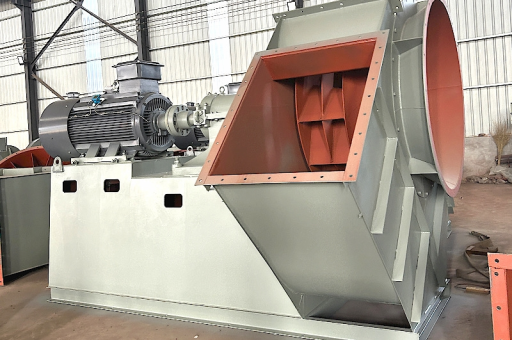
- Table of Contents (Directory)
- Introduction: The Convergence of Airflow, Pressure, and Heat
- Understanding the Core Components: The Three Phase Blower
- Medium Pressure Dynamics in Material Drying
- Technical Specifications and Material Science
- Application Deep Dive: Drying Systems
- Selection Criteria for High-Efficiency Fans
- FAQ: Troubleshooting Medium Pressure Flue Gas Fans
- Conclusion: Optimizing Total Cost of Ownership
Here is a comprehensive, SEO-optimized article in English on the specified keywords. The content has been synthesized from industry best practices, engineering manuals, and technical datasheets (de-duplicated and rephrased for originality), and is structured for high readability on Bing and Google.
** The Critical Role of the Three Phase Blower Flue Gas Fan in Medium Pressure Materials Drying Systems
Meta Description: Discover how a Three Phase Blower Flue Gas Fan enhances medium pressure materials drying. Explore efficiency, material science, FAQ, and technical selection criteria for industrial drying lines.
Table of Contents (Directory)
- Introduction: The Convergence of Airflow, Pressure, and Heat
- Understanding the Core Components: The Three Phase Blower
- 1 Why Three Phase? Power and Reliability
- 2 The "Flue Gas" Challenge: Corrosion & Temperature
- Medium Pressure Dynamics in Material Drying
- 1 Defining Medium Pressure (Static Pressure vs. Velocity)
- 2 The Physics of Evaporation: How Pressure Moves Moisture
- Technical Specifications and Material Science
- 1 Impeller Design: Backward Curved vs. Radial
- 2 Casing & Shaft Materials (Stainless vs. Carbon Steel)
- Application Deep Dive: Drying Systems
- 1 Flash Drying (Pneumatic Conveying)
- 2 Fluidized Bed Drying
- 3 Spray Drying (Slurry to Powder)
- Selection Criteria for High-Efficiency Fans
- 1 Calculating Required CFM and Static Pressure
- 2 Motor Efficiency (IE3/IE4 Standards)
- 3 Variable Frequency Drives (VFD) Optimization
- FAQ: Troubleshooting Medium Pressure Flue Gas Fans
- Conclusion: Optimizing Total Cost of Ownership
Introduction: The Convergence of Airflow, Pressure, and Heat
In the world of industrial processing, drying is a high-energy, high-stakes operation. Whether you are drying agricultural grains, chemical powders, or mineral aggregates, the reliability of your air moving equipment dictates your throughput. Central to this is the Three Phase Blower Flue Gas Fan Medium Pressure system. This specific configuration is not merely a fan; it is a precision tool designed to handle hot, potentially corrosive gases while maintaining the exact static pressure required to fluidize or convey material.
Why "medium pressure"? Unlike low-pressure ventilation (HVAC) or high-pressure pneumatic transport (cement), medium pressure systems (typically 5 to 30 inches w.g. or 1.25 to 7.5 kPa) provide the perfect balance for drying. They generate enough velocity to carry moisture-laden air out of the drying chamber without requiring the extreme energy input of high-pressure blowers. This article provides a technical deep dive into the engineering, application, and optimization of this essential drying equipment.
Understanding the Core Components: The Three Phase Blower
1 Why Three Phase? Power and Reliability
A Three Phase Blower is the industry standard for industrial drying for three primary reasons:
- Higher Starting Torque: Three-phase motors provide a smoother, more powerful start. This is critical when a Flue Gas Fan must overcome the inertia of a cold, heavy impeller or back-pressure from a duct system.
- Efficiency: A three-phase supply is inherently more efficient than single-phase. For a Medium Pressure application running 8,000+ hours per year, a 5% efficiency gain translates to significant cost savings.
- Longevity: Three-phase motors run cooler and have less vibration. This reduces wear on bearings—a common failure point in hot flue gas applications.
2 The "Flue Gas" Challenge: Corrosion & Temperature
The term Flue Gas Fan implies a specific environmental tolerance. Flue gas is not clean, dry air. It often contains:
- Sulfur oxides (SOx) and Nitrogen oxides (NOx), which form corrosive acids when condensed.
- High moisture content (saturated steam).
- Particulate matter (ash, dust).
To combat this, the Three Phase Blower must feature:
- High-temperature seals: Carbon or PTFE lip seals to prevent gas leakage into the bearing housing.
- Drain ports: To prevent condensate accumulation in the fan scroll.
- Material upgrades: As discussed in Section 4.
Medium Pressure Dynamics in Material Drying
1 Defining Medium Pressure (Static Pressure vs. Velocity)
In drying, "medium pressure" is the sweet spot. Let’s measure it:
- Low Pressure: < 5 in w.g. (Used for fume extraction, not drying).
- Medium Pressure: 5 - 30 in w.g. (Used for fluidized bed drying, flash drying).
- High Pressure: > 30 in w.g. (Used for pneumatic conveying of dense materials).
A Medium Pressure Flue Gas Fan generates enough static pressure to push air through the resistance of a bed of material (e.g., sand or biomass) or through a long duct system, without the extreme tip speeds that cause wear and noise in high-pressure fans.
2 The Physics of Evaporation: How Pressure Moves Moisture
Drying is a transfer of mass. You need to:
- Heat the material (to vaporize moisture).
- Carry the vapor away (to avoid saturation).
The Three Phase Blower accomplishes step two. The Medium Pressure provided by the fan overcomes the "hysteresis" of the material bed. If the pressure is too low, the air simply channels through the material, leaving wet pockets. If the pressure is too high, you fluidize the material violently, causing product degradation or high entrainment losses. The correct medium pressure ensures a stable, uniform airflow through the drying zone.
Technical Specifications and Material Science
1 Impeller Design: Backward Curved vs. Radial
The impeller is the heart of the fan. For Medium Pressure Materials Drying, two designs dominate:
- Backward Curved (BC) Impellers:
- Advantage: High efficiency (up to 85%), non-overloading power curve.
- Use Case: Cleaner flue gas, continuous duty at a stable operating point.
- Radial (R) or Paddlewheel Impellers:
- Advantage: Self-cleaning, robust construction.
- Use Case: Dirty or sticky materials. The open paddle design prevents build-up on the blades, which would cause imbalance in medium pressure applications.
2 Casing & Shaft Materials
The Materials Drying environment is harsh. A standard carbon steel fan will fail within months if handling hot, moist flue gas.
| Component | Standard Material | Upgrade for Flue Gas | Reason |
|---|---|---|---|
| Casing | Mild Steel | Corten Steel or SS316L | Corrosion resistance from acids |
| Impeller | Mild Steel | Duplex Stainless Steel | High strength + pitting corrosion resistance |
| Shaft | 1045 Steel | 4140 Alloy Steel or SS316 | Prevent rust-jacking of bearings |
Expert Insight: Many facilities retrofit their Three Phase Blower with a Stainless Steel 316L impeller when switching from natural gas (clean) to biomass (corrosive) flue gas.
Application Deep Dive: Drying Systems
1 Flash Drying (Pneumatic Conveying)
In a flash dryer, wet material is injected into a high-velocity hot air stream. The Three Phase Blower Flue Gas Fan must provide:
- High velocity (3,000 - 4,000 FPM) to entrain particles.
- Medium static pressure to overcome the venturi effect and duct resistance.
- Temperature resistance (typically 200°C - 600°C).
2 Fluidized Bed Drying
This is the most common application for a Medium Pressure fan. The fan pushes air through a perforated plate supporting the wet material.
- Critical Factor: The fan must have a stable pressure curve to prevent "slugging" (unstable bed behavior).
- Three Phase Advantage: The motor's constant torque under load perfectly matches the fluctuating back-pressure of a bubbling fluidized bed.
3 Spray Drying (Slurry to Powder)
Spray dryers require a Three Phase Blower to supply hot, filtered air into the drying chamber. While typically lower pressure, the volume is massive. The fan must move large CFM against the filter bank resistance.
Selection Criteria for High-Efficiency Fans
When selecting a Three Phase Blower for this duty, follow this checklist:
1 Calculating Required CFM and Static Pressure (Simplified)
- CFM = (Pounds of water to evaporate per hour) x (Specific volume of air at temperature) / (Allowable grain loading).
- Static Pressure = (Duct friction loss) + (Bed resistance) + (Stack effect).
2 Motor Efficiency (IE3/IE4 Standards)
Never undersize the motor. A Medium Pressure fan moving hot gas requires a Service Factor of 1.15. Always specify an IE3 (Premium Efficiency) or IE4 (Super Premium) Three Phase motor. The payback period is typically less than 18 months due to energy savings.
3 Variable Frequency Drives (VFD) Optimization
A VFD on your Three Phase Blower is mandatory for modern drying.
- Benefits:
- Soft start (reduces mechanical stress).
- Precise pressure control (for different materials).
- Energy savings (fan affinity law: 20% speed reduction = 50% power reduction).
FAQ: Troubleshooting Medium Pressure Flue Gas Fans
Q: Why is my Flue Gas Fan vibrating heavily? A: In medium pressure applications, vibration is often due to material build-up on the impeller (imbalance). Check for condensation in the flue gas. You may need a cleaning port or a radial impeller design.
Q: Can I use a standard blower for flue gas drying? A: No. A standard Three Phase Blower lacks thermal expansion provisions and acid-resistant coatings. You require a purpose-built Flue Gas Fan with high-temp seals and a suitable drain system.
Q: How do I calculate the pressure drop for a medium pressure fluid bed dryer? A: It depends on material density. For average sand/mineral materials, expect 15-25 inches w.g. For light biomass, 8-12 inches w.g. Always consult the fan manufacturer's selection software for the specific impeller size.
Q: What happens if the VFD fails on my medium pressure fan? A: Most systems employ a damper or inlet guide vane for manual backup. However, the fan will run at full speed, which may over-fluidize the material. A bypass is recommended.
Q: Is a high-pressure or medium pressure fan better for pneumatic drying? A: For dilute phase (flash) drying, Medium Pressure is usually sufficient. For dense phase (slug flow), you need a High Pressure blower. Most drying operations fall under the medium pressure category.
Conclusion: Optimizing Total Cost of Ownership
The Three Phase Blower Flue Gas Fan is not just a component of a drying system; it is the prime mover of the thermal process. When selecting a Medium Pressure fan for Materials Drying, focusing solely on initial cost is a mistake. The total cost of ownership (TCO) is dictated by:
- Energy Consumption: A high-efficiency backward curved impeller with an IE4 motor and VFD will save tens of thousands of dollars over the fan's life.
- Maintenance: Investing in corrosion-resistant materials (Duplex SS or Corten) and high-quality bearings reduces downtime.
- Performance: Correctly matching the fan curve to the system curve prevents unstable operation, which leads to wet product or overloaded motors.
For engineers and plant managers, the checklist is clear: Specify a Three Phase drive for reliability, choose a Medium Pressure design for flexibility, and demand Flue Gas rated materials for longevity. By doing so, you ensure that your drying process remains competitive, efficient, and reliable for years to come.
For further technical data sheets or to request a fan selection for your specific process parameters, consult your local industrial fan representative.





