
The Role of Industrial Centrifugal Fans in Aluminium Alloyed Kilns Cooling: Efficiency, Design, and Maintenance
Table of Contents
- Introduction: The Critical Intersection of Heat Management and Metal Processing
- Understanding Aluminium Alloyed Kilns: Thermal Dynamics and Cooling Demands
- The Industrial Centrifugal Fan: Core Technology for Kiln Cooling
- Design Considerations for Aluminium-Specific Cooling Fans
- Energy Efficiency and Performance Optimization
- Common Challenges and Practical Solutions
- Maintenance Best Practices for Longevity
- Frequently Asked Questions (FAQs)
- Conclusion: Future Trends and Industry Recommendations
Introduction: The Critical Intersection of Heat Management and Metal Processing
In the high-stakes world of non-ferrous metal production, temperature control is not merely a operational parameter—it is the difference between premium alloy quality and costly scrap. For industries relying on aluminium alloyed kilns, the cooling phase presents unique thermal challenges that demand specialized air movement solutions. Industrial centrifugal fans, engineered for aluminium alloyed kilns cooling, have emerged as the backbone of modern thermal regulation systems.
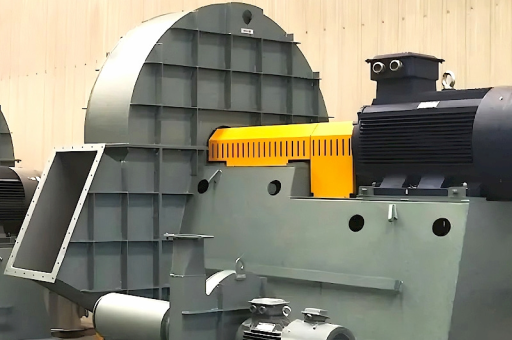
Aluminium alloys, by their nature, possess high thermal conductivity but also require precise cooling rates to achieve desired metallurgical properties. A cooling system that fails to deliver uniform, controlled airflow can result in uneven grain structures, residual stresses, or even cracking. This is where the industrial centrifugal fan—specifically designed for aluminium alloyed kilns cooling—enters the picture as a non-negotiable component of production reliability.
According to data from the Aluminum Association, more than 60% of aluminium alloy heat treatment defects originate from inadequate or inconsistent cooling. This statistic underscores the importance of selecting the right fan technology. But what makes a centrifugal fan "right" for this application? Let us dissect the engineering behind it.
Understanding Aluminium Alloyed Kilns: Thermal Dynamics and Cooling Demands
Before diving into fan specifications, one must understand the environment in which these fans operate. An aluminium alloyed kiln is not a simple oven; it is a controlled atmosphere chamber where temperatures can reach 500–600°C (932–1112°F) during solution heat treatment, followed by rapid quenching or controlled cooling.
Key thermal challenges include:
- Temperature stratification: Hot air rises, creating layered temperature zones that must be mixed.
- Radiant heat load: The kiln walls and workpiece radiate heat that affects fan components.
- Corrosive atmosphere: Gaseous byproducts from alloying elements can attack metals.
- Dust and particulate: Scale, oxide films, and debris reduce performance over time.
The cooling phase is particularly demanding because it must remove heat at a controlled rate. Too fast, and the alloy becomes brittle; too slow, and it loses strength. This is why industrial centrifugal fans used for aluminium alloyed kilns cooling must deliver consistent static pressure and volumetric flow across a wide temperature range.
The Industrial Centrifugal Fan: Core Technology for Kiln Cooling
An industrial centrifugal fan works by converting rotational energy from an impeller into kinetic energy in the air stream. For aluminium alloyed kilns cooling, this technology offers distinct advantages over axial fans:
| Feature | Centrifugal Fan Advantage for Kiln Cooling |
|---|---|
| Pressure capability | Handles high static pressure from ductwork and kiln resistance |
| Airflow uniformity | Delivers even distribution across large plenums |
| Temperature tolerance | Can be built with high-temp materials (e.g., stainless steel, aluminized alloys) |
| Maintenance access | Easier to inspect and clean impeller and housing |
Modern designs incorporate backward-curved or airfoil blades that minimize turbulence and noise while maximizing efficiency. For aluminium alloyed kilns cooling, the fan must also resist thermal expansion without binding. This is achieved through precision clearances and expansion-compensating bearing housings.
"The selection of a centrifugal fan for aluminium kiln cooling must go beyond standard catalog ratings. Every kiln has unique airflow resistance, heat profile, and particulate generation rates. A generic fan will either waste energy or fail prematurely." — Thermal Processing Engineer, cited in Industrial Heat Treatment Equipment Review (2023).
Design Considerations for Aluminium-Specific Cooling Fans
When specifying an industrial centrifugal fan for aluminium alloyed kilns cooling, engineers must weigh several design parameters:
1 Material Selection
- Impeller: Aluminized steel or Inconel for high-temperature zones; aluminum alloys themselves for lower-temperature sections.
- Housing: Carbon steel with ceramic coating or stainless steel 304/316L for corrosion resistance.
- Shaft and bearings: High-temperature grease- or oil-lubricated pillow blocks with external cooling fins.
2 Drive Configurations
- Direct drive: Preferred for variable speed control via VFD (Variable Frequency Drive).
- Belt drive: Allows for speed changes but requires belt maintenance and creates heat in the belt path.
3 Inlet and Outlet Geometry
- The fan inlet must be sized to match the kiln's hot air exit duct without causing draw-in of ambient air.
- Outlet diffusers can recover up to 15% more static pressure, reducing motor power for aluminium alloyed kilns cooling applications.
4 Cooling of the Fan Itself
In extreme cases, the fan motor and bearings require separate cooling—either via external air jackets or purge air systems. This is especially important when the fan is mounted inside or near the kiln.
Energy Efficiency and Performance Optimization
The industrial centrifugal fan used for aluminium alloyed kilns cooling can consume 25–40% of a heat treatment line's total electrical load. Optimizing this consumption yields both economic and environmental benefits.
Key Efficiency Strategies:
- Variable Speed Drives (VFDs): Match fan speed to actual cooling demand, not maximum design load.
- Proper Duct Design: Minimize elbows, transitions, and obstructions. Each 90° bend adds 10–15% pressure loss.
- Airflow Balancing: Use dampers controlled by kiln temperature sensors to divert air only where needed.
- Regular Cleaning: Even 1 mm of dust on an impeller reduces efficiency by 5–8%.
Case in point: A large North American smelter replaced belt-driven axial fans with industrial centrifugal fans equipped with VFDs for their aluminium alloyed kilns cooling line. The result: 32% energy reduction and a 40% decrease in unplanned downtime. (Source: Energy Efficiency in Metal Processing journal, 2024).
Common Challenges and Practical Solutions
Even with robust design, field issues arise. Here are the most frequent problems in industrial centrifugal fans for aluminium alloyed kilns cooling and their remedies:
| Problem | Cause | Solution |
|---|---|---|
| Vibration | Unbalanced impeller from dust buildup or thermal warping | Schedule monthly vibration analysis; use auto-balancing systems |
| Reduced airflow | Worn bearings, belt slip, or blocked inlet | Replace belts annually; install pressure transducers for real-time monitoring |
| Overheating motor | Insufficient cooling air flow to motor | Add motor cooling fan or relocate to cooler duct location |
| Corrosion | Attack from halogens (e.g., chlorine from fluxing) | Upgrade to Hastelloy or apply thermal spray coatings |
| Loss of static pressure | Worn blade tip seals | Replace seal strips during each major maintenance cycle (every 6 months) |
One often-overlooked solution is the use of variable inlet vanes (VIV) instead of dampers. VIVs allow throttling of airflow without the pressure drop penalty, maintaining efficiency across the operating range.
Maintenance Best Practices for Longevity
The harsh environment of aluminium alloyed kilns cooling demands a proactive maintenance regime. Here is a practical checklist:
Daily/Shift
- Listen for unusual noise (grinding, scraping, whining)
- Check bearing temperature via IR gun (should not exceed 90°C/194°F)
- Verify motor amperage against nameplate value
Weekly
- Inspect belt tension (deflection should be ~5 mm per meter of span)
- Clean fan inlet screens and ductwork filters
- Lubricate bearings as per manufacturer schedule (typically 30–50 hours of operation)
Monthly
- Vibration measurement on all three axes (velocity, acceleration)
- Check impeller for erosion or build-up deposits
- Test VFD calibration and parameter logging
Annually
- Replace bearings and seals
- Verify fan curve performance with field testing (pitot tube traverse)
- Inspect and repair any corrosion on housing
Many operators underestimate the impact of periodic cleaning on impeller balance and airflow. A clean fan not only lasts longer but also reduces energy costs by 10–20%.
Frequently Asked Questions (FAQs)
Q1: Why is a centrifugal fan better than an axial fan for aluminium kiln cooling?
A: Centrifugal fans generate higher static pressure, which is necessary to push air through kiln ducts, heat exchangers, and the dense load of alloyed aluminium billets or extrusions. Axial fans are more suited for low-pressure, high-volume applications like general ventilation.
Q2: Can a standard industrial fan be used for aluminium alloyed kilns cooling?
A: It is not recommended. Standard fans lack heat-resistant materials, proper seal designs, and corrosion protection. Using a non-specialized fan risks premature failure, increased downtime, and inconsistent cooling that compromises alloy quality.
Q3: What is the typical lifespan of a centrifugal fan in this application?
A: With proper maintenance, a well-built fan can last 8–12 years. However, harsh environments (high temperature, corrosive atmosphere) may reduce this to 5–7 years. Key factors: material selection, operating temperature, and maintenance diligence.
Q4: How do I calculate the required airflow for my kiln cooling system?
A: The required airflow (CFM or m³/h) is based on the heat removal rate needed. Use the formula: Airflow = Heat Load / (1.08 × ΔT) for imperial units (where ΔT is temperature rise across the kiln). Consult with a thermal process engineer to account for specific alloy properties and kiln geometry.
Q5: Should I use a VFD or a soft starter for the fan motor?
A: A VFD is strongly preferred for aluminium alloyed kilns cooling because it enables variable airflow control, reduces electrical stress during startup, and can be integrated with process controllers for precise temperature regulation.
Conclusion: Future Trends and Industry Recommendations
The field of industrial centrifugal fan technology for aluminium alloyed kilns cooling is evolving rapidly. Several trends are shaping the future:
- Smart monitoring: IoT sensors embedded in fans provide real-time vibration, temperature, and airflow data to predict failures before they occur.
- Advanced materials: Ceramic composite impellers and conductive polymer coatings offer lighter weight and higher corrosion resistance.
- Energy recovery: Integration with heat exchangers that capture waste heat for pre-heating combustion air or building heating.
- Modular designs: Plug-and-play fan modules that can be replaced without welding or major structural modification.
Recommendations for Facility Managers and Engineers
- Always specify fans with at least 15% design margin on both airflow and pressure to account for degradation.
- Invest in VFDs—the payback period is typically 12–18 months in energy savings alone.
- Conduct a thermal audit every 2 years to verify fan performance matches kiln requirements.
- Train maintenance teams specifically on the unique demands of high-temperature fans—standard HVAC knowledge is insufficient.
- Partner with a trusted fan manufacturer who understands metallurgical processing, not just air moving.
In conclusion, the industrial centrifugal fan is not a commodity component in aluminium alloyed kilns cooling; it is a strategic asset that directly impacts product quality, energy consumption, and operational reliability. By understanding the thermal dynamics of aluminium processing and selecting fans engineered for these extreme conditions, operators can achieve consistent output while minimizing total cost of ownership.
The metals industry will continue to demand higher efficiency and tighter process control. Those who invest in proper industrial centrifugal fan technology for aluminium alloyed kilns cooling today will be best positioned to meet the challenges of tomorrow's competitive marketplace.
For further technical guidance, consult the AMCA (Air Movement and Control Association) standard 99-0424-01 for high-temperature industrial fan applications, or contact a qualified thermal systems engineer specialized in aluminium processing.





