
This article's table of contents introduction:
- Table of Contents
- Introduction: The Critical Role of Flue Gas Handling in Industry
- Understanding the Core Components: V Belt Drive, Centrifugal Blower, and Fan
- Why V Belt Driving Systems Are Preferred for High-Performance Flue Gas Fans
- Design Considerations for Durability and Efficiency in Harsh Environments
- Performance Metrics: Airflow, Static Pressure, and Energy Consumption
- Frequently Asked Questions (FAQs)
- Conclusion: Achieving Optimal Performance with the Right Drive System
** Maximizing Industrial Efficiency: The Engineering Excellence of High-Performance V Belt Driven Flue Gas Centrifugal Blower Fans
Article Content:
Table of Contents
- Introduction: The Critical Role of Flue Gas Handling in Industry
- Understanding the Core Components: V Belt Drive, Centrifugal Blower, and Fan
- Why V Belt Driving Systems Are Preferred for High-Performance Flue Gas Fans
- Design Considerations for Durability and Efficiency in Harsh Environments
- Performance Metrics: Airflow, Static Pressure, and Energy Consumption
- Frequently Asked Questions (FAQs)
- Conclusion: Achieving Optimal Performance with the Right Drive System
Introduction: The Critical Role of Flue Gas Handling in Industry
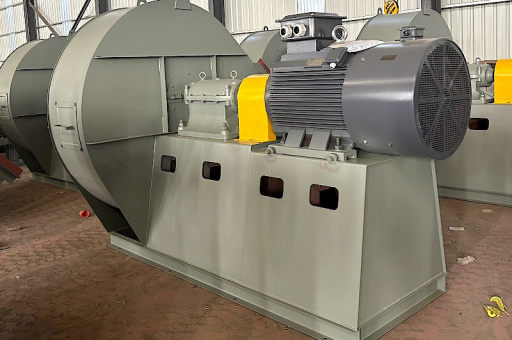
In modern industrial processes—ranging from power generation, chemical manufacturing, to steel production—the efficient removal and handling of flue gas is non-negotiable. Flue gas, often laden with particulates, moisture, and high temperatures, requires robust ventilation equipment. At the heart of this system lies the high-performance V Belt Driving Flue Gas Centrifugal Blower Fan. This assembly is not just a piece of machinery; it is a precision-engineered solution designed to maintain negative pressure, ensure combustion efficiency, and protect downstream pollution control equipment.
The combination of a V belt drive with a centrifugal blower fan offers distinct advantages in terms of torque management, speed variation, and maintenance accessibility. This article provides a comprehensive analysis of why this configuration is considered a gold standard in heavy-duty industrial ventilation, focusing on engineering performance, operational reliability, and energy optimization.
Understanding the Core Components: V Belt Drive, Centrifugal Blower, and Fan
To appreciate the system, one must first understand its three main components:
- V Belt Drive: A mechanical transmission system that transfers rotational power from a motor to the fan impeller using trapezoidal cross-section belts. Its primary advantages include vibration dampening, overload protection (belt slip prevents motor burnout), and the ability to adjust fan speed by changing pulley diameters.
- Centrifugal Blower: Also known as a radial fan, it uses a rotating impeller to accelerate air radially outward, converting kinetic energy into pressure. For flue gas applications, centrifugal blowers are preferred over axial fans due to their ability to handle high static pressures and variable gas densities.
- Fan Housing and Impeller: Constructed from corrosion-resistant materials (e.g., Corten steel or stainless steel) to withstand acidic condensates and high temperatures (often exceeding 200°C). The impeller design (forward-curved, backward-curved, or radial) defines the fan’s pressure versus flow characteristics.
When these three elements are combined into a high-performance V Belt Driving Flue Gas Centrifugal Blower Fan, the result is a versatile unit capable of delivering consistent airflow against high system resistance.
Why V Belt Driving Systems Are Preferred for High-Performance Flue Gas Fans
Many industrial fan systems utilize direct drives (motor mounted directly on the fan shaft). However, for demanding flue gas applications, the V belt drive offers compelling advantages:
- Speed Flexibility: By changing the pulley ratio, operators can adjust fan speed (RPM) without replacing the motor. This is critical when system conditions fluctuate, such as varying furnace loads or ductwork modifications.
- Vibration and Shock Absorption: Flue gas systems often experience pressure surges or particulate buildup, causing imbalance. The V belt acts as a mechanical fuse, absorbing shocks and reducing stress on bearings and motor windings.
- Simplified Maintenance: Belt replacement is straightforward and low-cost compared to replacing a direct-drive motor bearing or impeller. This translates to reduced downtime—a key performance metric in continuous process industries.
- Energy Optimization: Modern high-performance belts (cogged or raw-edge) achieve up to 98% efficiency. Combined with a properly sized centrifugal blower, the system can lower energy consumption by 5-15% compared to outdated direct-drive designs handling similar loads.
Design Considerations for Durability and Efficiency in Harsh Environments
A high-performance flue gas centrifugal blower fan must be engineered for longevity. Key design features include:
- Material Selection: The impeller and housing must resist corrosion from sulfur dioxide (SO₂), nitrogen oxides (NOx), and acidic dew points. Common materials include 316L stainless steel or specialized coatings like epoxy or PTFE.
- Belt Tensioning and Alignment: Precise alignment of pulleys and proper belt tension (using laser alignment tools or tension gauges) prevents premature belt wear and ensures maximum power transmission. Automatic tensioners are increasingly used in high-duty cycles.
- Aerodynamic Optimization: Backward-curved impeller blades are favored for high-performance flue gas fans due to their non-overloading power curve and higher efficiency (up to 85%). This design also reduces the risk of stall during variable flow conditions.
- Bearing and Lubrication Systems: Heavy-duty spherical roller bearings with sealed housings protect against dust ingress. For high-temperature applications, heat slingers and extended grease lines are critical.
Performance Metrics: Airflow, Static Pressure, and Energy Consumption
When evaluating a V Belt Driving Flue Gas Centrifugal Blower Fan, three metrics define its performance:
- Airflow (CFM or m³/h): The volume of gas moved. For flue gas systems, airflow must match combustion or process requirements, often ranging from 10,000 to 200,000 CFM.
- Static Pressure (in. w.g. or Pa): The pressure required to overcome duct resistance, filter resistance, and stack losses. A high-performance fan must deliver rated pressure at the design flow point.
- Brake Horsepower (BHP) and Efficiency: The power consumed at the fan shaft. Using a V belt drive, efficiency losses are typically 2-5%. Selecting a premium efficiency motor (IE4 or IE5) further reduces operating costs.
Example: A 50 HP motor driving a backward-curved centrifugal fan via cogged V belts can move 30,000 CFM at 15 in. w.g., with system efficiency exceeding 82%. This configuration reduces annual energy costs by approximately $2,500 compared to a standard direct-drive unit operating at lower efficiency.
Frequently Asked Questions (FAQs)
Q1: Can a V belt drive handle the high temperatures of flue gas? A: Yes, but only if the drive components are properly specified. The motor and belts should be placed outside the flue gas flow path, with the fan shaft passing through a heat slinger. Belts made of neoprene or chloroprene rubber can tolerate ambient temperatures up to 90°C; for higher temperatures, heat shields or remote mounting are necessary.
Q2: How often should V belts be replaced in a flue gas fan system? A: Typical replacement intervals range from 6 months to 2 years, depending on belt quality, alignment accuracy, and load conditions. Regular inspection for cracking, fraying, or tension loss is recommended monthly. Predictive maintenance tools like vibration analysis can also indicate impending belt failure.
Q3: Is a V belt drive more or less reliable than a direct drive for this application? A: V belt drives are generally more reliable in abrasive or high-shock environments because they provide mechanical isolation. However, direct drives offer higher efficiency (no belt slip) and require less physical space. For flue gas fans where maintenance access is limited, the V belt drive’s ease of service often outweighs the slight efficiency penalty.
Q4: What is the typical lifespan of a high-performance centrifugal blower fan for flue gas? A: With proper maintenance (bearing lubrication, belt replacement, and cleaning), a well-designed fan can last 15 to 25 years. The V belt drive system itself may require component replacement every 3-5 years, but the fan housing and impeller are designed for extended service life.
Q5: Can I retrofit an existing flue gas fan with a V belt drive? A: Yes, retrofitting is common. It involves replacing the direct motor mount with a baseplate, pulleys, and belt tensioning assembly. This upgrade often yields immediate benefits in maintenance reduction and speed adjustability, especially in facilities with varying process conditions.
Conclusion: Achieving Optimal Performance with the Right Drive System
The high-performance V Belt Driving Flue Gas Centrifugal Blower Fan represents a mature yet continuously evolving technology that balances mechanical simplicity with operational flexibility. By understanding the interplay between V belt drive advantages, centrifugal blower aerodynamics, and material science for harsh environments, industrial engineers can design systems that deliver consistent airflow, reduce energy consumption, and extend equipment life.
Whether you are specifying new equipment for a power plant, upgrading a chemical facility’s ventilation, or optimizing a steel mill’s combustion air system, the V belt-driven centrifugal configuration remains a reliable and cost-effective choice. For more detailed technical specifications or to request a system performance assessment, please contact our engineering team at fan. We specialize in custom-engineered solutions for demanding process gas applications.





