
This article's table of contents introduction:
- What is it?
- Common Specifications
- Key Operational Challenges
- Common Industries & Standards
- Why "High Pressure" matters here
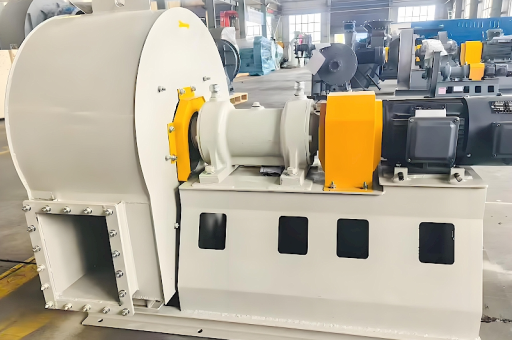
It appears you are referencing a specific type of heavy-duty centrifugal fan used in the cement industry. This is likely a High-Pressure Induced Draft (ID) Fan used for a Dust Collector (such as a baghouse or electrostatic precipitator).
Here is a technical breakdown of what this equipment is, its specifications, and critical operating parameters.
What is it?
- Function: It pulls (induces) dirty, hot, and abrasive gas from the cement kiln or clinker cooler through the dust collector, creating negative pressure in the ductwork.
- Type: High-pressure, radial-tipped or backward-inclined centrifugal fan.
- Application: Specifically designed to overcome the high resistance (pressure drop) of fabric filter bags or ESP plates.
Common Specifications
For a cement plant ID fan on a dust collector, typical parameters include:
| Parameter | Typical Value / Range | Notes |
|---|---|---|
| Flow Rate | 200,000 – 800,000 m³/h | Varies with kiln size (e.g., 5,000 TPD plant). |
| Static Pressure | 2,500 – 7,000 Pa (High) | Standard ID fans are ~2.5-4 kPa. High pressure systems (long bags, pulse-jet collectors) can require 5-7 kPa. |
| Temperature | 90 °C – 200 °C (Max 280 °C) | Normal operation. Higher peaks require special alloys (e.g., Corten, 16Mo3). |
| Speed | 750 – 1,100 RPM | Controlled via VFD (Variable Frequency Drive) or fluid coupling. |
| Motor Power | 1,000 kW – 3,000+ kW | Very high power consumption; often the single largest motor in the plant. |
| Impeller Type | Radial (to handle dust) or Backward-curved (for efficiency) | Radial is more robust for abrasive dust; backward is more efficient. |
Key Operational Challenges
- Erosion / Abrasion: Cement dust is highly abrasive. The fan impeller blades and housing often suffer from wear. Mitigation: Hard-facing (welding overlay), ceramic tiles, or replaceable wear plates.
- Imbalance: Due to uneven dust build-up on the blades or erosion. Sensors for vibration are critical.
- Sulfuric Acid Dew Point: If gas temperatures drop below ~140 °C (exact temp depends on moisture & SO3 content), sulfuric acid forms, causing rapid corrosion of the fan casing.
- VFD Control: Almost all modern high-pressure ID fans use VFDs to control flow instead of dampers (which cause huge power losses). The fan operates at variable speeds (e.g., 30% to 100%) based on kiln load.
Common Industries & Standards
- Used for: Baghouse, EP (Electrostatic Precipitator), Hybrid filter systems.
- Standards: API 673 (for design), AMCA (for performance testing), ISO 1940 (for balancing).
- Drives: Usually a DOL (Direct-on-Line) start with a VFD, or via a hydraulic coupling for large motors.
Why "High Pressure" matters here
In standard cement plants, the main ID fan (for the kiln) operates at 2-2.5 kPa. However, if you are calling it a High Pressure Induced Draught fan for the Dust Collector, it is likely because:
- The dust collector uses high-pressure pulse-jet bags (higher resistance).
- The fan is being asked to overcome the pressure drop of a wet scrubber or a dry desulfurization reactor before the collector.
- The system is using long bags (8m+), which require more static pressure to pull air through them.
Are you looking for:
- Sizing/selection calculation for a new fan?
- Troubleshooting (e.g., high vibration, low suction, overheating motor)?
- Comparison of fan types (Radial vs. Backward Inclined) for this specific duty?
- Power consumption optimization (VFD vs. Damper control)?





