
This article's table of contents introduction:
- The Primary Application
- Key Operating Challenges (Why Special Fans are Needed)
- The "Must-Have" Design Features
- Common Specifications (Example)
- Which Manufacturers to Look For?
- Summary Checklist for Your Purchase
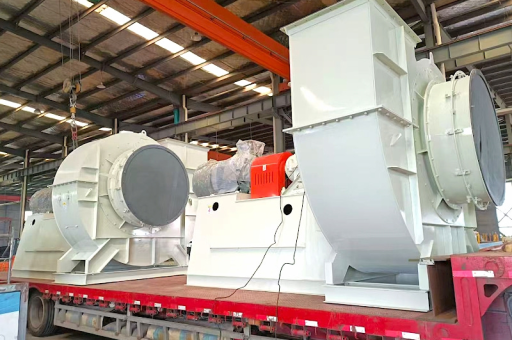
It sounds like you are looking for Industrial Centrifugal Fans (Exhaust Blowers) specifically designed for the harsh environment of Cement and Mineral Sintering processes.
These fans are critical for removing high-temperature, dust-laden, and sometimes corrosive gases from kilns, coolers, and material handling systems.
Here is a breakdown of the type, key features, critical requirements, and considerations for selecting an Exhaust Blower / Industrial Cement Fan for Mineral Powder Sintering.
The Primary Application
In a cement plant or mineral sintering plant, these fans are used for:
- Kiln Induced Draft (ID Fan): The most critical fan. Pulls combustion gases through the entire kiln system.
- Cooler Exhaust Fan: Removes hot air from the clinker cooler.
- Coal Mill Fan: Transports pulverized coal to the burner.
- Dust Collector Fan: Provides suction for baghouses or electrostatic precipitators.
Key Operating Challenges (Why Special Fans are Needed)
- Extreme Heat: Gas temperatures can range from 150°C (300°F) up to 400°C (750°F) in normal operation, with peaks much higher.
- Abrasive Dust: Sintered mineral powder is extremely hard (silica, calcium oxide). The fan impeller acts like a "sandblasting" target.
- Corrosion: Condensation of sulfuric acid in the gas stream (especially at lower temperatures) can destroy standard steel.
- Sticky Material: Alkalis and sticky dust can cause imbalance due to build-up on the blades.
- Large Volume Flows: Sintering lines move massive volumes of gas, often requiring fans with impellers 3-4 meters in diameter.
The "Must-Have" Design Features
For a Heavy-Duty Cement/Sintering Exhaust Blower, you should look for the following specifications:
A. Impeller Blade Profile
- Backward Inclined / Backward Curved (BC): The industry standard. These are more efficient, non-overloading (safer for ductwork), and have a self-cleaning tendency compared to radial blades.
- Radial Blade (R): Used for extremely dirty or sticky gases where the blade shape allows for thicker erosion liners.
- Specialty: Airfoil Blades for maximum efficiency in clean-ish gas (rare in sintering).
B. Material of Construction (Critical)
- High-Temperature Steel:
- HSA (High Strength Alloy) or Corten/Weathering Steel for hot gas.
- Stainless Steel (SS 310, 316) if corrosion is present (e.g., high sulfur in coal).
- Wear Protection:
- Hardfacing: Welding a layer of chromium carbide (e.g., Stellite or similar) onto the leading edges of the blades and the side plates (the "eye" of the wheel).
- Replaceable Liners: Wear plates bolted onto the housing that can be swapped out during maintenance.
- Ceramic Lining: Spray-on or tile-based ceramic coating for extreme abrasion vs. raw sinter powder.
C. Bearing and Shaft Seal
- Shaft Cooling: Cooling disc or fan to prevent heat from the shaft from cooking the bearings.
- Bearing Housing: Piller pillow blocks (heavy duty) or split spherical roller bearings with vibration/temperature sensors.
- Shaft Seal: High-temperature labyrinths or compressed carbon rings to prevent hot, dusty air from reaching the bearings.
D. Vibration and Dynamics
- Class: The rotor must be dynamically balanced to Grade G2.5 (or better G1.0) for high-speed, large-volume fans.
- Critical Speed: The operating speed must be well below (or above) the first natural frequency of the shaft to avoid resonance.
Common Specifications (Example)
If you are sourcing a fan, you might use a specification like this:
Item: Heavy Duty Industrial Centrifugal Exhaust Blower (ID Fan) Application: Mineral Sintering / Cement Kiln Exhaust Type: Single Inlet, Overhung Impeller Performance:
- Flow Rate: 500,000 m³/h
- Static Pressure: 7,500 Pa (750 mm WC)
- Temperature (Operating): 180°C (Max. 350°C @ 10min) Construction:
- Impeller: Backward Curved; Material Hardox 450 with Chromium Carbide overlay on leading edges.
- Housing: Weathering Steel (S355J2W) with replaceable abrasion-resistant liners.
- Shaft: Forged alloy steel (EN 24 or similar).
- Bearings: SKF/FAG spherical roller with automatic grease system.
- Drive: Direct drive via a water-cooled motor (for high temp) or belt drive with tensioner. Certification: API 610 or ISO 13709 (for structural design), ATEX 94/9/EC (if explosive dust is present).
Which Manufacturers to Look For?
- Global Majors: Howden, Greenheck (Industrial), Robinson Fans, New York Blower, TLT-Turbo, ABB/Flender (for drives).
- Specialized Cement Fan OEMs: Many companies specialize only in Cement Exhaust Fans (e.g., Chinese manufacturers like Shanghai Cement Fan Factory, Sichuan Chuanguo, or Indian manufacturers like Airtech Fans, Kriti Industries). These are often more cost-effective for the heavy abrasion/high temp spec.
Summary Checklist for Your Purchase
- Is the impeller made of abrasion-resistant steel (Hardox / Abrex)? (Yes/No)
- Does it have a wear plate liner in the lower quadrant of the housing? (Yes/No)
- Can the bearing stand a radiation heat load from the shaft (cooling disc)? (Yes/No)
- Is the design speed below the first critical speed? (Yes/No)
- Is the rotor dynamically balanced to G2.5 or G1.0? (Yes/No)
Recommendation: If you are buying for a specific project, you need to provide the Gas Composition (ppm of SOx, NOx, dust load, humidity) and Temperature Profile to the fan supplier. A standard "cheap" blower will fail in months in a sintering line; a properly engineered fan will last 3-5+ years between major rebuilds.





