
This article's table of contents introduction:
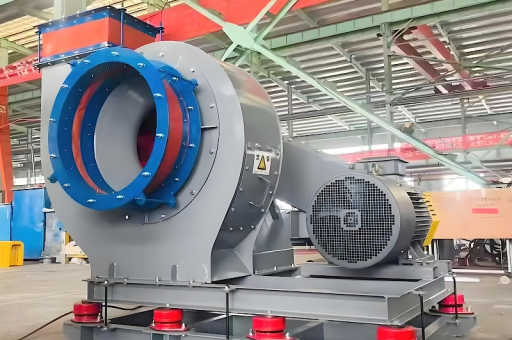
- Why are Dust Collector Fans Critical for Biomass Boilers?
- Common Fan Types Used in Biomass Systems
- Critical Design Challenges
- Fan Sizing & Selection Criteria
- Typical System Layout
- Conclusion: Best Practice
This is a specialized topic within mechanical engineering, industrial ventilation, and combustion systems.
Here is a comprehensive breakdown of Biomass Boiler Dust Collector Fans, covering their purpose, types, challenges, and selection criteria.
Why are Dust Collector Fans Critical for Biomass Boilers?
Unlike natural gas or oil, biomass fuels (wood chips, pellets, agricultural waste, straw) produce a large volume of fly ash and unburned carbon particulate. A dust collector fan is the "engine" of the entire air pollution control system. Its primary jobs are:
- Induce Draft (ID): Create negative pressure inside the boiler to pull combustion gases through the system.
- Overcome Resistance: Move flue gas through the ductwork, heat exchangers, economizers, and crucially, the dust collector (baghouse, cyclone, ESP).
- Convey Particulate: Transport collected ash from the hoppers to a storage silo or disposal system.
- Maintain EPA Compliance: Ensure the system meets emission limits for Total Suspended Particulates (TSP) and PM2.5.
Common Fan Types Used in Biomass Systems
The specific fan design depends on where it is located in the system and the gas characteristics.
| Fan Type | Location / Use | Key Features | Pros | Cons |
|---|---|---|---|---|
| Centrifugal (Radial) Fan | Main ID Fan (after baghouse) or Pneumatic Ash Conveying | Heavy-duty wheel, often with backward or radial blades. | Robust, handles dust, high pressure, reliable. | Larger, heavier, noisier. |
| Induced Draft (ID) Fan | Between boiler outlet and dust collector, or after dust collector. | Typically backward-inclined or airfoil blades for efficiency. | High efficiency, stable performance. | Airfoil blades can erode if ash is abrasive. |
| Forced Draft (FD) Fan | At the boiler inlet (supplying combustion air). | Clean air; standard centrifugal or axial fan. | No dust handling challenges. Relatively simple. | Not for dust collection directly. |
| Conveying Fan | For pneumatic transport of dry ash from hoppers. | High-pressure, often with "fan-peller" style or radial-tip wheel. | Can handle high dust loads. | High wear rate on fan wheel and housing. |
Critical Design Challenges
Biomass flue gas is notoriously difficult to handle. These are the main factors that kill standard industrial fans:
Erosion (Ash Abrasion)
- Problem: Biomass ash (especially from straw or bark) is often highly abrasive silica sand (SiO₂). At high velocities (20-40 m/s), it acts like sandblasting on the fan wheel and casing.
- Solution: Use reinforced fan wheels (thicker steel, wear liners), lower tip speeds, and hardfacing (e.g., tungsten carbide coatings) on leading edges. Some fans use radial-tip or paddle-wheel designs that are less sensitive to erosion than backward-curved airfoil blades.
Corrosion (Acid Dew Point)
- Problem: Biomass combustion produces SO₂ and HCl. When the flue gas temperature drops below the acid dew point (typically 120°C–150°C for biomass), these gases condense into sulfuric or hydrochloric acid, rapidly corroding the fan.
- Solution:
- Keep the fan on the clean side (after the baghouse).
- Insulate and heat trace the fan housing.
- Use corrosion-resistant materials (Corten steel, 316L stainless steel, or even Hastelloy for extreme cases).
- Maintain gas temperature above 160°C.
Temperature
- Problem: Flue gas can reach 180°C–250°C at the boiler outlet and 120°C–160°C at the baghouse outlet.
- Solution: Use high-temperature shaft seals, cooling discs on the shaft, and bearings rated for the ambient temperature. Never use standard carbon steel for fan wheels at these temps; use Corten A/B or Stainless Steel.
Sticky/Klinker Ash
- Problem: Some biomass (e.g., poultry litter, certain grasses) produces "sticky" ash that can build up on the fan wheel, causing imbalance and vibration.
- Solution: Install wash ports in the fan housing for periodic cleaning. In extreme cases, use vane-axial fans (less prone to buildup than centrifugal) or PTFE-coated wheels.
Explosion Risk (CO / Unburned Carbon)
- Problem: If the boiler runs rich (lack of oxygen), combustible gases (CO, H₂, CH₄) can reach the dust collector and fan. The fan's rotating metal can provide an ignition source.
- Solution:
- CO monitoring at the boiler outlet.
- Explosion-proof fan design (non-sparking aluminum-bronze impeller, explosion-proof motor, shaft grounding).
- Blow-out panels in the ductwork.
Fan Sizing & Selection Criteria
You must provide these specifications to the fan manufacturer:
| Parameter | Why it Matters | Typical Range for Biomass |
|---|---|---|
| Volume Flow (m³/hr or CFM) | Determines fan size and motor power. | Varies widely; example: 50,000 m³/hr for a 5 MW boiler. |
| Static Pressure (Pa or "wg) | The "head" needed to overcome filter bag resistance + ductwork. | 1,000 – 5,000 Pa (4" – 20" wg) depending on system. |
| Gas Temperature (°C) | Affects material selection and air density correction. | 120°C – 200°C (clean side). Up to 250°C (dirty side). |
| Dust Concentration (g/Nm³) | Determines erosion potential and wheel design. | 10 – 50 g/Nm³ (inlet to baghouse). |
| Gas Chemical Composition | Corrosion risk (CI, S, H2O). | Measure O2, CO, HCl, SO2. |
| Air Density (kg/m³) | Needed for accurate power calculations. | Calculated from temp and pressure. |
| Altitude | Affects air density and motor cooling. | Standard (sea level) to high (3000m). |
Typical System Layout
- Boiler -> Heat Exchanger -> Multicyclone (optional pre-collector for large particles) -> Baghouse Filter -> ID Fan -> Stack.
- Note: The fan is almost always placed AFTER the baghouse (clean side). This significantly reduces erosion and corrosion risks.
Conclusion: Best Practice
For a typical biomass boiler (1-20 MW):
- Best Fan Type: Backward-inclined centrifugal fan with a reinforced Corten steel wheel, placed after the baghouse.
- Motor: Variable Frequency Drive (VFD) for efficient turndown.
- Seals: Purge air seals (clean air blown into the shaft opening) to prevent ash ingress into bearings.
- Price Range: A 50,000 m³/hr unit (10 MW) might cost $25,000 – $60,000 USD depending on material spec (carbon steel vs. stainless vs. high-alloy).
If you have a specific boiler size (kW/thermal), fuel type (wood chips vs. corn stover), or local emission limit (mg/Nm³), I can help you narrow down the exact fan specifications.





