
This article's table of contents introduction:
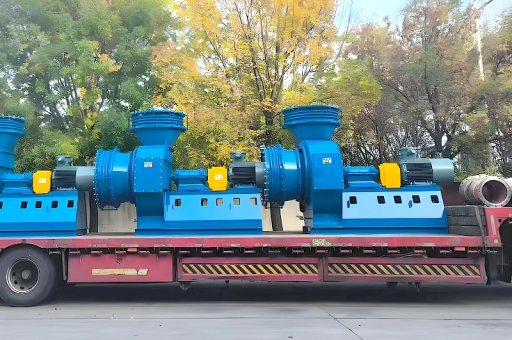
- SA Single Inlet Dust Collector Fan
- Industrial Boiler Dust Control Fan (ID Fan)
- Comparison Summary
- Recommended Specifications for Your Scenario
This request appears to combine several specific terms related to Industrial Ventilation and Air Pollution Control. Since you did not ask a specific question (e.g., "What is the difference?" or "How do I select one?"), I will interpret this as a request for a technical definition, application context, and key specifications linking these components.
Here is a breakdown of the terms "SA Single Inlet Dust Collector Fan" and "Industrial Boiler Dust Control Fan."
SA Single Inlet Dust Collector Fan
The "SA" likely stands for Single-Aspiration or Single-Air inlet (inlet on one side only, as opposed to "DA" or Double Inlet). This is a specific configuration of a centrifugal fan.
- What it is: A heavy-duty centrifugal fan designed to move air (or gas) laden with dust, particulate, or fumes.
- Key Characteristics:
- Single Inlet: Air enters the fan wheel from only one side. This allows for a wider, more robust wheel design compared to double-inlet fans of the same width.
- Radial or Paddle Wheel: The impeller typically uses straight or backward-inclined radial blades. This design is highly resistant to clogging and wear from abrasive dust.
- Housing: Heavy-gauge steel with wear liners (replaceable plates) on the scroll to protect against erosion.
- Drive: Typically belt-driven (V-belt) to allow for speed adjustment and motor protection from heat or dust.
- Primary Application:
- Baghouse Dust Collectors: The primary fan pulling dirty air through filter bags.
- Cyclone Collectors: Creating the necessary suction for separation.
- Material Conveying: Moving wood chips, grain, or metal shavings through ductwork.
Construction Note: For highly abrasive dust (e.g., sand, cement, fly ash), the SA fan will have liner plates bolted to the housing interior. If handling sticky or fibrous dust (e.g., textiles, paper), a shrouded or open-paddle wheel is chosen.
Industrial Boiler Dust Control Fan (ID Fan)
This fan is specifically configured for the harsh environment of a boiler system. There are two critical types here, but "Dust Control" implies the Induced Draft (ID) Fan.
- What it is: The fan located after the boiler and dust collector (Baghouse/ESP). It pulls exhaust gases through the system, creating negative pressure in the furnace and dust collector.
- Key Differences from a Standard Dust Collector Fan:
- Temperature: Boiler flue gas can range from 150°C (300°F) to 250°C (480°F). The fan shaft must have proper heat slingers and cooling discs. Bearings must be rated for high ambient heat or mounted outside the ductwork (pedestal mount).
- Corrosion: If burning coal or biomass, the gas contains sulfur and acids. The fan wheel may require Corten steel or stainless steel (e.g., 316L) to prevent rust.
- Wear: Fly ash is highly abrasive. The fan requires robust wear plates on the impeller blades and housing.
- Drive Type: Often requires hydraulic couplings or variable frequency drives (VFDs) to modulate draft precisely.
Comparison Summary
| Feature | SA Single Inlet (Standard Dust) | Boiler ID Fan (Dust Control) |
|---|---|---|
| Primary Job | Move dusty air from process to collector | Pull flue gas through boiler & collector |
| Temperature | Ambient (-20°C to 80°C typical) | High (150°C - 300°C+) |
| Abrasives | Moderate (wood, grain, plastic) | High (Silica, Fly Ash) |
| Corrosion | Low risk | High risk (Sulfur, Acids) |
| Wheel Type | Open paddle or Backward Inclined | Radial tip or Backward Inclined (heavy) |
| Typical Location | After collector (clean side) or Before (dirty) | Almost always after collector (or ESP/Baghouse) |
Recommended Specifications for Your Scenario
If you are looking to specify or purchase a fan that fits "SA Single Inlet" for an "Industrial Boiler Dust Control" application, here is what you should demand:
- Impeller: Radial tip or heavy-duty backward inclined. Must be balance grade G6.3 or better.
- Housing: Split housing for easy maintenance. 3/16” or 1/4” carbon steel with replaceable wear liners (AR400 steel).
- Bearings: Pillow block with self-aligning ball bearings, rated for L10 life of 100,000 hours minimum. Equipped with high-temperature grease fittings.
- Shaft Seal: Circumferential labyrinth seal or air purge seal to prevent dust leakage.
- Motor: TEFC (Totally Enclosed Fan Cooled) vertical or horizontal mount. VFD-ready inverter duty motor.
- Accessories:
- Inlet Box with turning vanes for uniform air distribution.
- Variable Inlet Vane Dampers to control airflow efficiently.
- Expansion Joint at the inlet/outlet to handle thermal expansion.
Next Step: If you can provide the Air Volume (CFM/m³/hr) , Static Pressure (in. wg./Pa) , Temperature, and Dust Type (e.g., Bituminous Coal Fly Ash vs. Biomass Ash), I can help you calculate the brake horsepower and recommend a specific wheel type.





