
This article's table of contents introduction:
- Table of Contents
- Introduction: The High-Stakes World of Boiler Fan Safety
- Root Causes: Why Do Exhaust Fans Explode?
- Engineering Solutions: From Spark-Resistant Design to Active Suppression
- Regulatory Frameworks: ISO, NFPA, and ATEX Compliance
- Maintenance & Real-Time Monitoring: The First Line of Defense
- Q&A Section: Expert Answers to Critical Questions
- Conclusion: Building a Culture of Prevention
** Mastering Industrial Exhaust Boiler Fan Explosion Protection: Engineering, Standards & Best Practices for Peak Safety
Table of Contents
- Introduction: The High-Stakes World of Boiler Fan Safety
- Root Causes: Why Do Exhaust Fans Explode?
- Engineering Solutions: From Spark-Resistant Design to Active Suppression
- Regulatory Frameworks: ISO, NFPA, and ATEX Compliance
- Maintenance & Real-Time Monitoring: The First Line of Defense
- Q&A Section: Expert Answers to Critical Questions
- Conclusion: Building a Culture of Prevention
Introduction: The High-Stakes World of Boiler Fan Safety
Industrial exhaust boiler fans are the unsung heroes of thermal power plants, chemical refineries, and large-scale manufacturing facilities. They are tasked with the critical job of removing hot, often combustible, exhaust gases from the combustion process. However, the very nature of this work introduces a severe risk: explosion. An explosion in an exhaust fan is not just a mechanical failure; it is a catastrophic event that can rupture ductwork, topple structural supports, and cause devastating fire-related damage, leading to extended downtime and significant financial loss. According to industry data following incidents in the chemical and power sectors, unplanned shutdowns caused by fan explosions can cost a facility over €500,000 per day in lost production and repair costs.
The challenge is multifaceted. The fan must operate in extreme heat, handle particulate-laden gas streams (such as fly ash or unburned fuel), and manage fluctuating pressures. When the air-to-fuel ratio becomes unbalanced—or when a mechanical failure, such as a bearing overheating, triggers a dust ignition—the fan becomes the epicenter of an explosion. The force is often sufficient to shatter fan housings, project shrapnel dangerously far, and collapse adjacent piping. This article synthesizes the latest engineering insights, international safety standards, and real-world case studies to provide a definitive guide on mitigating these risks. We will move beyond basic theory to explore metallurgical innovations, suppression system design, and the digital monitoring tools that are now mandatory in high-hazard environments.
Root Causes: Why Do Exhaust Fans Explode?
To prevent an explosion, one must first understand the "Fire Triangle" (Fuel, Oxygen, Ignition Source) as it applies to exhaust systems. In an industrial boiler fan, these three elements are often simultaneously present. Understanding the specific ignition triggers is the first step toward designing a safe system.
A. Combustible Dust & Gas Accumulation The most common catalyst is the accumulation of combustible material. In coal-fired boilers, fine unburned carbon dust (fly ash) can settle on fan blades. In chemical and petrochemical applications, volatile organic compounds (VOCs) or hydrogen gas may leak into the exhaust stream. If this mixture reaches its lower explosive limit (LEL) and finds an ignition source, the results are violent.
- Real-World Impact: An explosion in a utility boiler system is often triggered by a "puff" of unburned fuel gas that passes through the burner and into the exhaust side. This is known as a secondary explosion, occurring downstream in the boiler, duct, or fan.
B. Mechanical Failure & Heat Generation Mechanical friction remains the primary ignition source for dust explosions in fans.
- Bearing Overheating: A failing bearing generates extreme localized heat (easily exceeding 300°C), which is far above the auto-ignition temperature of many dusts (e.g., coal dust ignites around 170°C).
- Blade Imbalance & Rubbing: A worn or damaged fan blade (often due to erosion from fly ash) can cause the rotor to scrape against the fan housing (volute). The friction creates hot sparks, a classic ignition source.
- Rotor Rupture: In extreme cases, if a blade detaches at high RPM, it can puncture the housing and strike structural elements, creating a high-energy ignition event.
C. Air Ingress & Fire Propagation External air leaks into the exhaust system can be a hidden threat. If a boiler flame dies but a gas valve sticks open, air drawn in through a leaking duct joint can create an explosive mixture directly in the fan inlet. Similarly, if a fire starts in the boiler or ductwork (e.g., from a soot-blower malfunction), the fan can draw in flames and embers, converting it into a rocket-like blowtorch.
Engineering Solutions: From Spark-Resistant Design to Active Suppression
Modern explosion protection for industrial exhaust fans employs a multi-layered approach: design exclusion, passive containment, and active suppression.
A. Spark-Resistant Design & Material Science
- Non-Ferrous & High-Temp Alloys: The fan wheel (impeller) is often fabricated from Hastelloy, Inconel, or stainless steel rather than carbon steel. These alloys resist corrosion and maintain strength at high temperatures, reducing the likelihood of a fatigued blade breaking off and causing a spark.
- Minimized Clearance: Engineers design the gap between the blade tips and the fan housing to be as small as possible but still safe. This prevents excessive gas bypass while also reducing the chance of debris or dust accumulation forming a static charge or causing a rub.
- Surface Hardening: Coatings like Tungsten Carbide are applied to the leading edges of blades to resist erosion from fly ash. A smooth, intact blade surface reduces aerodynamic drag and minimizes the risk of sparks from dislodged scale.
B. Passive Explosion Protection (Containment & Venting)
- Explosion Isolators: These are passive mechanical devices (e.g., pinch valves or flameless venting units) placed in the ductwork between the fan and the boiler. They seal off a propagating flame, preventing it from reaching the fan.
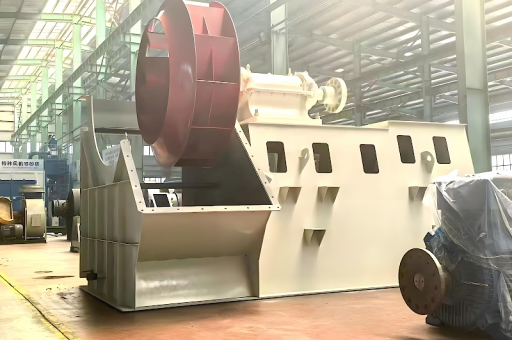
- Explosion-Proof Fan Housings: Housings are engineered to withstand a peak explosion overpressure (usually between 3 and 10 bar depending on the standard). A well-designed housing might contain the blast, preventing shrapnel from flying into the plant.
- Flameless Venting: A metal mesh or sintered plate is placed over a vent opening. The explosion pressure bursts the vent panel, but the mesh quenches the flame, preventing a flame jet from endangering personnel.
C. Active Suppression Systems For high-risk environments, passive systems alone are insufficient. Active electronic suppression systems are becoming standard.
- Pressure Sensors & Optical Detectors: Fast-responding pressure transducers detect a sudden pressure rise (the leading edge of an explosion) within milliseconds.
- High-Speed Isolation: A chemical suppression agent (typically a dry chemical powder like sodium bicarbonate or a non-flammable gas) is injected into the fan inlet or directly into the fan housing within 15-30 milliseconds of the detection. This quenches the fireball immediately, preventing full detonation.
- Fast-Acting Dampers: Some systems incorporate high-speed valves that close within milliseconds to physically block the flame front from propagating downstream.
Regulatory Frameworks: ISO, NFPA, and ATEX Compliance
Any discussion of explosion protection must be anchored in the governing standards. Non-compliance can lead to fines, insurance denials, and liability in the event of an incident.
A. European Directives (ATEX) The ATEX 2014/34/EU directive classifies hazardous areas where explosive atmospheres may occur.
- Zone 20/21/22 (Dust): For fans handling combustible dust, the fan internal area is often classified as Zone 20 or 21.
- Equipment Category: The fan motor and any electrical components inside the duct must be ATEX-certified (e.g., Category 2GD for gas and dust). This often means using sealed, explosion-proof motors and ensuring the fan housing has no hot surfaces that could act as an ignition source.
- ATEX 137 (User Directive): Requires operators to perform a Dust Hazard Analysis (DHA) and create an explosion protection document (EPD).
B. North American Standards (NFPA, OSHA)
- NFPA 68 (Venting): Standard on explosion protection by deflagration venting. Provides calculations for vent area based on the volume of the fan and duct system.
- NFPA 69 (Suppression): Standard on explosion prevention systems. Details requirements for active suppression, isolation, and purging.
- OSHA: The Occupational Safety and Health Administration enforces standards under 29 CFR 1910, including the Combustible Dust National Emphasis Program (NEP). Following a major dust explosion, OSHA can levy penalties exceeding $100,000 per violation.
C. ISO 19353: Safety of Machinery – Fire Prevention and Protection This international standard provides a framework for fire hazard analysis and the selection of protection measures. It emphasizes a systematic approach from design phase to decommissioning. The standard requires engineers to document:
- The location and nature of potential fire hazards.
- The selection of protective measures (containment, suppression, isolation).
- Verification and validation of the system's performance.
Maintenance & Real-Time Monitoring: The First Line of Defense
No engineering solution is fail-safe without a robust maintenance program. The best explosion protection system is a well-maintained fan.
A. Predictive Maintenance (PdM)
- Vibration Analysis: A significant increase in vibration at the fan's rotational frequency is a clear indicator of blade imbalance, bearing wear, or debris build-up. Modern analyzers can detect this days or weeks before a catastrophic failure.
- Thermography: Infrared cameras mounted on the fan housing monitor bearing temperatures, housing surface temperatures, and the temperature profile across the fan wheel. A hot spot might indicate a developing fire or a seized bearing.
- Current Monitoring: Measuring the motor's current draw can reveal a blocked inlet, a damper that is stuck, or a wheel that is loaded with dust.
B. Real-Time Gas & Dust Monitoring
- Combustible Gas Detectors: Placed upstream of the fan, these analyzers measure the lower explosive limit (LEL) percentage of combustible gases (H₂, CO, CH₄). If levels exceed 25% of the LEL, the system can trigger an alarm and start a purge cycle (e.g., using nitrogen or steam).
- Opacity Monitors (Smoke Detectors): An opacity meter in the exhaust stack detects changes in the density of the gas stream. A sudden increase in opacity can indicate that a fire has started in the boiler or that the fan is failing.
C. Routine Cleaning & Inspection The most common cause of explosion is simple neglect. A weekly visual inspection of the fan interior (if safe access is available) or borescope inspection is crucial.
- Blade Cleaning: To prevent the accumulation of sticky dust that causes imbalance.
- Housing Inspection: Check for cracks or weak spots that could fail during an explosion.
- Gland Seals: Inspect seals around the shaft to prevent air ingress and dust leakage.
Q&A Section: Expert Answers to Critical Questions
Q1: What is the difference between an explosion isolation valve and a suppression system? A: An isolation valve (e.g., a pinch valve or a fast-acting gate) is a passive or active device that mechanically closes to block a flame or pressure wave traveling through the ductwork. Its job is to stop the explosion from spreading to the rest of the plant. A suppression system is a chemical or mechanical intervention that extinguishes the explosion inside the fan or vessel itself. They are often used together: the suppression system quenches the explosion locally, while the isolation valve prevents it from migrating to the boiler or stack.
Q2: Can a standard carbon steel fan be made explosion-proof? A: Technically, yes, but not effectively. A carbon steel fan is susceptible to spark generation from rubs and corrosion. Upgrading to a spark-resistant alloy (e.g., stainless steel or aluminum) is required. Furthermore, the housing must be tested and rated to withstand the design explosion overpressure (e.g., 3.5 bar). Simply adding a vent to an existing carbon steel fan without massive structural reinforcement is dangerous; it might fail at the welds. The best practice is to purchase a fan that is factory-certified to ATEX or NFPA standards.
Q3: How often should the fan's internal explosion vent panels be inspected? A: At least once per month visually and annually with a detailed inspection.
- Visual: Look for signs of corrosion, dents, or debris blocking the vent panel.
- Functional: Ensure the vent panel's release mechanism (often a gasket or a hinge) is not seized or corroded. A panel that cannot burst will turn the fan housing into a bomb.
Q4: Is it safe to use a variable frequency drive (VFD) for an explosion-protected fan? A: Yes, but with specific restrictions. The motor used with the VFD must be inverter-duty and ATEX/UL certified for explosive atmospheres. A standard motor operating at low RPM may overheat due to poor cooling. Additionally, the VFD itself must be placed in a non-hazardous (safe) area or in an explosion-proof enclosure. The motor cable must also be shielded to prevent arc tracking.
Q5: What is the most common mistake facilities make regarding fan explosion protection? A: Underestimating the force of a dust explosion. Many facilities design for the minimum overpressure (e.g., 1.5 to 2 bar) without considering the pressure piling effect—where the explosion in the fan ignites a larger volume of dust in the ductwork or boiler. This can multiply the pressure by a factor of 10. A responsible DHA (Dust Hazard Analysis) will calculate the actual worst-case scenario, not just the fan's rated volume.
Conclusion: Building a Culture of Prevention
Protecting an industrial exhaust boiler fan from explosion requires a shift from reactive repair to proactive system engineering. It is not enough to buy a "special" fan with a spark-resistant wheel. True safety is achieved through a layered system that integrates proper design (spark-resistant materials, optimized geometry), passive protection (renting and containment), active suppression (chemical injection), and continuous monitoring (vibration, gas analysis, thermography).
The cost of retrofitting a fan with a full suppression system or replacing its wheel with an Inconel alloy is significantly lower than the cost of a single explosion, which can shut down a plant for weeks, injure personnel, and trigger legal penalties. By adhering to standards like ATEX, NFPA 68/69, and ISO 19353, and by committing to thorough predictive maintenance, facility managers can transform a volatile point of failure into a reliable workhorse. In the world of industrial exhaust, the best explosion is the one that never happens.





