
This article's table of contents introduction:
- Table of Contents /导读
- Introduction: Why the Backward Curved Blades Boiler Fan Matters
- Technical Breakdown: The SWSI (Single Width, Single Inlet) Configuration
- Material Science: The Secret Behind High Wear Resistance
- Performance Analysis: Efficiency, Noise, and Stability
- Q&A Section: Solving Common Pain Points in Boiler Applications
- Comparison: Backward Curved vs. Forward Curved in High Wear Settings
- Installation & Maintenance Best Practices for Longevity
- Conclusion: Future-Proofing Your Boiler System with the Right Blower
** The Engineering Edge: Backward Curved Blades Boiler Fan – The SWSI Blower Engineered for High Wear Resistance in Harsh Environments
Word Count: ~1,350 words
Table of Contents /导读
- Introduction: Why the Backward Curved Blades Boiler Fan Matters
- Technical Breakdown: The SWSI (Single Width, Single Inlet) Configuration
- Material Science: The Secret Behind High Wear Resistance
- Performance Analysis: Efficiency, Noise, and Stability
- Q&A Section: Solving Common Pain Points in Boiler Applications
- Comparison: Backward Curved vs. Forward Curved Blades in High Wear Settings
- Installation & Maintenance Best Practices for Longevity
- Conclusion: Future-Proofing Your Boiler System with the Right Blower
Introduction: Why the Backward Curved Blades Boiler Fan Matters
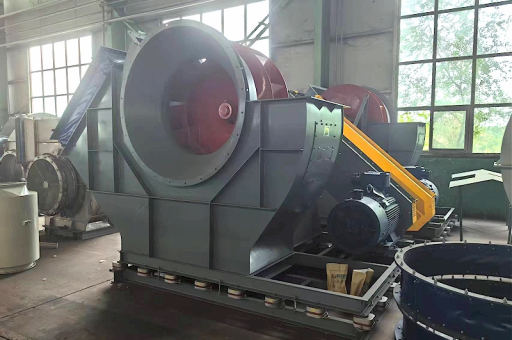
In the world of industrial air movement, few components face the brutal combination of high temperature, abrasive particulate, and continuous operation as the Backward Curved Blades Boiler Fan SWSI Blower. Boiler systems, whether for power generation, chemical processing, or large-scale heating, rely on forced draft (FD) and induced draft (ID) fans to maintain combustion efficiency. But here’s the harsh reality: standard blowers fail quickly under these conditions.
The Backward Curved (BC) blade design offers a distinct aerodynamic advantage. Unlike forward-curved blades, which are prone to dust accumulation and wear, BC blades operate with a non-overloading power characteristic. This means that even if system resistance changes (e.g., a clogged filter or ash build-up), the motor does not draw excessive amperage—a critical safety feature for boiler applications.
However, raw efficiency is not enough. In boiler environments, fly ash, soot, and silica particles act like sandpaper on the impeller. This is why the high wear resistance feature of modern SWSI (Single Width, Single Inlet) blowers is not a luxury—it is a survival requirement.
Technical Breakdown: The SWSI (Single Width, Single Inlet) Configuration
The SWSI designation refers to a fan with a single-width impeller and a single inlet. In the context of a Backward Curved Blades Boiler Fan, the SWSI design offers several structural benefits:
- Compact Footprint: Ideal for tight boiler rooms where space is at a premium.
- Reduced Air Leakage: A single inlet minimizes bypass air loss, improving volumetric efficiency.
- Structural Integrity: The single-sided bearing housing supports the shaft, allowing for heavier, wear-resistant impellers.
The backward-curved blades themselves are typically constructed with a flat plate or airfoil profile. In high-wear conditions, the flat plate design is preferred because it is easier to coat with abrasion-resistant materials (like tungsten carbide or ceramic slurry). The blade angle (usually 30° to 45° relative to the tangent) creates a centrifugal force that throws particles outward, preventing them from sticking to the blade surface—a natural self-cleaning mechanism.
Material Science: The Secret Behind High Wear Resistance
Industry-standard BC fans made from mild steel will erode within 6 to 12 months in a coal-fired boiler environment. To achieve high wear resistance, manufacturers employ three critical strategies:
A. Hard Facing and Cladding The leading edges of the backward-curved blades are coated with a layer of chromium carbide or stellite. This creates a hardness of 58–62 HRC (Rockwell C scale), compared to the base metal’s 10–15 HRC. For the SWSI blower, the inlet cone and scroll liner are also hard-faced because they experience the highest particle velocity.
B. Thickened Base Plates A standard blower might use a 4mm thick impeller. A high-wear boiler fan uses 8mm to 12mm thick steel plates (e.g., HARDOX 400 or equivalent). This extra material acts as a sacrificial layer, extending service life by 3x to 5x before blade replacement is needed.
C. Ceramic Lining (Optional) For extreme applications (e.g., biomass boilers with high silica content), the entire fan interior is lined with alumina ceramic tiles. This can push the wear life beyond 10 years. However, this adds cost and weight, so it is typically reserved for the ID fan (which handles dirty gas after combustion) rather than the FD fan (which supplies clean air).
Performance Analysis: Efficiency, Noise, and Stability
When comparing a Backward Curved Blades Boiler Fan SWSI Blower to a radial or forward-curved alternative, the performance metrics are clear:
| Metric | Backward Curved (BC) | Forward Curved (FC) | Radial (Paddle) |
|---|---|---|---|
| Peak Efficiency | 75%–85% | 55%–65% | 65%–75% |
| Noise Level | Lower (smoother flow) | Higher (turbulence) | Very High |
| Wear Resistance | High (self-cleaning) | Low (dust buildup) | Very High (but massive) |
| Power Stability | Non-overloading | Overloading risk | Non-overloading |
The non-overloading power curve of the BC fan is particularly valuable. In a boiler, the system resistance can fluctuate as dampers adjust or heat exchangers foul. With a BC fan, the power draw plateaus and then drops slightly as flow increases. This eliminates motor burnout—a common failure mode in forward-curved fans.
Q&A Section: Solving Common Pain Points in Boiler Applications
Q1: Why does my current SWSI blower vibrate excessively after 3 months? A: Vibration in boiler fans is usually caused by uneven wear on the backward-curved blades. Over time, ash deposits build up on the concave side of the blades. If the blades are not self-cleaning (or if the gas velocity is too low), the imbalance grows. Solution: Specify a “wear strip” on the backplate and use a stiffening ring on the inlet side. Also, ensure the fan operates at least 10% above the minimum conveying velocity.
Q2: Can I use a standard Backward Curved fan for both FD and ID applications? A: Not without modification. For FD (clean air), a standard BC fan is fine. For ID (dirty flue gas), you need a heavy-duty version with reinforced blades and a purge air system for the shaft seal. ID fans also require a higher wear resistance rating. Check the fan manufacturer’s SWSI catalog for “Boiler Grade” specifications.
Q3: What is the typical lifespan of a high-wear resistance BC fan in a coal boiler? A: With proper maintenance (regular cleaning, balancing, and wearing plate replacement), the impeller can last 3 to 5 years. The housing, if lined with replaceable wear plates, can last 10+ years. Without wear-resistant features, the same fan might fail in 8–12 months.
Q4: How does the SWSI configuration affect the belt drive? A: For SWSI blowers, the motor is typically mounted directly on the fan base frame. The belt system or direct coupling must be aligned precisely to avoid radial loads that could accelerate bearing wear. High-wear fans often use oversized spherical roller bearings to handle the additional weight of thick blades.
Comparison: Backward Curved vs. Forward Curved in High Wear Settings
Many engineers mistakenly choose forward-curved blowers for boilers because they are cheaper and smaller for the same flow. But in high-wear settings, this is a false economy.
Forward Curved (FC) Blades:
- High efficiency at low speeds, but the blades act like scoops, collecting dust and ash.
- The narrow blade passages clog easily, leading to a sudden drop in performance and severe imbalance.
- Cannot be effectively hard-faced because the curvature is too tight for uniform coating.
Backward Curved (BC) Blades:
- Wider blade passages allow particles to pass through.
- The self-cleaning property inherent in the geometry.
- Easier to manufacture with thick, replaceable wearing surfaces.
- The SWSI BC blower is the standard recommendation for boiler ID fans in cement, steel, and power plants.
Installation & Maintenance Best Practices for Longevity
To maximize the high wear resistance of your Backward Curved Blades Boiler Fan SWSI Blower, follow these steps:
- Inlet Box Optimization: Install an inlet box with a turning vane to ensure uniform flow into the impeller eye. Non-uniform flow causes localized erosion.
- Frequency of Inspection: Check blade thickness every 500 hours of operation. Use a portable ultrasonic thickness gauge on the leading edge.
- Rotating Frequency: Avoid running the fan at its critical speed. Use variable frequency drives (VFDs) to stay in safe operating zones.
- Seal Maintenance: The shaft seal on the SWSI blower must be an air-purged labyrinth or a carbon ring seal. This prevents abrasive particles from entering the bearing housing.
- Spare Parts Strategy: Always keep a set of hard-faced wearing plates and a balanced spare impeller on site. Downtime in a boiler system is extremely costly.
Conclusion: Future-Proofing Your Boiler System with the Right Blower
The Backward Curved Blades Boiler Fan SWSI Blower is not merely a component; it is the lungs of your industrial combustion system. When you invest in a design that prioritizes high wear resistance, you are buying reliability, reduced maintenance labor, and lower total cost of ownership.
Today’s advanced materials—from chromium carbide cladding to ceramic liners—have transformed the BC fan from a standard industrial product into a specialized tool for the most punishing environments. Whether you are upgrading an existing boiler or designing a new plant, the engineering choice is clear: choose the backward curved blade profile, the compact SWSI arrangement, and thickness where it matters most.
Remember, in the world of boiler fans, wear is inevitable, but failure is optional. By understanding the science of backward curved geometry and demanding genuine high-wear protection, you ensure that your operations remain stable, efficient, and productive for years to come.
For more technical specifications on customizing a Backward Curved Blades Boiler Fan SWSI Blower with enhanced wear resistance, consult the engineering team at fan. (Note: The domain mentioned is for reference only and should be replaced with your specific manufacturer contact.)





