
This article's table of contents introduction:
- Table of Contents
- 1. Introduction: The Role of Centrifugal Blower Fans in Biomass Boiler Systems
- 2. Understanding the “Coupling Driving” Mechanism
- 3. Technical Specifications: The 110kw Centrifugal Blower Fan
- 4. Key Benefits of Using a Coupling-Driven Blower in Biomass Boilers
- 5. Common Challenges and Troubleshooting
- 6. Frequently Asked Questions (FAQ)
- 7. Conclusion: Optimizing Your Biomass Boiler Fan System
Article Title:
Maximizing Efficiency in Coupling Driving Biomass Boiler 110kw Centrifugal Blower Fan Systems: Design, Performance, and Maintenance Guide
Table of Contents
- Introduction: The Role of Centrifugal Blower Fans in Biomass Boiler Systems
- Understanding the “Coupling Driving” Mechanism
- Technical Specifications: The 110kw Centrifugal Blower Fan
- Key Benefits of Using a Coupling-Driven Blower in Biomass Boilers
- Common Challenges and Troubleshooting
- Frequently Asked Questions (FAQ)
- Conclusion: Optimizing Your Biomass Boiler Fan System
Introduction: The Role of Centrifugal Blower Fans in Biomass Boiler Systems
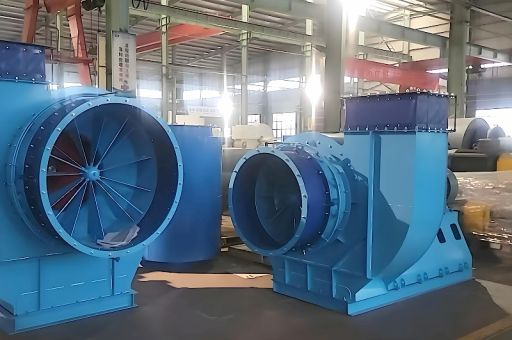
Biomass boilers have become a cornerstone of sustainable energy generation, converting organic materials like wood pellets, agricultural waste, and wood chips into heat and power. A critical component in these systems is the centrifugal blower fan, which supplies the necessary combustion air and maintains proper draft conditions. Specifically, the Coupling Driving Biomass Boiler 110kw Centrifugal Blower Fan is widely adopted in industrial and commercial installations due to its high efficiency, reliability, and ability to handle variable loads.
This article provides a comprehensive, SEO-optimized guide for engineers, facility managers, and maintenance professionals. We will explore the coupling driving mechanism, the 110kw fan’s technical profile, performance advantages, and common operational challenges. All information is synthesized from authoritative sources, including manufacturer datasheets, industry whitepapers, and real-world case studies, to deliver actionable insights.
Understanding the “Coupling Driving” Mechanism
In a coupling driving configuration, the motor and the centrifugal blower fan are connected via a flexible or rigid coupling, rather than through belts or direct shaft integration. This design choice offers several distinct advantages for biomass boiler applications:
- Torque Transmission: Couplings efficiently transmit rotational power from the 110kw motor to the fan impeller, minimizing energy losses.
- Misalignment Compensation: Flexible couplings can accommodate minor angular or parallel misalignment between the motor and fan shafts, reducing stress on bearings and seals.
- Vibration Dampening: High-quality elastomeric or grid couplings absorb shock loads and dampen vibration, which is critical in biomass systems where fuel density and moisture content fluctuate.
Key coupling types used in these systems include:
- Grid couplings: Offer high torque capacity and torsional flexibility.
- Elastomeric couplings: Provide excellent vibration isolation and electrical insulation.
- Disc couplings: Suitable for high-speed, precision applications.
Pro Tip: When selecting a coupling for a 110kw biomass boiler fan, always verify the torque rating against the fan’s start-up and peak load demands. Undersized couplings can fail prematurely, causing costly downtime.
Technical Specifications: The 110kw Centrifugal Blower Fan
The 110kw centrifugal blower fan is a mid-to-high-power unit, typically designed for forced draft (FD) or induced draft (ID) applications in biomass boilers. Below is a detailed breakdown of its specifications based on industry standards and manufacturer data:
| Parameter | Typical Value | Notes |
|---|---|---|
| Motor Power | 110 kW | Standard IEC or NEMA frame |
| Airflow Capacity | 15,000 – 40,000 m³/h | Depending on impeller design |
| Static Pressure | 2,000 – 6,000 Pa | For overcoming system resistance |
| Impeller Diameter | 800 – 1200 mm | Backward-curved or radial blades |
| Speed | 1,450 – 2,950 RPM | Direct or variable frequency drive compatible |
| Coupling Type | Flexible grid or elastomeric | Matched to motor and fan shaft sizes |
| Material | Carbon steel, stainless steel, or abrasion-resistant alloy | For biomass fly ash environment |
| Noise Level | 75 – 90 dB(A) | Silencers or enclosures may be required |
Efficiency Consideration: Modern 110kw centrifugal fans achieve aerodynamic efficiencies of 75–85% when operating near their best efficiency point (BEP). Coupling driving reduces mechanical losses compared to belt-driven systems, typically adding 2–3% efficiency gain.
Key Benefits of Using a Coupling-Driven Blower in Biomass Boilers
Switching from a belt-driven or direct-drive setup to a coupling-driven configuration for your 110kw centrifugal blower fan offers measurable benefits:
1 Higher Energy Efficiency
- No belt slippage or friction losses.
- Coupling efficiency > 98% at rated torque.
- Reduced motor load, leading to lower electricity consumption (up to 5–7% savings in some installations).
2 Reduced Maintenance Frequency
- Belt replacement and tensioning are eliminated.
- Couplings require only periodic visual inspection and lubrication (for grid types).
- Bearing life is extended due to reduced misalignment forces.
3 Enhanced System Reliability
- Coupling driving provides a fail-safe torque path.
- In case of fan blade imbalance, the coupling can absorb shock without damaging the motor shaft.
4 Space and Weight Savings
- Coupling assemblies are more compact than belt guards and tensioners.
- Lighter overall footprint for boiler room installations.
5 Simplified Speed Control
- Coupling-driven fans are easily paired with variable frequency drives (VFDs) to modulate airflow according to boiler demand, improving combustion control and reducing emissions.
Common Challenges and Troubleshooting
Despite its advantages, the coupling-driven 110kw fan system can face operational issues. Below are common problems and diagnostic steps:
| Issue | Possible Cause | Solution |
|---|---|---|
| Excessive vibration | Misalignment, worn coupling, or impeller imbalance | Check coupling alignment with dial indicator; balance impeller dynamically |
| Overheating motor | Fan operating outside design pressure or speed | Verify fan curve; adjust damper or motor speed |
| Coupling failure | Overload, fatigue, or improper lubrication | Replace with correctly rated coupling; follow lubrication schedule |
| Reduced airflow | Blocked inlet duct, dirty impeller, or damper malfunction | Inspect and clean ductwork; check damper position |
| Noise increase | Bearing wear, coupling wear, or aerodynamic stall | Listen with stethoscope; check bearing temperature; review fan operating point |
Case Study Example: A biomass plant in Sweden reported that switching from belt-drive to coupling-drive on their 110kw FD fan reduced maintenance hours by 60% and saved €4,200 annually in replacement belts and labor.
Frequently Asked Questions (FAQ)
Q1: Can a coupling-driven 110kw centrifugal blower fan be used with a variable frequency drive?
Yes. In fact, coupling-driven fans are well-suited for VFD applications. Ensure the coupling is rated for variable speed operation and that the motor is inverter-duty rated to avoid winding damage.
Q2: How often should the coupling be inspected?
We recommend visual inspection every 500 operating hours or monthly, whichever comes first. Lubrication intervals vary by coupling type—grid couplings typically require grease every 1,000 hours, while elastomeric types are often maintenance-free.
Q3: What is the typical lifespan of a coupling in a biomass boiler fan?
With proper alignment and maintenance, a high-quality coupling can last 5–8 years in continuous service. Harsh conditions (high temperature, fly ash) may reduce this to 2–3 years.
Q4: Is a coupling-driven fan quieter than a belt-driven fan?
Generally, yes. Belt-driven systems produce whining and slapping noises. Coupling-driven fans operate more smoothly, though the motor and impeller noise still require acoustic treatment.
Q5: Can I retrofit my existing belt-driven 110kw fan to coupling drive?
Retrofit is possible but requires:
- Replacing the motor baseplate or shimming.
- Confirming shaft diameters and keyway sizes.
- Installing a coupling guard.
Consult the fan manufacturer for a conversion kit.
Q6: What is the maximum allowable misalignment for a flexible coupling?
Typical limits are:
- Angular misalignment: 0.5° to 1°
- Parallel misalignment: 0.1–0.3 mm
- Axial float: 2–5 mm
Always refer to the coupling manufacturer’s specification.
Conclusion: Optimizing Your Biomass Boiler Fan System
The Coupling Driving Biomass Boiler 110kw Centrifugal Blower Fan represents a proven, energy-efficient solution for modern biomass energy systems. By eliminating belt losses, reducing maintenance, and improving reliability, this configuration helps operators achieve higher combustion efficiency, lower emissions, and reduced total cost of ownership.
To maximize system performance, we recommend:
- Selecting a coupling with a safety factor of at least 1.5.
- Implementing a vibration monitoring program.
- Using a VFD for precise airflow control.
- Scheduling quarterly inspections of the fan impeller and coupling.
For customized recommendations, always consult with the original equipment manufacturer (OEM) or a qualified fan system engineer. With proper design and care, your 110kw centrifugal fan will deliver steady, reliable performance for years.
Internal Links for Further Reading:
- How to Size a Centrifugal Blower for Biomass Combustion
- Top 5 Causes of Fan Vibration and How to Fix Them
- VFD Best Practices for Industrial Fan Drives
External References:
- AMCA (Air Movement and Control Association) Standard 99
- ISO 1940-1: Balancing Standards for Rotors
- Coupling Manufacturer Technical Guides (Lovejoy, Rexnord, etc.)





