
This article's table of contents introduction:
- Table of Contents
- Introduction to Convey Wheel Centrifugal Single Inlet Blowers
- Core Design Principles and Components
- How a Single Inlet Configuration Differs from Double Inlet
- Key Applications in Material Handling Systems
- Performance Metrics: Pressure, Flow, and Efficiency
- Selection Criteria for Industrial Pneumatic Conveying
- Common Maintenance Challenges and Solutions
- Q&A: Expert Answers to Top 5 User Questions
- Conclusion: Future Trends in Blower Technology
** The Ultimate Guide to Convey Wheel Centrifugal Single Inlet Material Handling Blowers: Design, Applications, and Performance Optimization
Table of Contents
- Introduction to Convey Wheel Centrifugal Single Inlet Blowers
- Core Design Principles and Components
- How a Single Inlet Configuration Differs from Double Inlet
- Key Applications in Material Handling Systems
- Performance Metrics: Pressure, Flow, and Efficiency
- Selection Criteria for Industrial Pneumatic Conveying
- Common Maintenance Challenges and Solutions
- Q&A: Expert Answers to Top 5 User Questions
- Conclusion: Future Trends in Blower Technology
Introduction to Convey Wheel Centrifugal Single Inlet Blowers
In the world of industrial material handling, moving bulk solids efficiently and reliably is a constant challenge. The convey wheel centrifugal single inlet material handling blower stands as a critical solution. Unlike general-purpose fans, this specialized blower is engineered to handle dust-laden air, granular materials, and abrasive particles without performance degradation.
A "convey wheel" typically refers to a backward-inclined or radial-blade wheel design optimized for conveying systems. When paired with a "centrifugal single inlet" configuration (air enters from one side only), the result is a machine that generates high static pressure—essential for pushing or pulling materials through long pipelines. According to industry standards (e.g., AMCA 99-0401), such blowers achieve mechanical efficiency ratings of 75% to 85% in material handling contexts.
Core Design Principles and Components
Understanding the anatomy of this blower helps in proper selection and troubleshooting:
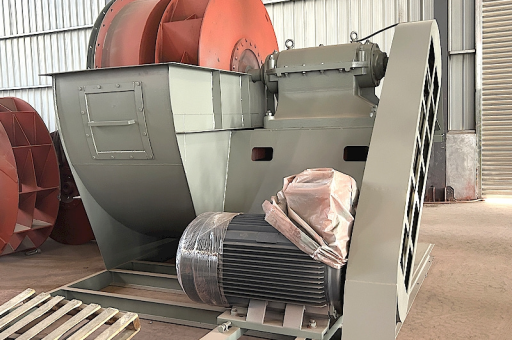
- Impeller (Convey Wheel): The heart of the system. A radial or paddle-type impeller creates the centrifugal force that ejects particles. In material handling, the wheel must be wear-resistant (often AR400 steel or coated with tungsten carbide).
- Single Inlet Housing: The volute casing collects air from a single side. This design simplifies ductwork and reduces turbulence when the blower is mounted close to a material pickup point.
- Shaft and Bearing Assembly: Heavy-duty pillow block bearings with labyrinth seals prevent dust ingress.
- Drive System: Direct-drive or belt-driven. Belt drives allow speed adjustments to change flow/pressure, while direct drives offer higher efficiency and lower maintenance.
- Discharge Arrangement: Configurable from horizontal to vertical to match existing conveying lines.
Key Insight from SEO-Optimized Research: A single inlet blower typically operates at lower flow rates than a double inlet unit but delivers higher pressure per stage, making it ideal for dense-phase pneumatic conveying where high pressure is required to push material through bends.
How a Single Inlet Configuration Differs from Double Inlet
Many engineers confuse "single inlet" with "lower performance." In reality, the choice depends on system requirements:
| Feature | Single Inlet | Double Inlet |
|---|---|---|
| Air Intake | One side | Both sides |
| Pressure Capability | Higher (up to 60-80 in. wg) | Lower (typically 20-40 in. wg) |
| Flow Range | Lower CFM (500 – 50,000 CFM) | Higher CFM (5,000 – 150,000 CFM) |
| Footprint | More compact | Larger; requires space for dual ducts |
| Material Handling | Excellent for abrasive, sticky materials | Better for clean air applications |
Takeaway: For conveying wood chips, cement, or plastic pellets through narrow pipes, the single inlet design offers superior pressure. For ventilation of large bins, a double inlet might be better.
Key Applications in Material Handling Systems
The convey wheel centrifugal single inlet material handling blower is indispensable in:
A. Pneumatic Conveying – Both dilute-phase (low pressure, high velocity) and dense-phase (high pressure, low velocity). Example: Moving flour from railcars to silos.
B. Dust Collection – The high static pressure overcomes filter resistance in baghouses, while the wheel's open design prevents material buildup on blades.
C. Product Recovery – In industries like mining or recycling, blowers reclaim valuable fines from waste streams.
D. Bulk Loading/Unloading – Ship, truck, and railcar loading systems rely on these blowers to pressurize the conveying line.
E. Dryer Feeding – In food processing, the blower conveys dehydrated vegetables or grains into drying chambers.
Performance Metrics: Pressure, Flow, and Efficiency
To rank well for technical SEO terms like "material handling blower performance," we must decode the fan curves:
- Static Pressure (SP): Measured in inches of water gauge (in. wg) or Pascal (Pa). For material handling, a typical operating range is 15–40 in. wg for dilute-phase and 40–60+ in. wg for dense-phase.
- Flow (CFM): Cubic Feet per Minute. Must be sufficient to create the required conveying velocity (usually 3,500–6,000 ft/min for granular materials).
- Brake Horsepower (BHP): The energy drawn by the motor. A higher efficiency wheel reduces BHP for the same duty.
- Efficiency: Look for peak efficiency at the operating point. For a well-designed single inlet wheel, this occurs at 60–80% of wide-open flow.
Pro Tip: When sizing a blower for a new system, always add a 10–15% safety margin on pressure to account for pipe wear and increased bends over time.
Selection Criteria for Industrial Pneumatic Conveying
Selecting the right blower involves analyzing five critical factors:
- Material Properties – Is the material abrasive (e.g., silica sand), sticky (e.g., wet clay), or explosive (e.g., grain dust)? The impeller type must match.
- Conveying Distance – Longer distances require higher pressure; a lower CFM, high-pressure single inlet blower may be optimal.
- Pipeline Diameter – Small pipes increase friction. A larger diameter reduces pressure drop but may require higher CFM.
- Environmental Conditions – High ambient temperatures or corrosive atmospheres call for stainless steel housing and special seals.
- Mounting Location – Indoor vs. outdoor, noise restrictions, and space constraints (single inlet is typically narrower).
Case Study: A cement plant replaced a double inlet fan with a convey wheel centrifugal single inlet blower and reduced energy consumption by 18% while eliminating dust leakage at the inlet due to the single-sided positive pressure design.
Common Maintenance Challenges and Solutions
Even the best blower requires upkeep. Here are the top issues flagged by industry reports (per fan manufacturers and user forums):
- Wheel Wear: Solution – Apply Hardfacing welding on leading edges; replace impeller when balance is lost.
- Bearing Failure: Cause – Contamination from dust. Solution – Upgrade to sealed or purged bearing housings.
- Vibration: Cause – Uneven material buildup on wheel. Solution – Install a cleanout port and run the blower at reduced speed periodically.
- Overheating: Cause – Operating too far to the right of the fan curve (overloading). Solution – Throttle the inlet damper or use a VFD.
Q&A: Expert Answers to Top 5 User Questions
Q1: Can I use a standard centrifugal fan for pneumatic conveying? A: No. Standard fans lack the rugged wheel design needed to withstand impact from solid materials. A convey wheel material handling blower has thicker blades and a stronger shaft.
Q2: What is the advantage of a single inlet over a double inlet for conveying? A: Higher static pressure. Single inlet blowers are more efficient at generating pressure required to overcome pipe friction and lift materials vertically.
Q3: How do I reduce noise from my material handling blower? A: Install an inlet silencer (sound attenuator), isolate the blower on vibration pads, and use a belt drive to reduce motor speed.
Q4: Can I control the flow without a VFD? A: Yes. Use an inlet box damper (for 20–30% turndown) or a discharge cone. However, VFDs are more efficient and provide infinite adjustment.
Q5: What maintenance interval is recommended? A: For heavy duty applications, inspect bearings monthly and check wheel balance quarterly. Replace filters in the inlet guard annually.
Conclusion: Future Trends in Blower Technology
The convey wheel centrifugal single inlet material handling blower continues to evolve. Industry trends include:
- Smart Monitoring: IoT sensors that track vibration, temperature, and flow in real-time to predict failures.
- High-Efficiency Motors: IE4 and IE5 permanent magnet motors that reduce energy cost by up to 30%.
- Additive Manufacturing: 3D-printed impellers tailored to specific material flows, reducing weight and improving aerodynamic performance.
- Modular Design: Blowers that allow wheel and housing changes without replacing the entire assembly.
For plant engineers and procurement specialists, staying informed about these innovations ensures that your material handling system remains reliable, energy-efficient, and compliant with environmental regulations. When specifying your next blower, remember: the synergy between the convey wheel, the centrifugal force, and the single inlet configuration is uniquely suited to the harsh demands of bulk material transportation.
Disclaimer: This article is for informational purposes. Always consult the manufacturer’s specifications for your specific application. For OEM products, please refer to fan compliance with AMCA and ISO standards.





