
This article's table of contents introduction:
- Table of Contents (导读目录)
- Introduction to SWSI Boiler Fans and Low-Pressure Ventilation
- Understanding Coupling-Driven Systems: Mechanical Principles and Advantages
- How Low-Pressure Ventilation Improves Boiler Efficiency and Safety
- Key Components and Design Considerations for SWSI Fans
- Application Scenarios: Where Coupling-Driven Low-Pressure Ventilation Matters Most
- Common Questions and Technical Answers (Q&A Section)
- Conclusion: Future Trends and Best Practices for Fan Optimization
Article Title:
Optimizing Industrial Combustion: The Role of Coupling-Driven Low-Pressure Ventilation in SWSI Boiler Fans
Table of Contents (导读目录)
- Introduction to SWSI Boiler Fans and Low-Pressure Ventilation
- Understanding Coupling-Driven Systems: Mechanical Principles and Advantages
- How Low-Pressure Ventilation Improves Boiler Efficiency and Safety
- Key Components and Design Considerations for SWSI Fans
- Application Scenarios: Where Coupling-Driven Low-Pressure Ventilation Matters Most
- Common Questions and Technical Answers (Q&A Section)
- Conclusion: Future Trends and Best Practices for Fan Optimization
Introduction to SWSI Boiler Fans and Low-Pressure Ventilation
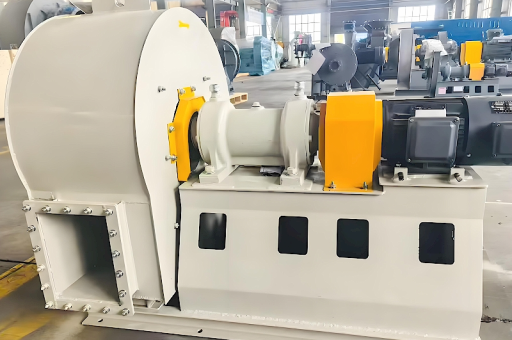
In modern industrial boiler systems, air movement is not just about pushing combustion air—it is about precision, energy efficiency, and system longevity. SWSI (Single Width, Single Inlet) boiler fans are widely used in power plants, chemical processing, and HVAC systems due to their robust design and high static pressure capability. When combined with low-pressure ventilation, these fans operate under optimized aerodynamic conditions that reduce mechanical stress and energy consumption.
A coupling-driven mechanism further refines this system by transmitting torque from the motor to the fan impeller without direct shaft connection (via flexible or rigid couplings). This design minimizes vibration, allows for easier maintenance, and improves alignment accuracy. The synergy between coupling-driven transmission and low-pressure ventilation creates a hybrid system that is both durable and energy-efficient.
Understanding Coupling-Driven Systems: Mechanical Principles and Advantages
How does a coupling-driven SWSI fan differ from a direct-drive fan?
A direct-drive fan has the impeller mounted directly on the motor shaft, which can transfer motor vibrations directly to the fan. In contrast, a coupling-driven fan uses a flexible or rigid coupling to connect the motor shaft to the fan shaft. This separation offers several advantages:
- Vibration Dampening: Flexible couplings absorb misalignment and reduce harmonic vibrations, extending bearing and impeller life.
- Simplified Maintenance: The motor and fan can be serviced independently without dismantling the entire assembly.
- Better Heat Dissipation: The coupling gap allows air circulation, preventing heat buildup in the motor bearings.
Why is low-pressure ventilation critical in this setup?
In a boiler fan, low-pressure ventilation (typically below 10 kPa) reduces the load on the impeller while maintaining adequate airflow for combustion. This lowers the required motor torque, allowing the coupling to operate within its optimal capacity range. The result is less wear on the coupling, lower energy consumption, and reduced noise levels.
How Low-Pressure Ventilation Improves Boiler Efficiency and Safety
Does lower pressure mean lower performance?
Not at all. In fact, low-pressure ventilation is purpose-designed for boiler systems that do not require high static pressure (e.g., natural draft boilers or systems with pre-combustion air heaters). By reducing the fan’s pressure output, the system achieves:
- Energy Savings: A 10% reduction in fan pressure can lead to a 20–30% reduction in power consumption, depending on fan curve characteristics.
- Extended Fan Life: Lower pressure means reduced blade loading, less erosion, and lower operating temperatures.
- Enhanced Safety: Lower system pressure reduces the risk of duct leaks and mechanical failure, especially in aging infrastructure.
For SWSI fans specifically, the combination of coupling-driven transmission and low-pressure operation creates a self-regulating airflow system that maintains stable combustion even under fluctuating load conditions.
Key Components and Design Considerations for SWSI Fans
When designing or selecting a coupling-driven low-pressure ventilation SWSI boiler fan, engineers must consider:
- Impeller Geometry: Backward-curved blades are preferred for low-pressure systems due to their high efficiency and non-overloading power characteristics.
- Coupling Type: Elastomeric or grid couplings are common for low-torque applications, while gear couplings are used for higher torque loads.
- Inlet Design: A properly designed inlet bell and impeller clearance is critical to avoid turbulence and noise.
- Motor Sizing: Because the coupling introduces slight power loss (typically 1–3%), the motor must be oversized accordingly.
Pro Tip: Always ensure that the coupling’s misalignment tolerance matches the fan’s operating envelope. Excessive misalignment can cause premature coupling failure, leading to unplanned downtime.
Application Scenarios: Where Coupling-Driven Low-Pressure Ventilation Matters Most
This configuration is particularly advantageous in:
- Industrial Steam Boilers: Where consistent but moderate airflow is needed for fuel combustion, especially in oil or gas-fired units.
- Waste-to-Energy Plants: Where low-pressure ventilation prevents ash accumulation on fan blades while maintaining efficient combustion.
- Hospital and Clean-Room HVAC: Where noise and vibration must be minimized.
- Retrofit Projects: Replacing older direct-drive fans with coupling-driven units often results in immediate energy savings and reduced maintenance costs.
A real-world example: A mid-size chemical plant replaced its direct-drive boiler fan with a coupling-driven SWSI fan configured for low-pressure operation. The plant reported a 15% reduction in electricity consumption and a 30% reduction in bearing replacement frequency within the first year.
Common Questions and Technical Answers (Q&A Section)
Q1: Is a coupling-driven SWSI fan more expensive than a direct-drive fan?
A: Yes, initially. However, the total cost of ownership (TCO) is often lower due to reduced maintenance and longer component life. The coupling itself is a low-cost, easily replaceable wear item.
Q2: Can I convert my existing direct-drive SWSI fan to coupling-driven?
A: In many cases, yes. It requires installing a separate bearing frame, a new shaft, and a coupling adapter. Consult the original fan manufacturer for compatibility.
Q3: What is the typical lifespan of a coupling in a low-pressure SWSI fan?
A: Under proper alignment and load conditions, an elastomeric coupling can last 3–5 years, while a gear coupling can last 8–10 years before needing replacement.
Q4: Does low-pressure ventilation affect combustion quality?
A: Not if the fan is correctly sized. Low-pressure ventilation is ideal for boilers with low resistance ductwork. For high-resistance systems, a medium-pressure fan is required.
Conclusion: Future Trends and Best Practices for Fan Optimization
The combination of coupling-driven low-pressure ventilation in SWSI boiler fans represents a mature, yet evolving, technology. As industries push for higher energy efficiency and lower emissions, this design offers a practical path forward.
Best Practices for Implementation:
- Use variable frequency drives (VFDs) with coupling-driven fans to further optimize energy use.
- Perform regular alignment checks using laser alignment tools to extend coupling and bearing life.
- Incorporate condition monitoring (vibration, temperature) to predict coupling wear before failure occurs.
The future may see intelligent couplings with embedded sensors that provide real-time feedback on torque and misalignment. Until then, the current generation of coupling-driven SWSI fans remains a reliable, cost-effective choice for low-pressure boiler ventilation.
For more technical resources on boiler fan design and selection, visit the official fan engineering portal.





