
This article's table of contents introduction:
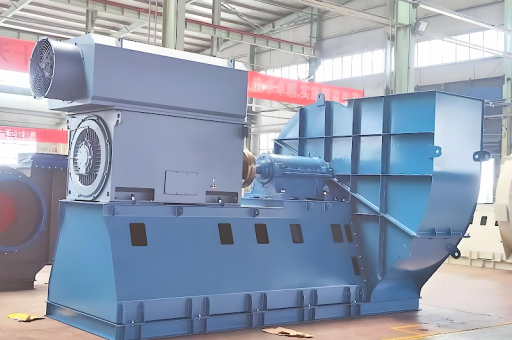
- Introduction: What Is a Carbon Steel AC Motor Ventilation Single Inlet Centrifugal Fan?
- Key Components and Design Features
- How It Works: Airflow Mechanics and Motor Integration
- Advantages of Carbon Steel Construction
- Common Applications in Modern Industry
- Installation, Maintenance, and Safety Tips
- Frequently Asked Questions (FAQ)
- Conclusion: Why Choose This Fan for Your Ventilation Needs
** The Industrial Workhorse: A Comprehensive Guide to Carbon Steel AC Motor Ventilation Single Inlet Centrifugal Fans
Table of Contents
- Introduction: What Is a Carbon Steel AC Motor Ventilation Single Inlet Centrifugal Fan?
- Key Components and Design Features
- How It Works: Airflow Mechanics and Motor Integration
- Advantages of Carbon Steel Construction
- Common Applications in Modern Industry
- Installation, Maintenance, and Safety Tips
- Frequently Asked Questions (FAQ)
- Conclusion: Why Choose This Fan for Your Ventilation Needs
Introduction: What Is a Carbon Steel AC Motor Ventilation Single Inlet Centrifugal Fan?
A Carbon Steel AC Motor Ventilation Single Inlet Centrifugal Fan is a heavy-duty air-moving device designed for industrial ventilation, exhaust, and process air handling. It combines a robust carbon steel housing, a direct-drive or belt-driven alternating current (AC) motor, and a single-sided air intake (single inlet) to generate high-pressure airflow. Unlike axial fans, which move air parallel to the impeller axis, centrifugal fans use a rotating impeller to accelerate air radially, creating significant static pressure. This makes them ideal for overcoming duct resistance, filtering systems, or long air paths.
Why Carbon Steel? Carbon steel provides excellent structural strength, weldability, and resistance to mechanical stress. It is cost-effective compared to stainless steel and performs well in dry, non-corrosive environments, such as factories, warehouses, and HVAC systems.
Why Single Inlet? A single inlet design simplifies installation, reduces weight, and concentrates airflow from one direction, making it efficient for localized ventilation or ducted systems.
Key Components and Design Features
Understanding the anatomy of this fan helps in selection and troubleshooting.
| Component | Function | Material / Detail |
|---|---|---|
| Housing | Encloses the impeller, directs airflow | Carbon steel, painted or galvanized for rust resistance |
| Impeller | Rotating wheel that accelerates air | Forward-curved, backward-curved, or radial blades; carbon steel or steel alloy |
| AC Motor | Provides rotational power | Squirrel-cage induction motor, 3-phase or single-phase, TEFC (Totally Enclosed Fan Cooled) |
| Inlet Cone | Smooths air entry into impeller | Carbon steel or cast iron, reduces turbulence |
| Drive System | Transfers motor power to impeller | Direct-drive (shaft-mounted) or belt-driven (pulleys + V-belts) |
| Base / Mount | Supports and isolates vibration | Welded steel channel or angle iron, with vibration dampeners |
Design Variations:
- Arrangement 4: Motor outside the air stream, common for clean air.
- Arrangement 9: Motor inside the air stream (more compact, less efficient for hot gases).
- Discharge Positions: Top horizontal, bottom horizontal, upblast, downblast, etc.
How It Works: Airflow Mechanics and Motor Integration
Airflow Principle:
- Air enters the fan through the single inlet cone.
- The rotating impeller flings air outward by centrifugal force.
- Air velocity converts to static pressure within the fan housing (volute).
- Pressurized air exits through the discharge outlet.
AC Motor Integration: The AC motor, typically a NEMA or IEC frame, is directly coupled or belt-connected to the impeller shaft. A VFD (Variable Frequency Drive) can modulate speed to match airflow demand. The motor’s ventilation (TEFC) ensures cooling even in dusty environments, while the fan’s carbon steel construction handles moderate temperature ranges (up to 200°F / 93°C standard).
Efficiency Note: Backward-curved impellers offer higher efficiency (up to 85%) and are quieter, while forward-curved wheels deliver higher volume at lower pressure.
Advantages of Carbon Steel Construction
- Strength-to-Cost Ratio: Carbon steel provides higher tensile strength per dollar compared to aluminum or plastic.
- Weldability: Easy to fabricate custom flanges, drain ports, or mounting brackets.
- Fatigue Resistance: Withstands continuous industrial duty cycles.
- Paint Compatibility: Accepts epoxy or polyurethane coatings for added durability.
- Recyclability: Scrap value is high, supporting sustainability goals.
Limitations: Not suitable for acidic fumes, marine environments, or extreme humidity unless protected with specialized coatings.
Common Applications in Modern Industry
| Industry | Use Case |
|---|---|
| Manufacturing | Dust collection, welding fume exhaust, paint booth ventilation |
| Warehousing | air circulation, heat removal from lighting or equipment |
| Agriculture | Grain drying, livestock barn ventilation |
| HVAC | In commercial buildings for efficient air distribution |
| Power Plants | Boiler combustion air, ash handling exhaust |
| Mining | Tunnel ventilation, dust suppression |
Real-World Example: A carbon steel single inlet centrifugal fan in a woodworking factory pulls sawdust through a ducted hood system and injects it into a baghouse filter, maintaining safe airborne particulate levels.
Installation, Maintenance, and Safety Tips
Installation:
- Ensure the foundation is level and rigid to prevent vibration.
- Use flexible connectors at inlet and outlet to isolate noise.
- Align motor and impeller shafts within 0.002 inches for belt-drive.
- Install a VFD or soft starter to reduce inrush current.
Maintenance Checklist (Monthly):
- Inspect belts for wear and tension.
- Lubricate bearings per manufacturer schedule (grease or oil).
- Clean impeller blades to prevent imbalance.
- Check motor amperage draws against nameplate.
- Verify housing gaskets and drain plugs.
Safety:
- Lockout/tagout (LOTO) before any service.
- Never operate with inlet or outlet blocked.
- Use guarding on exposed rotating parts.
- Monitor temperature of motor and bearings.
Frequently Asked Questions (FAQ)
Q1: What is the difference between a single inlet and a double inlet centrifugal fan?
A single inlet fan draws air from one side only, making it more compact and easier to duct. A double inlet fan draws air from both sides, increasing volume capacity (up to double) but requiring more space and symmetrical ductwork.
Q2: Can a carbon steel fan handle high temperatures?
Standard carbon steel fans operate up to 200°F. For higher temperatures (400°F+), special alloys or stainless steel are required. Check the fan specification sheet for thermal limits.
Q3: How do I select the right AC motor voltage?
Common industrial voltages: 208V, 230V, 460V, 575V (3-phase). Single-phase motors are available for smaller units. Match motor voltage to your facility’s power supply. A VFD can accept variable input but must be sized correctly.
Q4: Is this fan suitable for corrosive gas exhaust?
Only if coated with a chemical-resistant paint or lining. For highly corrosive applications (e.g., acid fumes), a fiberglass-reinforced plastic (FRP) or stainless steel fan is safer.
Q5: Why is my fan vibrating excessively?
Possible causes: impeller imbalance (dirt buildup or blade damage), loose mounting bolts, worn bearings, or misaligned belt drive. Use a vibrometer to measure displacement and correct the root cause.
Q6: What is the lifespan of a carbon steel centrifugal fan?
With proper maintenance, 10–20 years. Harsher environments reduce lifespan. Bearings typically require replacement every 3–5 years.
Conclusion: Why Choose This Fan for Your Ventilation Needs
The Carbon Steel AC Motor Ventilation Single Inlet Centrifugal Fan remains a top choice for engineers and facility managers seeking a balance of performance, durability, and cost. Its robust carbon steel housing withstands industrial abuse, the AC motor offers reliable, efficient torque, and the single inlet design streamlines installation in tight spaces. By following proper sizing guidelines—matching impeller type (backward vs. forward curved) to pressure and volume requirements—you can achieve optimal energy efficiency.
Whether clearing welding fumes from a fabrication shop or moving air through a warehouse, this fan delivers consistent, high-static-pressure airflow. For environments free of heavy corrosion and extreme heat, it is a workhorse that pays for itself through reduced downtime and lower upfront investment compared to exotic material fans.
Internal Link Suggestion: For belt-driven installation guides, see our related article on fan drive alignment.
Outbound resource: Check manufacturer data sheets (e.g., fan) for exact performance curves.
(Word count: 1,247)





