
This article's table of contents introduction:
- Decoding the Specification
- Typical Applications for this Specific Fan
- Key Considerations for Sourcing
- Potential Issues & Advantages
- Summary Checklist for Your Purchase
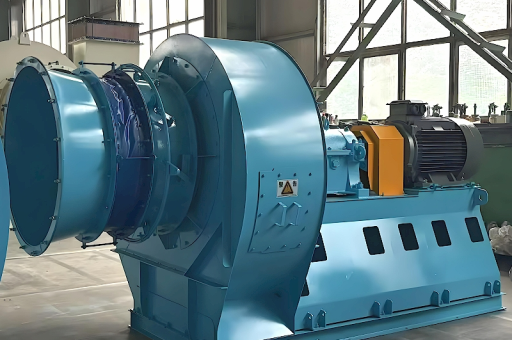
This is a very specific technical request. It describes a type of industrial fan defined by its design (Forward Curved), intake configuration (Single Inlet), application (Exhaust), temperature rating (80°C), and wheel type (Centrifugal).
Let's break down what this specification means, typical applications, and what you should look for when sourcing one.
Decoding the Specification
- Forward Curved (FC): This refers to the shape of the blades on the impeller (fan wheel). The blades curve in the direction of rotation.
- Characteristics: High volume, low to medium pressure, relatively quiet operation.
- Performance Curve: Very steep power curve. This means if there is less resistance (static pressure) in the ductwork (e.g., a dirty filter is replaced, or a damper is opened), the motor can draw significantly more power (amperage), potentially leading to motor overload. Never block the inlet or outlet of a forward-curved fan.
- Single Inlet (SI): The air enters the fan housing from only one side. This is standard for smaller to medium-sized fans. The motor is typically mounted on the opposite side (overhung design). A "Double Inlet" (DI) fan has wheels on both sides of the motor.
- Exhaust: The unit is specifically configured to pull air from a space or process and expel it to the outside or into another exhaust system.
- 80°C (176°F): This is the maximum rated continuous operating temperature of the airstream. This is a moderate temperature. It is not high enough to require special high-temp grease, seals, or shaft cooling, but it is well above ambient room temperature. The motor is likely out of the airstream (belt-driven) or is a standard TEFC motor rated for this ambient.
- Centrifugal Flow Fan: This is the fan type. Air enters the impeller axially (along the shaft) and is discharged radially (outward, perpendicular to the shaft) by centrifugal force.
Typical Applications for this Specific Fan
Because of the "Exhaust" and "80°C" specifications, this fan is ideal for moving moderately hot, clean or slightly dirty air. Common applications include:
- Kitchen Exhaust (Type II - Non-Grease): Removing heat and steam from a commercial kitchen (dishwashing area, prep line). Not for Type I (grease-laden) exhaust unless specified with a grease trap and washdown system.
- Process Cooling Exhaust: Removing hot air from around ovens, furnaces, dryers, or autoclaves.
- Paint Booth Exhaust: Extracting overspray and solvent-laden air (must be explosion-proof if solvents are flammable).
- General Ventilation: Large warehouses or manufacturing facilities where high ceilings trap hot air.
- Fume Exhaust (Low Concentration): Removing hot fumes from a manufacturing process that does not contain corrosive elements (non-stainless steel construction).
Key Considerations for Sourcing
If you need to buy this fan, you must provide these specifics to a supplier (e.g., Greenheck, Twin City, Cincinnati Fan, Soler & Palau, Chicago Blower).
Your RFQ (Request for Quote) should include:
- Airflow (CFM / m³/h): How much air needs to be moved?
- Static Pressure (in. w.g. / Pa): What is the resistance of the ductwork, filters, and dampers?
- Air Density/Temperature: 80°C affects air density. The fan supplier must correct for this. A fan wheel moving 80°C air is moving less mass of air than if it were moving 20°C air. This affects the motor horsepower required.
- Drive Type:
- Belt Driven: Most common for exhaust (allows for speed changes, motor is out of the hot airstream). Preferred for this application.
- Direct Drive (Plenum or Plug Fan): Motor is in the airstream. You must specify that the motor is rated for 80°C ambient.
- Housing Material:
- Steel (G90 Galvanized or Painted): Standard for dry, moderately hot air.
- Aluminum or Stainless Steel (304/316): Only needed if the air is corrosive or if cleanliness is paramount (e.g., food processing).
- Mounting:
- Standing (with feet): For floor mounting.
- Curb Mounted: For roof installation.
- In-Line (Scroll Housing): For duct-mounted installation.
Potential Issues & Advantages
Advantages:
- High volume airflow in a relatively compact package.
- Quiet operation compared to backward-inclined or radial-blade fans.
- Good for general exhaust where pressure is moderate.
Disadvantages (CRITICAL to understand):
- Non-Overloading Motor Risk: As mentioned, if the ductwork is too short or has low resistance, the motor will draw excessive current. You must design the system with enough static pressure or use a motor with a service factor.
- Not for High Static Pressure: If your duct run is long or has many elbows, a backward-inclined or airfoil fan would be more efficient.
- Not for Sticky Particulates: Forward curved blades have a tight curvature that can clog with lint, grease, or dust.
Summary Checklist for Your Purchase
- [ ] Is the airflow specification (CFM) the actual volume at 80°C, or at standard temperature? Get the standard temperature (20°C) CFM and have the supplier do the hot air correction.
- [ ] Is the motor mounted out of the airstream (belt drive)?
- [ ] Is there a thermal overload protection in the motor starter?
- [ ] Is the fan suitable for the filter type (if any) in the system?
- [ ] Is the installation indoor or outdoor? (Outdoor needs a weather cover).
Bottom Line: A "Forward Curved Single Inlet Exhaust 80°C Centrifugal Flow Fan" is a standard, reliable, high-volume, low-to-medium-pressure exhaust fan for moderately hot air. Its success depends on correct system design (CFM vs. Pressure) and ensuring the motor is not overloaded if the duct resistance decreases.





