
This article's table of contents introduction:
- What is it?
- Detailed Breakdown of Features & Benefits
- Typical Specifications (Example)
- Why "Aluminium" specifically? (The Critical Point)
- Would you like information on:
This sounds like you are describing a specific type of industrial fan used in coal-fired power plants or heavy industrial milling processes (like cement or steel). Let's break down the key terms to clarify what this product is and its typical specifications.
What is it?
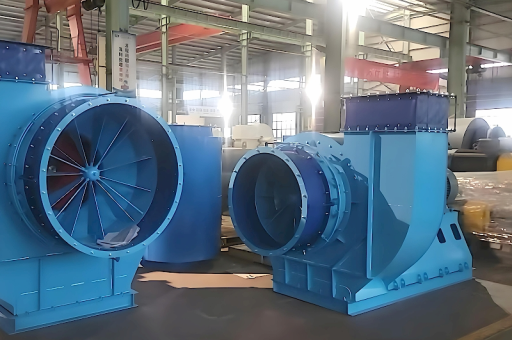
It is a Centrifugal Fan (specifically a High-Pressure type) designed to supply the primary air or induced draft (ID/PA fan) for a coal mill (bowl mill or vertical roller mill). The key differentiators are the Aluminium Alloyed construction and the design focus on Long Lifetime.
Detailed Breakdown of Features & Benefits
High Pressure Centrifugal Fan
- Function: Moves air/gas against high resistance (static pressure).
- Application: In a coal mill, this fan must force enough air into the grinding zone to dry the coal and carry the fine coal powder up to the classifier and then to the burner.
- Blade Type: Typically backward-curved or radial-tipped blades. These are efficient and handle the abrasive nature of coal dust better than forward-curved blades.
Aluminium Alloyed Construction
This is a very specific and somewhat unusual choice for a coal mill fan. Here’s why it’s chosen:
- Spark Resistance (Anti-Spark): This is the primary reason. In a coal mill environment, there is a risk of combustible coal dust clouds and flammable gases (methane). If a steel blade strikes a steel casing or a foreign object, a spark can cause an explosion.
- Aluminium is a non-ferrous material. When struck against iron/steel (common in the mill), it does not produce a spark. It deforms instead.
- Alloyed (e.g., AlMg, AlSi alloys): Pure aluminium is too soft. Alloying elements (Magnesium, Silicon, Manganese) add strength, wear resistance, and castability.
- Corrosion Resistance: Excellent resistance to moisture and mildly corrosive gases found in coal (e.g., sulfate compounds).
- Lower Weight: Easier to balance and less stress on bearings and shafts.
Long Lifetime Design
- Heavy-Duty Bearings: Designed for 24/7 operation (50,000+ hours L10 life).
- Shaft Seals: Special air-purged labyrinth seals prevent coal dust from entering the bearing housing.
- Wear Liners: Even with an aluminium impeller, the casing will have internal wear plates (often abrasion-resistant steel or ceramic tiles) at key impact points (the volute tongue and outlet).
- Precision Balancing: Dynamic balancing to ISO G6.3 or better to minimize vibration and fatigue.
Typical Specifications (Example)
| Parameter | Typical Value / Description |
|---|---|
| Fan Type | Single Inlet, Single Width (SISW) or Double Inlet (DIDW) |
| Impeller Material | Aluminium Alloy (e.g., 5083, 6061-T6, or Cast Al-Alloy) |
| Casing Material | Carbon Steel / Stainless Steel (Inner lined with AR steel or Ceramic) |
| Pressure | 6000 – 15,000 Pa (0.87 – 2.18 psi) |
| Flow Rate | 50,000 – 300,000 m³/h (29,400 – 176,500 CFM) |
| Temperature | Standard: Up to 150°C (302°F) // High-Temp: Up to 350°C (662°F) with cooling shafts |
| Application | Primary Air Fan (PA Fan) for Coal Mill, Mill Exhaust Fan, Baghouse Fan |
| Standards | ISO 1940 (Balance), ISO 5801 (Performance), ATEX (Explosion-proof - Zone 20/21/22) |
Why "Aluminium" specifically? (The Critical Point)
Safety over Efficiency. While steel fans are stronger and cheaper, a steel-on-steel impact in a coal mill is a severe explosion risk.
- ATEX Compliance: In European and many international markets, fans handling combustible dusts (Coal, Flour, Wood) must be ATEX 94/9/EC compliant. An aluminium impeller is a standard solution for this (often designated as "EX" or "Certified Anti-Spark").
- The Trade-off: Aluminium is less strong and less abrasion-resistant than steel. Therefore, the "Long Lifetime" is achieved through:
- Thicker impeller blades (to compensate for lower strength).
- Ceramic coating or liners on the blades and casing.
- Regular inspection (aluminium is prone to fatigue cracking from vibration).
Would you like information on:
- Manufacturers of these specific fans?
- Maintenance procedures (e.g., checking for blade cracks)?
- How to select the right fan for a specific coal mill model (e.g., BHEL, Raymond, Loesche)?
- Cost comparison vs. a standard steel fan?





