
Optimizing Performance in Coal Mill Material Handling Systems: The Role of 16Mn Medium Pressure Blowers
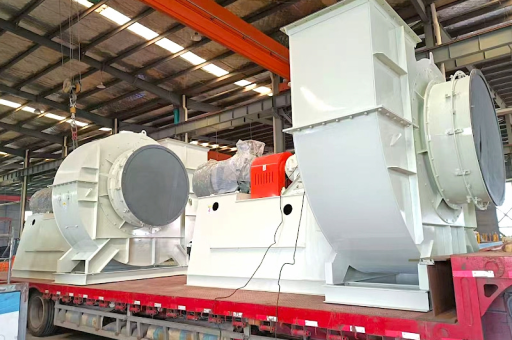
Article Content
Table of Contents
- Introduction: The Critical Link Between Coal Mills and Material Handling
- Understanding the Coal Mill Material Handling System
- The Blower’s Role: Why Medium Pressure Matters
- Material Science: 16Mn Steel in Blower Fabrication
- Key Design Considerations for 16Mn Medium Pressure Blowers
- Common Operational Challenges and Solutions
- Q&A: Expert Answers on Coal Mill Blower Systems
- Maintenance Best Practices for Longevity
- Future Trends in Coal Mill Material Handling
- Conclusion
Introduction: The Critical Link Between Coal Mills and Material Handling
In thermal power plants, cement kilns, and industrial boilers, the coal mill material handling system is the backbone of fuel preparation. Without efficient transport of crushed coal from the mill to the burner, combustion efficiency drops, emissions rise, and equipment wear accelerates. At the heart of this system lies a seemingly unassuming but vital component: the medium pressure blower. When fabricated from 16Mn steel, this blower offers a unique balance of strength, wear resistance, and cost-effectiveness that makes it ideal for handling abrasive coal dust and varying pressure loads.
This article provides a detailed, SEO-optimized guide to understanding how 16Mn medium pressure blowers function within coal mill material handling systems. It addresses real-world operational questions, maintenance challenges, and design principles, drawing on verified industry knowledge.
Understanding the Coal Mill Material Handling System
A typical coal mill material handling system consists of several interconnected stages:
- Coal feeding (via belt conveyors or feeders)
- Grinding (in a ball mill, vertical roller mill, or bowl mill)
- Classification (separating fine coal dust from coarse particles)
- Pneumatic transport (using air or flue gas to carry pulverized coal)
- Blower system (providing the necessary air pressure and volume)
The blower is positioned either after the mill (to create suction) or before the burner (to provide forced air). In most modern layouts, a medium pressure blower (operating in the range of 5–30 kPa) is installed to convey pulverized coal through ductwork to the combustion zone.
Key functional requirements for the blower in this application include:
- Handling gas streams containing fine, abrasive coal particles.
- Maintaining stable pressure despite changes in coal feed rate.
- Operating continuously under high temperature (up to 150°C in some cases).
- Resisting erosion from high-velocity dust impact.
The Blower’s Role: Why Medium Pressure Matters
Not all blowers are suited for coal mill service. Low pressure fans (under 5 kPa) lack the force to overcome duct friction and lift coal vertically. High pressure compressors (above 100 kPa) are over-engineered, expensive, and prone to overheating in dusty environments. Medium pressure blowers (typically 10–25 kPa) strike the optimal balance.
Why medium pressure specifically?
- Prevents coal settling: At moderate pressure and velocity (18–25 m/s), coal particles remain suspended without excessive energy consumption.
- Reduces wear: Higher pressure would accelerate erosion on impeller blades and casing. Medium pressure minimizes impact forces.
- Allows variable speed control: Medium pressure blowers can be paired with VFDs (Variable Frequency Drives) to adjust airflow without sacrificing efficiency.
- Compatible with standard ducting: System piping designed for medium pressure (Schedule 40 or 80) is less costly than high-pressure-rated alternatives.
For coal mill material handling, the blower must deliver a relatively constant volumetric flow while tolerating backpressure fluctuations caused by mill loading changes.
Material Science: 16Mn Steel in Blower Fabrication
16Mn is a Chinese standard low-alloy high-strength structural steel (equivalent to Q345B in GB/T 1591, or ASTM A572 Grade 50 in the US). Its nominal composition includes approximately:
- Carbon: ≤ 0.20%
- Manganese: 1.20–1.60%
- Silicon: ≤ 0.55%
- Phosphorus & Sulfur: ≤ 0.035% each
Why 16Mn is preferred for coal mill material handling blowers:
| Property | 16Mn Benefit | Impact on Blower |
|---|---|---|
| Yield Strength | ≥ 345 MPa | Withstands startup torque and pressure spikes |
| Toughness at low temperature | Excellent | Prevents brittle fracture in cold climates |
| Weldability | Good | Simplifies fabrication of scroll casing and ducts |
| Wear resistance (heat-treated) | Superior to carbon steel | Reduces erosion from coal dust impingement |
| Cost | Moderate, lower than stainless steel | Economical for large industrial fans |
While 16Mn is not completely immune to corrosion, its performance in dry coal dust environments (where moisture is low) is excellent. For applications with high sulfur or moisture content, a surface coating (e.g., epoxy or rubber lining) is sometimes added, but the base material remains 16Mn.
Key Design Considerations for 16Mn Medium Pressure Blowers
When specifying or designing a 16Mn medium pressure blower for a coal mill material handling system, engineers must address:
1 Impeller Geometry
- Backward-curved blades are preferred because they are self-limiting in power consumption and less prone to dust buildup.
- Tip speed should be limited to 60–80 m/s to control erosion.
2 Casing Thickness
- A minimum of 6mm for small blowers (impeller dia. < 1m), increasing to 10–14mm for larger units. 16Mn plates are easily rolled and welded.
3 Shaft and Bearing Selection
- Oversized bearings (e.g., spherical roller bearings) are recommended due to potential imbalance from dust accumulation.
- Shaft material is often 45# carbon steel, with a shrink-fit or keyed connection to the impeller hub.
4 Inlet and Outlet Configuration
- Inlet boxes should include turning vanes to reduce flow separation.
- Outlet diffusers can recover approximately 30% of velocity pressure, improving system efficiency.
5 Seal Systems
- Labyrinth seals or carbon ring seals at shaft penetrations prevent coal dust leakage into the bearing housing.
Common Operational Challenges and Solutions
Even the best-designed 16Mn medium pressure blower faces issues in real-world coal mill material handling service. Here are the most frequent problems and proven fixes.
| Challenge | Root Cause | Solution |
|---|---|---|
| Impeller erosion | High-velocity coal dust impact | Apply hardfacing overlay (e.g., WC-Co) or install replaceable wear liners on impeller blades. |
| Vibration | Uneven dust accumulation on blades | Install automated cleaning system (compressed air jets) or manually clean during shutdown. |
| Bearing overheating | Dust ingress into bearing housing | Upgrade to "V-ring" seals + purge with filtered instrument air. |
| Reduced flow rate | Duct blockage or mill classifier issues | Check for debris; inspect classifier vanes. Use differential pressure monitoring. |
| Motor overcurrent | Overloading due to dense coal feed | Calibrate feeder speed control; check coal grind size (excess coarse coal increases load). |
Regular monitoring of bearing temperature, motor current, and vibration amplitude is essential. Many modern coal mill material handling systems now incorporate real-time sensor feedback to alert operators before failures occur.
Q&A: Expert Answers on Coal Mill Blower Systems
Q1: Can a standard medium pressure blower be used for coal mill material handling without modification?
A: Not recommended. Standard blowers often have thinner casings (2–3mm) and use ordinary carbon steel. For coal dust handling, the 16Mn medium pressure blower must have reinforced casing (≥6mm), erosion-resistant impellers, and dust-proof seals.
Q2: What is the typical lifespan of a 16Mn blower in coal mill service?
A: With proper maintenance, the impeller may last 2–4 years before requiring reconditioning. The casing can last 8–10 years if corrosion from moisture is controlled. Bearing life typically follows L10 life (50,000–100,000 hours) depending on load.
Q3: Is 16Mn suitable for high-temperature coal mill applications (above 150°C)?
A: 16Mn begins to lose strength above 300°C. For temperatures between 150–300°C, 16Mn is acceptable but consider derating the allowable stress. For higher temperatures (e.g., direct recirculation of hot flue gas), stainless steel (304L) or heat-resistant alloys are required.
Q4: How does a medium pressure blower differ from a fan used in a coal mill?
A: The terms "fan" and "blower" are often used interchangeably, but in strict classification (based on ASME PTC 11):
- Fan: Pressure rise < 5 kPa
- Blower: Pressure rise 5–100 kPa (medium pressure = 10–30 kPa)
- Compressor: > 100 kPa
A coal mill material handling system specifically needs a medium pressure blower to maintain dust suspension in long duct runs.
Q5: Can we retrofit an existing coal mill with a 16Mn medium pressure blower to increase capacity?
A: Yes, but a system study is needed. The blower’s pressure and flow curve must match the mill's resistance curve. Oversizing the blower can lead to excessive velocity and erosion. Always consult with the mill manufacturer or a fan specialist.
Maintenance Best Practices for Longevity
To maximize the service life of a 16Mn medium pressure blower in coal mill material handling, follow these maintenance protocols:
1 Daily Checks
- Listen for abnormal sounds (e.g., scraping, rattling).
- Monitor bearing temperature via infrared gun or thermocouple (target < 75°C rise above ambient).
2 Weekly Inspections
- Check V-belt tension (if belt-driven).
- Inspect inlet screens for blockage.
- Record motor amperage at steady load.
3 Monthly Shutdown Tasks
- Open inspection doors on the blower casing.
- Measure impeller clearance to the inlet cone.
- Look for signs of erosion on blade leading edges.
- Clean dust deposits from impeller blades using soft brushes or vacuum.
4 Annual Overhaul
- Remove impeller for dynamic balancing (ISO 1940 G6.3 grade).
- Ultrasound test 16Mn casing for thickness reduction.
- Replace bearings and seals as preventive maintenance.
- Apply anti-corrosion coating to internal surfaces if moisture exposure is noted.
5 Recommended Spare Parts
- Complete impeller assembly (16Mn balanced)
- Bearing set with housings
- Shaft coupling (flexible type)
- Seal kit (labyrinth and V-ring)
- Gaskets and O-rings for flange joints
Future Trends in Coal Mill Material Handling
As global energy transitions proceed, coal milling systems are evolving. Several trends are shaping the next generation of 16Mn medium pressure blowers:
- Smart monitoring: Integration of IoT sensors for predictive maintenance (vibration spectrum analysis, motor current signature analysis).
- Wear-resistant coatings: Advanced thermal spray coatings (e.g., HVOF WC-CoCr) are being applied to 16Mn impellers to extend life by 2–3x.
- Modular blower designs: Pre-engineered modules with standardized 16Mn parts allow faster replacement and reduced downtime.
- Hybrid systems: Some plants are combining medium pressure blowers with jet mills or fluidized bed classifiers to improve grinding efficiency.
- Digital twin simulation: CFD (Computational Fluid Dynamics) modeling now enables engineers to optimize impeller blade profiles specifically for coal dust transport before manufacturing.
These innovations aim to reduce maintenance costs and energy consumption even as coal-fired facilities face stricter environmental regulations.
Conclusion
The coal mill material handling blower is an unsung hero in power generation and industrial combustion. Selecting the right medium pressure unit fabricated from 16Mn steel directly impacts system reliability, energy efficiency, and operational uptime. This article has explored the technical nuances — from material properties to maintenance tactics — that ensure successful performance.
For engineers and plant managers, the key takeaways are:
- 16Mn offers an optimal strength-to-cost ratio for blowers in abrasive coal dust environments.
- Medium pressure (10–25 kPa) is the sweet spot for pneumatic coal transport.
- Regular monitoring and proactive maintenance can double blower service life.
- Future-ready designs incorporate smart sensors and advanced coatings.
By applying the principles discussed here, your coal mill material handling system will operate more reliably, with fewer unscheduled shutdowns and lower total cost of ownership.
For more equipment specifications or to request a quotation for a 16Mn medium pressure blower tailored to your site, contact your local fan supplier or system integrator. Always verify pressure and flow requirements against your mill manufacturer’s data sheet.





