
This article's table of contents introduction:
- Why a Backward-Curved Centrifugal Fan is Best for Dust Extraction
- Key Performance Characteristics to Look For
- Common Applications
- Sizing & Selection: How to Choose the Right Unit
- Example of a High-Performance Unit Spec
- Key Consideration: Air Density
- Final Recommendation
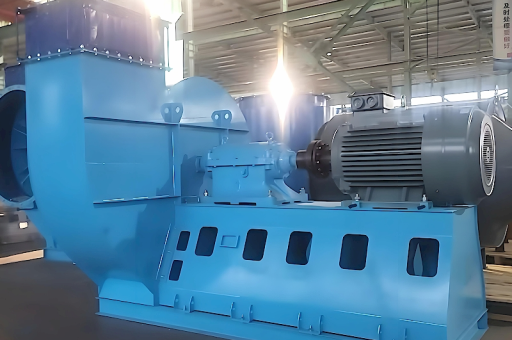
It sounds like you are looking for a high-performance industrial dust extraction fan, specifically a backward-curved centrifugal blower. This is the gold standard for material handling and dust collection in industrial environments.
Below is a detailed breakdown of what makes this configuration ideal, its key features, common applications, and how to select the right one.
Why a Backward-Curved Centrifugal Fan is Best for Dust Extraction
Unlike forward-curved fans (often used in HVAC) or radial (paddle-wheel) fans (used for heavy debris), the backward-curved design offers a unique balance for dust extraction:
- Non-Clogging Design: The blades curve away from the direction of rotation. This shape prevents dust, fibers, and particulate from getting caught on the blades, unlike forward-curved fans which can "load up" and vibrate.
- High Efficiency: These are the most efficient centrifugal fans. They convert more motor power into air movement, resulting in lower energy bills for the same CFM (Cubic Feet per Minute) output.
- Stable Performance Curve: The horsepower (HP) requirement peaks at the fan's rated operating point. If the system pressure drops (e.g., a filter bag is clean), the motor is less likely to overload and burn out.
- High Static Pressure: They are excellent at overcoming the high resistance (static pressure) created by long ductwork, cyclones, and fine dust filters (HEPA, baghouses).
Key Performance Characteristics to Look For
When specifying a "high-performance" unit, focus on these parameters:
- Airflow (CFM): The volume of air moved.
- Static Pressure (SP / inches w.g.): The resistance the fan must overcome. Dust extraction systems typically require 6" to 20"+ w.g.
- Wheel Diameter: Larger wheels move more air at lower RPM, reducing noise and wear.
- Tip Speed: The speed at the edge of the impeller. Higher tip speeds (usually over 150 m/s) are required for handling fine, hazardous dusts.
- Material of Construction: Abrasive dust (wood, metal) requires hardened steel or even AR (Abrasion Resistant) plate. Corrosive dust needs stainless steel (304/316) .
- Spark Resistance: For combustible dust (wood, grain, metal), look for non-sparking aluminum or bronze impellers with a steel housing.
Common Applications
This type of fan is specifically designed for:
- Woodworking Shops (Sawdust, chips, sanding dust)
- Welding & Plasma Tables (Fume extraction)
- Cement & Concrete Plants (Dry powder handling)
- Grain Elevators & Feed Mills (Agricultural dust)
- Pharmaceutical & Chemical Processing (Fine powder and tablet dedusting)
- Metalworking (Grinding dust, metal shavings)
Sizing & Selection: How to Choose the Right Unit
To avoid buying a fan that is too small (poor collection) or too big (wasted energy, overheating), you need three numbers:
- Required CFM (Airflow): Calculate based on the number of machine ports. Example: A 6" dust port needs approx. 400-500 CFM.
- System Static Pressure (SP): This is the sum of resistance from ductwork length, elbows, filters, and cyclones. Measured in inches of water gauge (in.w.g.).
- Material Type: Is it fine dust (e.g., sanding) or bulky debris (e.g., wood chips)? Backward-curved handles fine dust best.
Pro Tip: Most high-performance dust extraction fans operate at 1750 RPM or 3500 RPM (motor speed). For very high static pressure (over 15" w.g.), a belt-driven unit is preferred because you can change the pulley ratio to fine-tune performance.
Example of a High-Performance Unit Spec
A typical high-performance model (like from manufacturers such as New York Blower, Cincinnati Fan, or Greenheck for industrial use) might look like this:
- Type: Backward-Curved Centrifugal (BC)
- Wheel Size: 16" diameter
- Motor: 10 HP, 3-Phase, 230/460V
- Airflow: 3,000 CFM
- Static Pressure: 12" w.g.
- Inlet: 10" diameter
- Outlet: 10" x 8" rectangular
- Construction: Heavy-duty steel with sealed bearing housing to prevent dust ingress.
Key Consideration: Air Density
High-performance fans are rated for Standard Air (0.075 lb/ft³ at 70°F). If you are moving hot air (e.g., from a welding fume extractor) or very dusty air, the air density changes. You must correct your CFM and SP requirements for altitude and temperature, or the motor may overload. Manufacturers provide fan curves for this.
Final Recommendation
If you are buying one:
- For heavy wood/metal dust: Look for Backward-Inclined (BI) or Backward-Curved (BC) .
- For fine, hazardous dust: Look for Airfoil (AF) blades (a variation of backward-curved) or Backward-Curved with a non-sparking wheel.
- Always ensure it is a "Material Handling" or "Dust Extraction" model, not a general HVAC fan.
Action Step: Give your supplier these four numbers:
- Target CFM
- Target Static Pressure (in.w.g.)
- Dust Type (abrasive, combustible, sticky)
- Voltage available (Single phase or 3-phase)
This will ensure you get the correct high-performance backward centrifugal blower for your industrial dust extraction system.





