
This article's table of contents introduction:
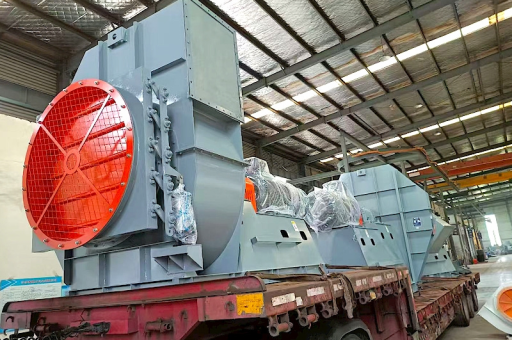
- What is a "Material Handling" Centrifugal Fan?
- The "Anti-Fraying" Requirement
- Drying & Ventilating Functions
- Common Industrial Applications
- Typical Specifications (What to look for when ordering)
- Example Sizing (General Guide)
- Quick Recommendation:
It sounds like you're looking for a Material Handling Centrifugal Blower Fan designed for applications involving anti-fraying, drying, and ventilation.
This is a specific industrial fan category used to move bulk materials, trim waste, or granular products through ductwork without the fan blades getting tangled or damaged.
Here is a breakdown of what this means, the key design features you need, and common applications:
What is a "Material Handling" Centrifugal Fan?
Unlike standard HVAC fans that move clean air, material handling fans are built with a radial (paddlewheel) or backward-inclined wheel that allows air to carry particles, dust, fibers, and bulk solids through the fan housing.
The "Anti-Fraying" Requirement
"Anti-fraying" is critical when handling:
- Fibrous materials (textile lint, carpet fibers, paper trim)
- Stringy waste (plastic bags, shrink wrap, strapping)
- Long materials (wood shavings, hay, chopped fiberglass)
Key Anti-Fraying Features:
- Blunt/Thick Leading Edges: Blades are thick (often 3/16" to 1/2" steel) and have a radiused or flat leading edge (not sharp) to prevent cutting fibers as they pass.
- Open Inlet (No Inlet Cone): Allows long materials to enter the wheel without being pinched or sheared.
- Wide Housing Clearance: The gap between the wheel and the housing scroll is wider than standard fans to prevent material packing.
- Smooth Interior: Welds are ground smooth; no sharp edges or ledges where fibers can snag and "fray" (accumulate).
- Liners (Optional): Can be lined with plastic (UHMW) or rubber to reduce friction and prevent material from sticking.
Drying & Ventilating Functions
While moving materials, this fan also handles the process air:
- Drying: The high-velocity air stream strips moisture from the surface of materials (e.g., washed plastic flakes, laundered textiles, freshly cut wood chips).
- Ventilation: Removes hot, humid, or dust-laden air from the process area (e.g., paper dust exhaust, textile mill ventilation).
Common Industrial Applications
These fans are standard in:
- Textile Industry: Moving cotton lint, synthetic fibers, and fabric trim.
- Paper & Printing: Conveying paper trim (chopped or long strips), dust collection.
- Plastics Recycling: Moving shredded PET bottles, film, or regrind (drying after washing).
- Woodworking: Chips, shavings, and sawdust (often with a spark-resistant construction).
- Agriculture: Moving hay, straw, grains, or feed pellets.
- General Manufacturing: Conveying plastic strapping, cardboard scrap, or rubber dust.
Typical Specifications (What to look for when ordering)
To ensure you get an "anti-fraying" model, ask for these specs:
| Feature | Standard HVAC Fan | Material Handling Fan (Anti-Fray) |
|---|---|---|
| Wheel Type | Airfoil, Forward Curved | Radial (Paddlewheel) or Backward Inclined (heavy duty) |
| Blade Shape | Thin, curved, aerodynamic | Flat, thick, straight (radial) or curved (B.I.) |
| Inlet | Smooth converging cone | Flanged plate or open (no cone) |
| Housing | Light gauge steel | Heavy gauge (10-7 ga.) with wear liners |
| Speed | High RPM (for pressure) | Moderate RPM (for material velocity) |
| Standard | AMCA Class I, II | AMCA Class III or IV |
Example Sizing (General Guide)
- Airflow (CFM): Determine by the material conveying velocity (typically 3500-5000 FPM for light fibers, 5500-7000 FPM for heavy scrap).
- Static Pressure (SP): Depends on duct length and filter load (often 6" to 20" w.g. for industrial systems).
- Motor HP: Typically 5 HP to 100 HP+ depending on density of material.
Quick Recommendation:
If you are designing a system for textile trim or paper fibers, request a Heavy-Duty Radial Paddlewheel Fan with an open inlet and thick, blunt blades. Avoid forward-curved fans (they clog) and avoid sharp airfoil blades (they fray fibers).
Would you like help calculating the CFM / Static Pressure for your specific drying or ventilation application? (Provide material type, weight, and duct length).





