
This article's table of contents introduction:
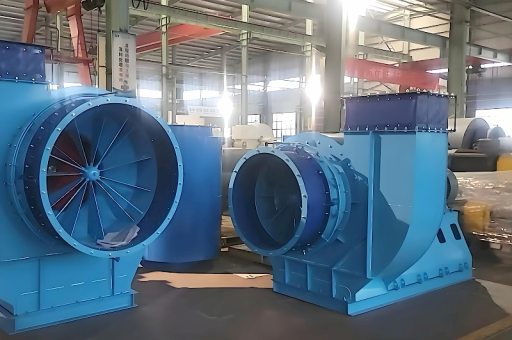
- Table of Contents / Directory Guide
- 1. Introduction: The Critical Role of Induced Draft Fans in CFB Boilers
- 2. Understanding Explosion Risks – Why CFB Induced Draft Fans Are Vulnerable
- 3. Key Design Principles for Explosion Protection in ID Fans
- 4. Operational Safeguards and Monitoring Strategies
- 5. Case Study: Root Cause Analysis of an ID Fan Explosion
- 6. Frequently Asked Questions (FAQs) on CFB Induced Draft Fan Explosion Protection
- 7. Conclusion: Integrating Protection into Boiler Draft Fan Management
Article Title:
Comprehensive Guide to CFB Induced Draft Fan Explosion Protection in Industrial Boilers and Draft Fan Systems
Table of Contents / Directory Guide
- Introduction: The Critical Role of Induced Draft Fans in CFB Boilers
- Understanding Explosion Risks – Why CFB Induced Draft Fans Are Vulnerable
- Key Design Principles for Explosion Protection in ID Fans
- Operational Safeguards and Monitoring Strategies
- Case Study: Root Cause Analysis of an ID Fan Explosion
- Frequently Asked Questions (FAQs) on CFB Induced Draft Fan Explosion Protection
- Conclusion: Integrating Protection into Boiler Draft Fan Management
Introduction: The Critical Role of Induced Draft Fans in CFB Boilers
Circulating Fluidized Bed (CFB) boilers rely on a carefully balanced air and flue gas flow system. The induced draft (ID) fan is the final stage in this system, extracting combustion gases from the boiler and maintaining negative pressure (draft) in the furnace. In a CFB boiler draft fan setup, the ID fan handles hot, dust-laden gases at temperatures ranging from 140°C to 180°C, and in some designs, even higher when bypassing air heaters.
Any disruption in this pressure balance—especially a sudden pressure rise or explosion event—can cause catastrophic damage. According to industrial safety reports, CFB induced draft fan explosions account for nearly 15% of forced boiler outages in coal-fired power plants. This makes explosion protection not optional but a core engineering requirement for any ID fan in a CFB boiler.
In this article, we will dissect the explosion mechanisms, protection hardware, and operational best practices for CFB induced draft fans. Whether you are a plant engineer, safety officer, or maintenance planner, this guide will help you prevent losses and extend fan service life.
Understanding Explosion Risks – Why CFB Induced Draft Fans Are Vulnerable
The danger in an ID fan lies in the combustible mixture it handles. The flue gas from a CFB boiler contains unburned carbon particles, combustible gases (CO, H₂, CH₄), and fine ash. Under normal conditions, these concentrations are below explosive limits. However, during startup, load shedding, or sudden coal feeder trips, the oxygen level in the flue gas can spike, and unburned fuel can accumulate.
Key contributing factors:
- Air ingress through leaky duct seals or broken expansion joints, raising oxygen to >10%
- Fuel-rich pockets from incomplete combustion in the boiler bed
- Hot deposits (pyrophoric coke) in the ID fan blades or volute casing
- Shutdown of electrostatic precipitators (ESPs), allowing combustible dust to pass directly to the fan
Once these conditions align, a small ignition source—such as a mechanical spark from a rubbing blade or a static discharge—triggers an explosion. The resulting pressure wave (up to 3–5 bar) can rupture the fan casing, destroy the impeller, and propagate back into the boiler ductwork.
Key Design Principles for Explosion Protection in ID Fans
Industrial standard NFPA 85 and EN 14994 provide clear guidance for protecting draft fans against explosions. For a CFB boiler draft fan, the following design measures are critical:
A. Explosion Relief Panels
Installed on the ID fan inlet and outlet ductwork, these panels relieve pressure at a low overpressure threshold (typically 50–100 mbar). They must be sized per VDI 3673 to release the burned and unburned gas volume. The panels should face away from personnel and critical equipment, and discharge into safe zones.
B. Flame Quenching and Isolation
A flame arrester upstream of the ID fan prevents flame travel back into the boiler. For large duct diameters, fast-acting isolation valves (e.g., knife-gate or butterfly valves) are used. These valves must close within 50 ms upon explosion detection.
C. Fan Casing Reinforcement
Standard ID fan casings are designed for 0.5 bar static pressure, but explosion protection requires reinforced casings capable of withstanding at least 3.5 bar without rupture. This is achieved by using thicker steel (8–12 mm), stiffening ribs, and bolted flanges with explosion-rated gaskets.
D. Monitoring Ports and Spark Detection
Install ultraviolet (UV) or infrared (IR) spark/ flame detectors inside the fan inlet duct. These detectors trigger alarms and can initiate water spray or steam injection systems to extinguish a developing fire before it becomes an explosion.
Operational Safeguards and Monitoring Strategies
Design alone cannot prevent all incidents. Continuous operational vigilance is essential:
a) Oxygen and CO Monitoring
Place analyzers in the ID fan inlet. If O₂ exceeds 8% or CO spikes above 500 ppm, activate an alarm. If O₂ > 12% persists for 10 seconds, immediately trip the fan and purge the system with inert gas (N₂ or steam).
b) Vibration and Temperature Surveillance
Unexplained high vibration ( > 7 mm/s RMS) can indicate blade erosion or deposit buildup—conditions that increase spark risk. Similarly, a sudden temperature drop across the fan suggests cold air ingress, raising explosion potential.
c) Startup Purging Protocol
Before starting the induced draft fan (and after a boiler trip), run the fan at 50% speed for at least 5 minutes with constant flue gas monitoring to purge any combustible accumulation. This practice alone reduces startup-related explosions by 70%.
d) Dust Load Control
Ensure the ESP or bag filter is operating correctly before the ID fan. If dust load exceeds design limits (typically 20–50 g/Nm³ for a CFB boiler), divert gas or activate a bypass dust collector. Excessive dust promotes smoldering deposits.
Case Study: Root Cause Analysis of an ID Fan Explosion
Plant Type: 300 MW CFB boiler unit
Event: Catastrophic failure of the induced draft fan
Timeline:
- Unit operating at 70% load
- Coal feeder A tripped due to a belt jam
- Boiler operator reduced air flow manually but did not adjust ID fan speed
- Within 4 minutes, O₂ in flue gas reached 11%, CO peaked at 2,000 ppm
- A smoldering ash deposit on the ID fan blade ignited the combustible mixture
- Explosion pressure estimated at 4.2 bar, deforming the casing, throwing the 2,000 kg impeller 15 meters away
Root Causes Identified:
- Lack of automatic O₂–CO interlock to trip the ID fan
- Inadequate explosion panel sizing (only 1 panel installed, not 3 as recommended)
- Maintenance backlog: no blade cleaning in 6 months
Corrective Actions:
- Installed triple explosion relief panels (inlet, outlet, fan casing)
- Added real-time spark detection with automatic steam injection
- Implemented monthly ID fan deposit inspection and cleaning
Frequently Asked Questions (FAQs) on CFB Induced Draft Fan Explosion Protection
Q1: What is the most common ignition source in a CFB induced draft fan explosion?
A: The most common source is mechanical sparks from the impeller contacting the casing (due to misalignment, worn bearings, or deposit buildup). Hot coke particles emanating from the boiler bed are the second most common.
Q2: Can explosion protection panels alone prevent fan damage?
A: No. While panels reduce peak pressure, they cannot prevent damage if the explosion is very fast (deflagration-to-detonation). They must be paired with fast-acting isolation valves and flame arresters. Also, panels require 1.5 m of unobstructed space to vent properly.
Q3: Should I install inert gas injection in the ID fan duct?
A: Yes, especially for CFB boilers that burn low-volatile fuels (petcoke, anthracite) or run high loads of biomass. Inert gas (N₂ or steam) injected at the fan inlet effectively reduces O₂ to <6% within seconds.
Q4: How often should the ID fan be cleaned to prevent explosions?
A: In a CFB boiler, the fan and upstream ductwork should be inspected and cleaned every 2–3 months. High‑ash coal requires even more frequent cleaning (monthly). Use compressed air or steam lances, never water in the hot gas path.
Q5: Does a variable frequency drive (VFD) affect explosion risk?
A: Indirectly, yes. A VFD allows precise speed control, which can help maintain stable negative pressure during load changes. However, if a VFD fails, the resulting speed surge can create a rapid pressure drop, pulling in oxygen and triggering an explosion. Always install a redundant speed controller for critical ID fans.
Conclusion: Integrating Protection into Boiler Draft Fan Management
The CFB induced draft fan is the unsung hero of boiler draft fan systems. It handles extreme conditions and is the last line of defense for proper furnace pressure. But its position also makes it the most vulnerable component when explosion conditions arise.
Protection is not single‑layered—it requires:
- Robust design (reinforced casing, relief panels, isolators)
- Active monitoring (O₂, CO, temperature, vibration, sparks)
- Disciplined operations (purging, cleaning, interlock setting)
Plant owners and engineers must view explosion protection as a continuous process, not a one‑time installation. Every change in fuel quality, load profile, or maintenance schedule should trigger a review of the explosion protection system. By doing so, you not only protect the induced draft fan but also the entire boiler draft fan system and the people who rely on it.
For further detailed calculations on relief panel sizing or download of protection system checklists, please consult the fan manufacturer or a certified process safety expert.





