
This article's table of contents introduction:
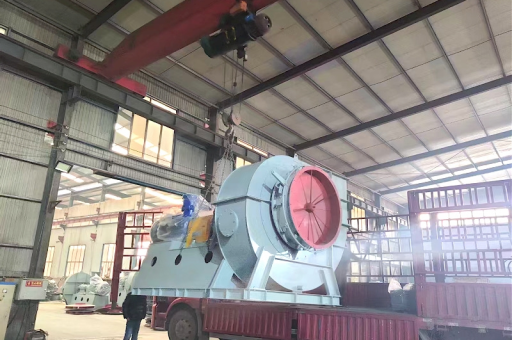
- What is a Backward Curved Centrifugal Fan?
- What is an Induced Draft (ID) Fan?
- "Green" – What Does It Mean Here?
- Typical Applications (Why you need this combo)
- What to Look for in a "Green" Backward Curved ID Fan
- Major Manufacturers (Examples)
- Summary Table
It sounds like you are looking for a specific type of industrial fan: a Backward Curved Centrifugal Fan designed for Induced Draft (ID) service, likely with a focus on energy efficiency ("Green") or a specific manufacturer.
Here is a breakdown of what that combination of terms means, why it is used, and what to look for.
What is a Backward Curved Centrifugal Fan?
This is the most common type of centrifugal fan for high-efficiency, high-pressure applications.
- How it works: Air enters the center (inlet) and is spun outward by blades that curve away from the direction of rotation.
- Key Characteristics:
- High Efficiency: Typically 80-85% static efficiency.
- Non-Overloading Power Curve: This is critical. As airflow increases, the motor power draw peaks and then drops. This prevents the motor from burning out if ductwork is open or clogged.
- Higher Speed: Runs at higher RPMs compared to forward-curved fans for the same duty.
What is an Induced Draft (ID) Fan?
This describes the fan's location and function in a system, most commonly in boilers, thermal oxidizers, or furnaces.
- Location: Installed after the process (e.g., between the air pollution control system and the stack).
- Function: It pulls (induces) a negative pressure or vacuum through the system, drawing flue gases from the boiler/furnace, through scrubbers or baghouses, and out the stack.
- The Challenge: ID fans handle hot, dirty, and often corrosive gases. The fan's construction must withstand high temperatures (up to 400°C/750°F or more), erosion from dust, and corrosion from acidic condensates.
"Green" – What Does It Mean Here?
"Green" in this context usually refers to three things:
- Energy Efficiency (EPA & ESG Compliance): Backward curved fans are inherently the most efficient design, reducing electricity consumption (kWh) and CO2 emissions.
- Wheel Accessories: Features like Hollow Airfoil (HAF) blades are the "greenest" option. They are the most aerodynamic and efficient shape, but also more expensive and less robust for dirty gases. Backward Inclined (BI) or Single Thickness (SISW) are more common for rugged ID service.
- Reduced Carbon Footprint: A properly specified ID fan reduces the pressure drop the boiler must overcome, improving the overall thermal efficiency of the plant.
Typical Applications (Why you need this combo)
- Utility and Industrial Boilers: Coal, biomass, or waste-to-energy plants.
- Cement Plants: Kiln exhaust (very dusty, high temp).
- Steel Mills: Furnace exhaust.
- Chemical Processing: Thermal oxidizers and incinerators.
- Pulp & Paper: Recovery boiler ID fans.
What to Look for in a "Green" Backward Curved ID Fan
When sourcing this fan, look for these specific features to ensure it meets "Green" performance and durability standards:
- Efficiency Testing: Must meet AMCA 210 (Air Movement and Control Association) certification for efficiency.
- High-Temperature Construction:
- Shaft Cooling: A cooling disc (fan wheel side) and/or a cooling wheel on the shaft to prevent heat from traveling to the bearings.
- Expansion Joints: On the inlet cone to handle thermal growth.
- Metallurgy: Carbon steel may suffice for low temps, but Corten, Stainless Steel (304/316), or Inconel are needed for high temps and corrosion.
- Wear Protection:
- Hardsurfacing: Tungsten carbide or ceramic weld overlay on the leading edges of the blades.
- Liner Plates: Replaceable wear plates in the housing and on the wheel.
- Drive & Control:
- VFD (Variable Frequency Drive): The "greenest" way to run an ID fan. It allows you to precisely match the fan speed to the boiler's load, saving massive amounts of energy compared to dampers or inlet vanes.
- High-Efficiency Motor: IE4 (Super Premium Efficiency) or IE5 (Ultra Premium) motors.
Major Manufacturers (Examples)
- Greenheck: (Popular name, but they make general ventilation fans, not typically heavy industrial ID fans).
- Industrial Specialists: Shenyang Blower Works (China), Howden (Global), New York Blower (USA), TLT Turbo (Germany), Beijing Huifeng (China).
- Note on "Green": If you saw this term in a catalog, it might be a specific product line or marketing name from a smaller OEM. More commonly, the focus is on "High-Efficiency" or "Airfoil" design.
Summary Table
| Feature | Standard Fan | Your "Green" Backward Curved ID Fan |
|---|---|---|
| Blade Type | Forward Curved or Radial | Backward Inclined (BI) or Hollow Airfoil (HAF) |
| Efficiency | 60-70% | 85%+ |
| Power Curve | Overloading | Non-Overloading (Safe) |
| Gas Stream | Clean Air | Hot, Dirty, Corrosive |
| Control | Damper / Inlet Vane | VFD (Variable Frequency Drive) |
| Cost | Low initial | Higher initial, much lower operating cost |
My Recommendation for you: If you need to specify a "Green" Backward Curved Induced Draft fan, focus on the Backward Inclined (SISW) or Hollow Airfoil design with a VFD drive, high-temperature shaft cooling, and wear-resistant coatings. This will give you the best ROI (Return on Investment) through energy savings and reliability.





