
The Ultimate Guide to Building Ventilation Air Supply Fan Draft Induction Blower 3 Phase Systems: Efficiency, Selection, and Optimization
Table of Contents
- Introduction: Why 3-Phase Ventilation Systems Dominate Industrial Buildings
- What is a Building Ventilation Air Supply Fan?
- Understanding Draft Induction Blower Technology
- The Role of 3-Phase Power in Fan and Blower Performance
- Key Differences: Air Supply Fan vs. Draft Induction Blower
- How to Select the Right 3-Phase Fan for Your Building
- Installation Best Practices for Ventilation Systems
- Maintenance and Troubleshooting Common Issues
- Energy Efficiency and Cost Savings with 3-Phase Blowers
- Frequently Asked Questions (FAQ)
- Conclusion: Future Trends in Industrial Ventilation
Introduction: Why 3-Phase Ventilation Systems Dominate Industrial Buildings
In modern industrial and commercial buildings, proper ventilation is not just a comfort requirement—it is a critical safety and operational necessity. The combination of a building ventilation air supply fan with a draft induction blower powered by 3-phase electricity represents the gold standard for moving large volumes of air efficiently. Unlike single-phase motors, 3-phase motors provide higher torque, smoother operation, and greater energy efficiency under continuous heavy loads.
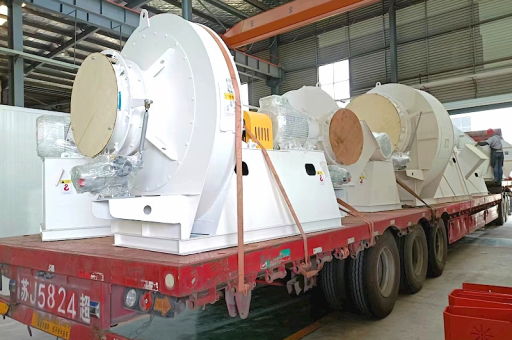
This article will guide you through the technical nuances of these systems, helping engineers, facility managers, and HVAC professionals make informed decisions about equipment selection, installation, and maintenance. We will address real-world questions that often arise on forums and technical discussions related to "fan" performance in industrial ventilation contexts.
What is a Building Ventilation Air Supply Fan?
A building ventilation air supply fan is a mechanical device designed to introduce fresh outdoor air into a building’s interior, maintaining acceptable indoor air quality (IAQ). It is the primary component in positive pressure ventilation systems, where air is pushed into the space, forcing stale air out through exhaust points.
Key Characteristics:
- Airflow Rate: Measured in CFM (cubic feet per minute) or m³/h.
- Static Pressure: Measured in inches of water gauge (in. WG) or Pascals.
- Fan Type: Centrifugal (forward-curved, backward-curved, or airfoil) or axial (propeller, tubeaxial, vaneaxial).
- Drive Mechanism: Direct drive or belt-driven.
- Motor Type: Typically a 3-phase induction motor for industrial applications.
Common Applications:
- Warehouse ventilation systems
- Manufacturing plant air makeup units
- Commercial kitchen exhaust makeup air
- Data center cooling supply
- Parking garage ventilation
Understanding Draft Induction Blower Technology
A draft induction blower, sometimes referred to as an induced draft fan, is a specialized fan that creates negative pressure by pulling air or gases through a system. In building ventilation, it is often used in conjunction with an air supply fan to balance pressure and ensure efficient air movement through ductwork or process equipment.
How Draft Induction Blowers Work:
- The blower induces airflow by drawing air through an inlet, accelerating it through an impeller, and discharging it at high velocity.
- In combustion applications (boilers, furnaces), it draws flue gases through the heat exchanger. In ventilation, it helps exhaust contaminated air from specific zones.
- 3-phase power is essential for these blowers because they often start under heavy load and require consistent torque.
Typical Specifications:
- Impeller Design: Radial or backward-inclined blades for handling particulate-laden air.
- Housing Material: Carbon steel, stainless steel, or fiberglass-reinforced plastic (FRP) for corrosive environments.
- Temperature Rating: Standard models up to 200°C; high-temperature versions up to 600°C.
The Role of 3-Phase Power in Fan and Blower Performance
The phrase "3 phase" refers to a type of alternating current (AC) electrical power system where three separate currents are offset in time by 120 electrical degrees. This configuration offers distinct advantages for ventilation equipment:
| Aspect | Single-Phase | 3-Phase |
|---|---|---|
| Torque | Lower starting torque | High starting torque |
| Efficiency | 70–80% typical | 85–95% typical |
| Motor Size | Limited to ~10 HP | Up to thousands of HP |
| Power Factor | Lower | Higher, easier to correct |
| Ripple/Noise | Higher vibration | Smoother operation |
Why 3-Phase is Preferred for Fans and Blowers:
- Reduced Motor Heating: 3-phase motors run cooler, extending insulation life.
- Higher Power Density: A smaller 3-phase motor can deliver the same power as a larger single-phase motor.
- Variable Speed Compatibility: 3-phase motors are easily controlled by Variable Frequency Drives (VFDs), enabling precise airflow modulation.
- Lower Wiring Cost: For equivalent power, 3-phase wiring uses smaller conductors than single-phase.
Question: Can I use a single-phase fan instead of a 3-phase blower for a large warehouse? Answer: Not recommended. Large warehouses typically require airflow above 50,000 CFM with static pressures over 2 in. WG. Single-phase motors above 5 HP become inefficient and require high startup currents that can cause voltage drops. A 3-phase system is far more cost-effective and reliable.
Key Differences: Air Supply Fan vs. Draft Induction Blower
While both move air, their roles in a building ventilation system are distinct:
| Feature | Air Supply Fan | Draft Induction Blower |
|---|---|---|
| Primary Function | Push fresh air into the building | Pull air/gases out of a system |
| Pressure Condition | Positive pressure downstream | Negative pressure upstream |
| Typical Location | Air intake or duct supply side | Exhaust stack or process outlet |
| Impeller Design | Forward-curved or airfoil (low noise) | Radial or backward-inclined (handles dust) |
| Leakage Sensitivity | Moderate | High (seals critical) |
When to Use Each:
- Air Supply Fan: When you need to pressurize a cleanroom, deliver makeup air, or maintain comfort conditions.
- Draft Induction Blower: When extracting heat, fumes, or particulate from furnaces, dryers, or chemical processes.
How to Select the Right 3-Phase Fan for Your Building
Selection involves matching the fan curve to your system’s resistance curve. Follow this structured approach:
Step 1: Determine Required Airflow
- Use ASHRAE Standard 62.1 for ventilation rates (e.g., 20 CFM per person in offices).
- For industrial spaces, consider process exhaust requirements.
Step 2: Calculate Static Pressure
- Sum duct friction losses, filter resistance, coils, dampers, and discharge losses.
- Use the Darcy-Weisbach equation or ductulator for accurate estimates.
Step 3: Select Fan Type Based on Application
- Low pressure (< 5 in. WG): Axial fans (propeller or tubeaxial).
- Medium pressure (5–15 in. WG): Centrifugal, backward-curved, or airfoil.
- High pressure (> 15 in. WG): Centrifugal, radial-bladed, or high-efficiency industrial fans.
Step 4: Choose 3-Phase Motor and Drive
- Motor speed: 1800 RPM or 3600 RPM (4-pole or 2-pole).
- VFD selection: Ensure harmonic filtering for sensitive electronic environments.
Step 5: Verify Environmental Conditions
- Temperature, humidity, corrosives, and explosive atmospheres (ATEX or NEC Class I/II).
Installation Best Practices for Ventilation Systems
Proper installation ensures that your 3-phase building ventilation air supply fan and draft induction blower operate at peak performance.
Foundation and Mounting:
- Use inertia bases or spring isolators to minimize vibration transmission.
- Anchor the fan to a concrete pad or steel frame that is level within 0.001 inches per foot.
Ductwork Connections:
- Install flexible connectors (neoprene or fabric) to decouple fan vibrations from ducts.
- Avoid sharp elbows within 5 duct diameters of the fan inlet.
Electrical Connections:
- Ensure proper phase rotation (use a phase rotation meter before startup).
- Size conductors per NEC Table 310.15(B)(16) with 125% ampacity for continuous load.
- Install disconnect switches within sight of the equipment.
Maintenance and Troubleshooting Common Issues
Regular maintenance extends the life of your 3-phase fan and blower systems.
Routine Tasks:
- Weekly: Check vibration levels (acceleration or velocity).
- Monthly: Inspect belts (tension and alignment) if belt-driven.
- Quarterly: Grease bearings per manufacturer spec (do not over-lubricate).
- Annually: Megger test motor windings (minimum 1 MΩ per kV).
Common Problems and Solutions:
| Issue | Cause | Solution |
|---|---|---|
| Motor trips on overload | Incorrect phase rotation | Swap any two phase wires |
| Excessive vibration | Worn bearings or unbalanced impeller | Balance impeller or replace bearings |
| Low airflow | Dirty filters or slipped belts | Clean filters, adjust belt tension |
| Motor overheating | Phase imbalance > 2% | Check supply voltage on all three phases |
Energy Efficiency and Cost Savings with 3-Phase Blowers
Energy costs represent up to 70% of the total lifecycle cost of an industrial fan. 3-phase systems offer several levers for savings:
Variable Frequency Drives (VFDs):
- Reduce motor speed by 20% → reduces power consumption by nearly 50% (affinity laws).
- Soft-start eliminates high inrush currents, reducing demand charges.
Premium Efficiency Motors:
- IE3 or IE4 efficiency class motors reduce losses by 20–30% compared to standard motors.
- Payback period is typically 1–3 years in continuous operation.
System Optimization:
- Use draft induction blowers with adjustable inlet vanes or variable speed.
- Implement demand-controlled ventilation (CO₂ sensors) to modulate fan output.
Frequently Asked Questions (FAQ)
Q: What is the difference between a draft induction blower and an exhaust fan? A: An exhaust fan simply pushes air out. A draft induction blower specifically creates a negative pressure to pull gases through a system, often against higher resistance. It is more robust and typically 3-phase.
Q: Can I run a 3-phase fan on a single-phase supply with a phase converter? A: Yes, but it is inefficient. Rotary or static phase converters introduce voltage imbalance and reduce torque. For permanent installations, a proper 3-phase service or VFD with single-phase input is better.
Q: How do I size a building ventilation air supply fan for a 100,000 sq. ft. warehouse? A: Calculate total ventilation rate (e.g., 0.05 CFM per sq. ft.) → 5,000 CFM. Then add exhaust makeup (e.g., welding booths, forklift charging stations). The 3-phase motor should be sized for the highest static pressure point.
Q: Why does my draft induction blower vibrate only after 10 minutes of operation? A: Likely thermal expansion causing misalignment. Check coupling alignment when hot, and consider flexible shaft couplings.
Q: Are 3-phase blowers noisier than single-phase? A: No. 3-phase motors inherently produce less electrical noise and vibration. Fan noise depends on blade design, housing, and ductwork.
Conclusion: Future Trends in Industrial Ventilation
The integration of building ventilation air supply fans and draft induction blowers powered by 3-phase electricity will continue to evolve with smart building technologies. The rise of IoT-enabled fan arrays, where multiple smaller 3-phase fans operate in parallel, allows for granular control and redundancy. Additionally, demand for high-efficiency EC (electronically commutated) motors that accept 3-phase input is growing, though traditional induction motors remain the workhorse for heavy-duty industrial applications.
When selecting your next ventilation system, prioritize total cost of ownership over initial price. A properly matched 3-phase fan and blower combination will deliver decades of reliable service, lower energy bills, and improved indoor air quality. For detailed specifications or customized solutions, consult a manufacturer such as fan, which specializes in industrial ventilation equipment.
This guide provides general technical information. Always consult local building codes and electrical safety standards before installation.





