
This article's table of contents introduction:
- Article Directory
- Introduction: The Unsung Hero of Industrial Kiln Operations
- What Defines a “Medium Pressure Heavy Duty Nickel Iron Kiln Industrial Centrifugal Fan”?
- Technical Specifications & Design Engineering
- Why Nickel Iron? Corrosion, Erosion & Thermal Shock Resistance
- Industrial Applications: Where These Fans Excel
- Performance Optimization & Energy Efficiency
- Maintenance Best Practices for Longevity
- Frequently Asked Questions (FAQs)
- Conclusion: Selecting the Right Fan for Your Kiln Process
*The Critical Role of Medium Pressure Heavy Duty Nickel Iron Kiln Industrial Centrifugal Fans in High-Temperature Manufacturing*
Article Directory
- Introduction: The Unsung Hero of Industrial Kiln Operations
- What Defines a “Medium Pressure Heavy Duty Nickel Iron Kiln Industrial Centrifugal Fan”?
- Key Material: Nickel Iron Alloy
- Pressure Classification & Duty Cycle
- Technical Specifications & Design Engineering
- Impeller Aerodynamics
- Bearing & Shaft Sealing Systems
- Why Nickel Iron? Corrosion, Erosion & Thermal Shock Resistance
- Industrial Applications: Where These Fans Excel
- Performance Optimization & Energy Efficiency
- Maintenance Best Practices for Longevity
- Frequently Asked Questions (FAQs)
- Conclusion: Selecting the Right Fan for Your Kiln Process
Introduction: The Unsung Hero of Industrial Kiln Operations
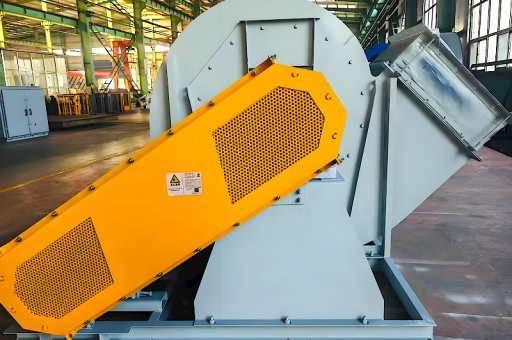
In the aggressive environment of a rotary or vertical kiln—where temperatures fluctuate between 200°C and 1200°C, and airborne particulates include abrasive clinker dust and corrosive alkali compounds—the fan system is the lifeline of the process. The Medium Pressure Heavy Duty Nickel Iron Kiln Industrial Centrifugal Fan is not a commodity piece of equipment; it is a precision-engineered machine designed to survive where standard carbon steel fans fail within weeks. For industries such as cement production, metal smelting, lime calcination, and chemical processing, this fan type ensures consistent draft, stable combustion, and particulate evacuation.
What Defines a “Medium Pressure Heavy Duty Nickel Iron Kiln Industrial Centrifugal Fan”?
To clarify the nomenclature:
Key Material: Nickel Iron Alloy
The defining feature of this fan is its construction. “Nickel Iron” typically refers to a high-alloy cast or fabricated steel containing 4–15% nickel and 1–3% chromium. This metallurgical choice provides:
- Superior oxidation resistance at continuous operating temperatures up to 650°C.
- Reduced thermal expansion compared to 304 or 316 stainless steel.
- Excellent toughness under cyclic thermal stress (thermal shock), preventing crack propagation.
Pressure Classification & Duty Cycle
- Medium Pressure: Typically operating within 500 Pa to 3500 Pa (2 to 14 inches w.g.). This is the sweet spot for overcoming the resistance of kiln ducts, preheaters, and baghouses without requiring the massive power input of a high-pressure blower.
- Heavy Duty: The fan is built with thicker impeller blades (8–12 mm), reinforced hubs, and oversized bearing assemblies to handle continuous 24/7 operation with minimal vibration.
Technical Specifications & Design Engineering
Impeller Aerodynamics The impeller is typically curved forward or backward inclined. For kiln applications, a radial tipped or flat backward inclined design is preferred because it resists material build-up (wheeling) better than airfoil blades. The blade tip thickness is increased to withstand particle erosion.
Bearing & Shaft Sealing A critical engineering consideration is heat transfer down the shaft. These fans utilize:
- Water-cooled bearing housings for applications where ambient air temperature near the fan exceeds 100°C.
- Labyrinth seals combined with purge air systems to prevent hot, dust-laden gas from reaching the bearings.
- High-temperature grease (synthetic lithium complex) with a drip point above 260°C.
Housing & Volute The fan housing is fabricated from heavy-gauge nickel iron plate (10–16 mm thick) with re-enforced stiffeners. A tangential outlet is standard to minimize pressure loss.
Why Nickel Iron? Corrosion, Erosion & Thermal Shock Resistance
When a standard carbon steel fan impeller is exposed to kiln exhaust at 450°C, it begins to scale (surface oxidation) within 100 hours. The scale flakes off, thinning the blade and causing imbalance.
Nickel iron forms a dense, adherent chromium-nickel oxide layer that sloughs off much more slowly. Furthermore, in sulfuric acid dew point conditions (common in cement kiln exhaust), nickel iron has 5–10x better corrosion resistance than carbon steel.
Thermal Shock Case Study: A fan tripping due to a power failure causes rapid cooling. Carbon steel blades warp or crack. A nickel iron alloy with 12% nickel retains its structural integrity down to 50°C drop rates.
Industrial Applications: Where These Fans Excel
- Cement Rotary Kiln ID Fans (Induced Draft): Moving hot, abrasive exhaust gas from the kiln to the preheater tower and baghouse. Here, the fan operates at 300–500°C with high dust loading.
- Lime Kiln Combustion Air Fans: Forced draft systems that preheat combustion air using kiln exhaust heat. Material temperatures reach 350°C.
- Metal Smelting & Incineration: Handling exhaust with chlorine, fluorine, or sulfur compounds.
- Glass Melting Furnaces: Recirculating gas at 600–700°C.
Performance Optimization & Energy Efficiency
Despite the “heavy duty” tag, modern design tools (CFD analysis) allow these fans to achieve 80–85% static efficiency.
Variable Frequency Drives (VFDs): A must. A medium pressure heavy duty fan running at full speed with a damper wastes energy. VFDs allow the fan to match kiln demand, saving 20–35% in electricity.
Inlet Box Dampers: If VFD is not an option, radial inlet vanes are preferred over louver dampers because they pre-swirl the gas, improving performance.
Tip Clearance Optimization: Reducing the gap between the impeller tip and the housing inlet cone improves efficiency and reduces recirculation loss.
Maintenance Best Practices for Longevity
| Maintenance Task | Frequency | Notes |
|---|---|---|
| Vibration Analysis | Weekly | Trending. A jump of 1.0 mm/s RMS indicates erosion or imbalance. |
| Thermography | Monthly | Check bearing temp. >85°C indicates grease failure or cooling issue. |
| Blade Thickness UT | Every 3 months | Ultrasonic testing on leading edge. Replace if thickness falls below 80% of original. |
| Grease Relubrication | Every 500 hours | Use high-temp NLGI 2 grease. Do not overfill. |
Common Failure Mode: Erosion at the blade leading edge near the cut-off (scroll tongue). This can be mitigated by welding hard-facing (Stellite) strips on new impellers.
Frequently Asked Questions (FAQs)
Q: Can a standard centrifugal fan be used for hot kiln exhaust if we just paint it with high-temp paint? A: No. Paint cannot withstand the constant abrasion of dust particles. The substrate metal will corrode and erode rapidly. A nickel iron metallurgy is required for structural longevity.
Q: What is the maximum operating temperature for a nickel iron fan? A: Continuous operation: 650°C (1200°F). Intermittent peaks up to 800°C are possible with special design considerations (shaft cooling, expansion joints).
Q: How do I know if I need a medium pressure fan versus a high pressure fan? A: Medium pressure fans are used for moving large volumes of gas against low-to-moderate system resistance (e.g., ductwork, cyclones, baghouse). High pressure fans are for pneumatic conveying or pressurized kilns. Calculate your system total static pressure drop at full flow. If it is under 3500 Pa, a medium pressure fan is usually correct.
Q: Are backward inclined or forward curved blades better for heavy duty kiln duty? A: Backward inclined (airfoil or flat plate) are universally recommended. Forward curved blades are prone to material build-up and are weaker. The flat backward inclined blade is the most robust and erosion-resistant.
Conclusion: Selecting the Right Fan for Your Kiln Process
The Medium Pressure Heavy Duty Nickel Iron Kiln Industrial Centrifugal Fan is a specialized asset that demands careful specification. Relying on a generic fan supplier without evaluating the material chemistry, blade shape, and cooling system can lead to catastrophic failure and unscheduled kiln downtime.
When sourcing, insist on:
- Certified material test reports confirming nickel content (≥10%).
- A performance curve with guaranteed efficiency at your operating point.
- A vibration limit guaranteed per ISO 1940 G2.5 balance grade.
Investing in a properly engineered nickel iron fan with a VFD is not an expense; it is a long-term strategic decision that protects the most critical thermal processing operation in your facility. For detailed sizing and a free draft calculation, consult with a specialist manufacturer who owns proprietary alloy formulations and in-house high-speed balancing. Visit our official website: fan for technical specifications and a full line catalog.





