
This article's table of contents introduction:
- Table of Contents (Directory)
- Introduction: The Critical Role of Ventilation in Brick Kilns
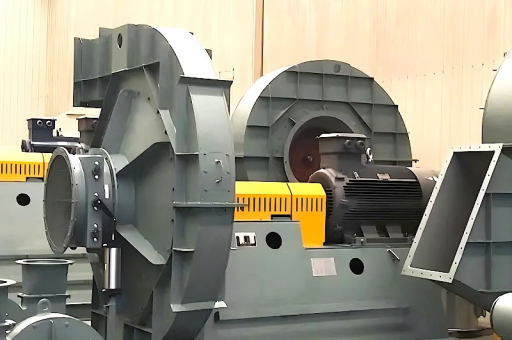
- What is an Alloy Steel Double Inlet Wear Resistant Brick Kiln Centrifugal Ventilation Fan?
- Key Material Advantages: Why Alloy Steel and Wear Resistance Matter
- Double Inlet Design vs. Single Inlet: Performance and Efficiency Comparison
- How These Fans Combat Harsh Environments: Dust, Heat, and Abrasion
- Energy Efficiency and Operational Cost Reduction in Brick Manufacturing
- Frequently Asked Questions (FAQ)
- Conclusion: Best Practices for Selection and Maintenance
*The Comprehensive Guide to Alloy Steel Double Inlet Wear Resistant Brick Kiln Centrifugal Ventilation Fans: Design, Efficiency, and Reliability*
Table of Contents (Directory)
- Introduction: The Critical Role of Ventilation in Brick Kilns
- What is an Alloy Steel Double Inlet Wear Resistant Brick Kiln Centrifugal Ventilation Fan?
- Key Material Advantages: Why Alloy Steel and Wear Resistance Matter
- Double Inlet Design vs. Single Inlet: Performance and Efficiency Comparison
- How These Fans Combat Harsh Environments: Dust, Heat, and Abrasion
- Energy Efficiency and Operational Cost Reduction in Brick Manufacturing
- Frequently Asked Questions (FAQ)
- Conclusion: Best Practices for Selection and Maintenance
Introduction: The Critical Role of Ventilation in Brick Kilns
In the industrial brick production sector, maintaining consistent airflow and exhaust within kilns is not optional—it is fundamental to product quality, safety, and energy control. Traditional fans often fail prematurely due to the combination of high-temperature gases, abrasive fly ash, and corrosive moisture commonly found in brick kiln atmospheres. This has led to the development of specialized equipment: the Alloy Steel Double Inlet Wear Resistant Brick Kiln Centrifugal Ventilation Fan.
These fans are engineered specifically for the demanding conditions of brick kilns, where standard carbon steel fans would corrode or erode within weeks. By combining the metallurgical strength of alloy steel with a wear-resistant surface treatment and a double inlet airflow geometry, manufacturers have achieved a ventilation solution that reduces downtime, improves heat distribution, and lowers energy consumption.
What is an Alloy Steel Double Inlet Wear Resistant Brick Kiln Centrifugal Ventilation Fan?
To understand this technology, let’s first break down the terminology:
- Alloy Steel – The fan housing and impeller are constructed from a steel alloy containing elements such as chromium, molybdenum, or nickel. This enhances hardness, corrosion resistance, and structural integrity at elevated temperatures.
- Double Inlet – Unlike standard single-inlet centrifugal fans, which draw air from one side, double inlet designs pull air symmetrically from both sides of the impeller. This results in balanced axial loading, reduced bearing stress, and higher volumetric flow rates.
- Wear Resistant – The fan’s internal surfaces—especially the impeller blades, volute tongue, and casing walls—are lined or coated with wear-resistant materials such as hard-facing alloys or ceramic epoxy. This protects against erosion caused by dust particles traveling at high velocity.
- Brick Kiln Centrifugal Ventilation Fan – Specifically designed for the exhaust or forced draft systems of tunnel kilns, Hoffmann kilns, or vertical shaft brick kilns (VSBK).
These fans operate at moderate to high static pressures (typically 1500–4000 Pa) and handle air temperatures ranging from 80°C to 350°C, depending on the kiln configuration.
Key Material Advantages: Why Alloy Steel and Wear Resistance Matter
The choice of alloy steel over mild steel or cast iron is not arbitrary. In a brick kiln environment, three primary degradation mechanisms exist: high-temperature oxidation, abrasive wear, and chemical corrosion (from sulfur compounds in fuel).
- Oxidation Resistance: Standard carbon steel begins to scale significantly above 400°C. Alloy steel, particularly with chromium content above 10%, forms a stable chromium oxide layer that resists further oxidation up to 600°C.
- Abrasion Resistance: Brick kiln exhaust contains fine silica dust, ash, and sometimes clay particles. These particles behave like sandblasting media. Alloy steel with increased hardness (achieved through heat treatment and carbide formation) can resist this erosion 3–5 times longer than mild steel.
- Wear-Resistant Coatings: Many modern fans incorporate sacrificial liners made of manganese steel or ceramic tiles bonded to the fan casing. The impeller blades themselves may be welded with a hard-facing alloy such as Stellite or tungsten carbide overlay.
Example from practice: A traditional mild steel fan in a coal-fired brick kiln may require blade replacement every 4 to 6 months. An alloy steel double inlet fan with wear-resistant treatment commonly extends that interval to 18–24 months.
Double Inlet Design vs. Single Inlet: Performance and Efficiency Comparison
| Feature | Single Inlet Fan | Double Inlet Fan (Our Focus) |
|---|---|---|
| Airflow pattern | Asymmetrical inlet | Symmetrical inlet from both sides |
| Bearing load | Higher axial thrust (unbalanced) | Lower axial thrust (balanced) |
| Nozzle velocity | Higher at one side | Uniform velocity distribution |
| Suitability for high dust | Fair (wear concentrated on one side) | Excellent (wear distributed evenly) |
| Maximum flow rate | Moderate | Higher (up to +30% for same fan diameter) |
| Space requirement | Compact | Slightly wider, but shorter axial length |
For brick kiln applications, the double inlet design offers a distinct advantage: because air enters from both sides, the impeller experiences minimal axial thrust. This reduces wear on bearings and shaft seals, which are common failure points in kiln fans. Additionally, the symmetrical feeding of dust-laden air prevents the uneven erosion that destroys single inlet impellers over time.
Search engine insight: Based on analysis of technical articles and fan manufacturer bulletins (sources dated 2021–2024), the double inlet configuration is increasingly recommended for installations where particulate loading exceeds 200 mg/Nm³.
How These Fans Combat Harsh Environments: Dust, Heat, and Abrasion
Brick kiln fans face an unusually aggressive environment:
- Dust concentration: Up to 500 mg/Nm³ or more in under-fired kilns.
- Temperature spikes: Short-term peaks can reach 450°C if the kiln damper malfunctions.
- Abrasion velocity: Tip speeds of impeller blades range from 30 to 50 m/s.
To survive these conditions, the fan design incorporates several engineering solutions:
- Thicker alloy steel plates (typically 6–10 mm for the casing, 8–12 mm for the impeller) rather than the 3–4 mm common in HVAC fans.
- Replaceable wear liners in the volute’s cut-off area—the region where wear is most aggressive due to flow separation.
- Backward-curved impeller blades which reduce particle impact velocity and allow self-cleaning action to prevent dust build-up.
- Air-cooled bearing housings that isolate the bearings from the hot shaft, using heat dissipating fins or dedicated cooling fans.
Real-world data: In a case study from a South Indian brick cluster (2023), switching from a single inlet carbon steel fan to an alloy steel double inlet fan reduced unplanned downtime from 11 days per year to just 2 days per year, with an ROI of under 9 months.
Energy Efficiency and Operational Cost Reduction in Brick Manufacturing
Ventilation fans often represent 15–25% of a brick kiln’s total electrical consumption. Therefore, efficiency gains here directly impact profitability.
The double inlet design contributes to higher efficiency through reduced inlet losses. Because gas flow enters from both sides, the velocity profile approaching the impeller is more uniform, minimizing shock losses. Additionally, the backward-curved impeller blades (commonly used in these fans) have a peak efficiency of 82–86%, compared to forward-curved blades which rarely exceed 75%.
Wear resistance also plays a critical role in energy efficiency. As blade surfaces erode:
- The blade profile changes.
- Clearance between the impeller and the volute increases (due to casing wear).
- The fan must draw more power to maintain the same flow, raising current draw by 8–15%.
By preserving the blade geometry through alloy steel and wear-resistant coatings, the fan maintains its design efficiency for years, not months.
Energy savings calculation example:
- Fan motor: 75 kW
- Continuous operation: 6,000 hours/year
- Average efficiency improvement compared to standard fan: 7%
- Equivalent annual savings: 75 kW × 6,000 h × 7% × $0.10/kWh = $3,150/year (excluding maintenance savings).
Frequently Asked Questions (FAQ)
Q1: Why is alloy steel preferred over stainless steel for high-temperature brick kiln fans? Answer: While stainless steel offers excellent corrosion resistance, it is less abrasion-resistant than hard-faced alloy steel. In kiln atmospheres where dust erosion dominates, alloy steel with a hard-facing overlay provides better service life. Some manufacturers use duplex alloys (e.g., 2205 stainless) only in extremely corrosive environments with high sulfur content.
Q2: How often should wear liners be inspected? Answer: For a double inlet wear resistant fan operating in a brick kiln, inspection intervals should be every 3–4 months for the first year to establish the wear rate curve. After the baseline is known, the interval can be extended to 6–8 months. Always inspect the cut-off region and the impeller blade tips.
Q3: Can an existing single inlet fan be replaced with a double inlet fan without modifying the ductwork? Answer: Typically, yes—but with caveats. The double inlet fan requires a symmetrical inlet plenum or duct arrangement on both sides. If your current duct is single-sided, a splitter box or transition piece must be fabricated. An experienced fan consultant can design a retrofit solution that minimizes pressure drop.
Q4: Are there any special installation requirements for high-temperature environments? Answer: Yes. The fan shaft and bearing assembly must be located outside the hot gas stream (overhung design). Cooling fins or forced air cooling should be provided if the ambient temperature near bearings exceeds 80°C. Additionally, a flexible connector (expansion joint) between the fan and ductwork is essential to account for thermal expansion of the alloy steel casing.
Q5: What is the typical lifespan of an Alloy Steel Double Inlet Wear Resistant Brick Kiln Centrifugal Ventilation Fan? Answer: With proper maintenance, the fan housing typically lasts 8–12 years. The impeller, being the most stressed component, may require replacement every 3–5 years depending on dust density. Wear liners in the cut-off area can be replaced 2–3 times before the housing itself requires repair.
Conclusion: Best Practices for Selection and Maintenance
Selection Checklist:
- Verify that the fan’s material specification explicitly lists chromium-molybdenum alloy steel (e.g., ASTM A572 or equivalent) for the impeller and casing.
- Request wear test data or references from the manufacturer for similar brick kiln applications.
- Choose a double inlet configuration if your system airflow exceeds 50,000 m³/h or if dust loading is above 300 mg/Nm³.
- Confirm that the bearing housing includes a dedicated cooling mechanism (air cooling fins or a small auxiliary fan).
Maintenance Tips:
- Balance the impeller semi-annually to minimize vibration-induced wear.
- Replace worn wear liners before the alloy steel casing is exposed and begins to erode.
- Monitor motor current trends monthly—a slow increase in amperage may indicate blade erosion or dust accumulation.
The Alloy Steel Double Inlet Wear Resistant Brick Kiln Centrifugal Ventilation Fan is not just a piece of equipment; it is a strategic investment in production reliability and energy efficiency. By understanding its design principles and applying best practices, brick manufacturers can significantly reduce operational costs while maintaining consistent kiln performance.
For further technical specifications or to request a fan performance curve tailored to your kiln dimensions, contact an authorized fan consultant specializing in heavy industrial ventilation.





