
This article's table of contents introduction:
- The Core Material: 16Mn Steel
- Key Features & Benefits (The Technology)
- Typical Applications
- Potential Limitations / Considerations
- Summary Table
- Conclusion
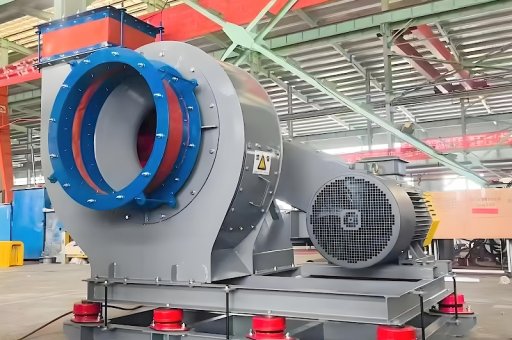
Here is a detailed breakdown of the product described as a 16Mn Energy Saving Dust Collector Blower Fan with High Wear Resistance.
This description combines specific material science (16Mn steel), an application (dust collection), a performance goal (energy saving), and a critical property (wear resistance). Let's analyze each component.
The Core Material: 16Mn Steel
- What it is: "16Mn" (also known as Q345B or S355JR in modern standards) is a low-alloy, high-strength structural steel. The "16" refers to its carbon content (around 0.16%), and "Mn" is the key alloying element, manganese.
- Why it's used for this fan:
- High Strength: Significantly stronger than standard carbon steel (like Q235). This allows the fan housing and impeller to be made thinner and lighter without sacrificing structural integrity, which reduces inertia and helps with energy efficiency.
- Good Toughness: It retains good impact resistance, crucial for handling the variable loads and occasional shocks in a dust collection system.
- Weldability: It can be welded reliably, which is essential for fabricating complex fan geometries.
- Wear Resistance (Base Level): 16Mn is tougher than standard steel, providing a baseline level of resistance to erosion from dust particles. However, for "High Wear Resistance," it is often used as a substrate for additional protection.
Key Features & Benefits (The Technology)
A. High Wear Resistance This is the most critical feature for a dust collector fan. The fan blades and housing are constantly bombarded by abrasive particles (dust, sand, metal filings, etc.).
- How it's achieved:
- Hardfacing/Lining: The 16Mn base is often coated with a wear-resistant layer. Common methods include:
- Thermal Spraying: Applying a coating of tungsten carbide or chromium oxide.
- Ceramic Liners: Bonding high-alumina ceramic tiles to the impeller blades and the volute (spiral housing).
- Hardox or AR Steel Liners: Welding plates of abrasion-resistant steel (e.g., Hardox 400/500, AR400) to the most vulnerable areas.
- Thicker Material: Using thicker 16Mn plate for the impeller blades, especially at the leading edge where impact is greatest.
- Optimized Blade Design: Using backward-curved or radial-tip blades that are less prone to particle impact at high velocity.
- Hardfacing/Lining: The 16Mn base is often coated with a wear-resistant layer. Common methods include:
B. Energy Saving A dust collector fan is often the largest single electricity consumer in a plant. "Energy Saving" is achieved through:
- Aerodynamic Design: High-efficiency impeller profiles (e.g., backward-inclined, airfoil) that minimize turbulence and friction losses.
- High-Efficiency Motors: Matched with premium-efficiency motors (IE3 or IE4 / NEMA Premium).
- Variable Frequency Drive (VFD) Integration: The fan is designed to operate optimally at variable speeds, allowing the system to match the exact airflow demand, rather than using dampers (which waste energy).
- Reduced Air Leakage: Proper sealing between the impeller and the housing inlet to prevent recirculation.
C. 16Mn Construction (Durability & Longevity) The use of 16Mn directly contributes to the fan's lifespan. It resists fatigue cracking and deformation better than standard steel, meaning the fan maintains its balance and efficiency for longer before requiring repair.
Typical Applications
This specific type of fan is used in heavy industrial processes where dust is a major byproduct:
- Cement Plants: Conveying raw meal, clinker, and fly ash.
- Steel Mills: Handling iron ore dust, coke breeze, and slag particles.
- Mining & Quarrying: Ventilation and dust extraction in crushers and screens.
- Wood Processing: Collecting sawdust, shavings, and chips (though the wear resistance is less critical here than abrasion).
- Power Plants: Handling coal dust and fly ash.
- Chemical & Fertilizer Plants: Moving abrasive powders and granules.
Potential Limitations / Considerations
- Cost: A 16Mn fan with high wear resistance coatings is significantly more expensive than a standard carbon steel fan. The ROI (Return on Investment) comes from longer lifespan and energy savings.
- Weight: 16Mn is dense. While it allows for thinner construction, a heavy-duty dust collector fan is still a heavy piece of equipment requiring robust foundations and supports.
- Corrosion: 16Mn has good atmospheric corrosion resistance but is not stainless steel. If the dust is acidic or corrosive (e.g., in chemical plants or wet scrubbers), further coatings (epoxy, rubber) or a different material (e.g., 304/316 Stainless) would be required.
- Repairability: While weldable, repairing a hardfaced or ceramic-lined impeller requires specialized techniques and materials. It is often more cost-effective to replace the entire impeller.
Summary Table
| Feature | Benefit | How it Works (Technical Detail) |
|---|---|---|
| 16Mn Material | High strength-to-weight ratio, good toughness, excellent weldability. | Low-alloy steel with 0.16% C and 1.5% Mn. Stronger than Q235. |
| High Wear Resistance | Long service life in abrasive environments (dust, sand, fly ash). | Hardfacing (WC, CrO2), ceramic liners, or Hardox/AR steel liners on the 16Mn base. |
| Energy Saving | Lower electricity consumption (15-30% savings vs. older designs). | High-efficiency impeller (backward-curved), premium motor (IE3/IE4), VFD-ready design. |
| Dust Collector Fan | Efficiently moves air/particulate mixtures with high static pressure. | Robust shaft, bearings, and housing designed for the pressure differential and loading. |
Conclusion
The 16Mn Energy Saving Dust Collector Blower Fan with High Wear Resistance is a high-performance, industrial-grade solution for the most demanding pneumatic conveying and dust extraction tasks. It is not a commodity fan. It is engineered for plants that prioritize reliability, low total cost of ownership (TCO), and energy efficiency in harsh working conditions. The key is the combination of a strong, ductile 16Mn base with a specialized wear-resistant surface treatment, all optimized for energy-efficient airflow.





