
This article's table of contents introduction:
- Table of Contents (导读)
- Introduction to Double Suction Industrial Boiler Fans
- Key Design Features: Why Double Suction?
- High Temperature Capability: Materials and Cooling Strategies
- Medium Pressure Performance: Balancing Flow and Energy Efficiency
- Industrial Boiler Applications: Where This Fan Excels
- Comparison: Double Suction vs. Single Suction Boiler Fans
- Maintenance and Reliability Considerations
- Frequently Asked Questions (FAQs)
- Conclusion and Selection Guidance
Article Title:
High-Performance Double Suction Industrial Boiler Fan: Engineered for High Temperature & Medium Pressure Applications
Table of Contents (导读)
- Introduction to Double Suction Industrial Boiler Fans
- Key Design Features: Why Double Suction?
- High Temperature Capability: Materials and Cooling Strategies
- Medium Pressure Performance: Balancing Flow and Energy Efficiency
- Industrial Boiler Applications: Where This Fan Excels
- Comparison: Double Suction vs. Single Suction Boiler Fans
- Maintenance and Reliability Considerations
- Frequently Asked Questions (FAQs)
- Conclusion and Selection Guidance
Introduction to Double Suction Industrial Boiler Fans
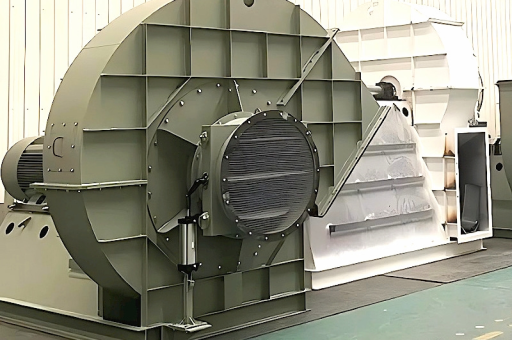
In modern industrial boiler systems, reliable airflow is critical for efficient combustion, heat transfer, and flue gas extraction. Among the most robust solutions is the double suction industrial boiler fan, designed to handle high temperature and medium pressure conditions simultaneously. Unlike standard fans, this configuration draws air from both sides of the impeller, doubling the inlet area while maintaining a compact footprint. This design is particularly favored in power plants, chemical processing units, and large-scale heating facilities where uptime and thermal stability are non-negotiable.
The fan’s ability to operate in continuous high-temperature environments—often exceeding 250°C (482°F)—while delivering consistent medium pressure (typically 2,000–6,000 Pa) makes it a cornerstone in forced draft (FD) and induced draft (ID) applications.
Key Design Features: Why Double Suction?
The fundamental advantage of a double suction configuration lies in its aerodynamic symmetry. By drawing gas from both sides, axial thrust on the bearing system is significantly reduced. This translates to:
- Lower vibration levels – Critical for long bearing and motor life.
- Higher volumetric capacity – Up to 30% more airflow compared to a single suction fan of the same diameter.
- Balanced impeller loading – Reduces mechanical stress at elevated temperatures.
For high-temperature service, the impeller is typically constructed from high-strength alloy steel (e.g., 16MnCr5 or equivalent) with heat-resistant coatings. Shaft seals and bearing housings incorporate external cooling fins or forced air cooling to prevent heat migration into lubrication zones.
High Temperature Capability: Materials and Cooling Strategies
Operating at temperatures above 200°C imposes severe demands on fan components. The double suction industrial boiler fan addresses this through:
- Heat-treated impeller blades – Designed to withstand thermal expansion without warping.
- Graphite or PTFE-based shaft seals – Maintain integrity at elevated temperatures.
- Bearing isolation – Cooling jackets or remote-mounted bearings using insulating shafts to keep grease or oil within operating limits (typically <80°C).
Some advanced models incorporate ceramic-lined volute casings to resist erosion from hot, particulate-laden flue gases. For extreme conditions (above 350°C), water-cooled bearing housings become necessary, though the medium pressure range usually stays within the 200–300°C band.
Medium Pressure Performance: Balancing Flow and Energy Efficiency
The term “medium pressure” for industrial boiler fans generally corresponds to a pressure rise of 2,000 to 6,000 Pascals (Pa). This range is ideal for overcoming resistance in boiler air ducts, burner registers, and flue gas cleaning equipment without excessive energy consumption.
Key performance parameters:
- Flow rate range: 50,000 – 300,000 m³/h (common for medium-sized boiler systems)
- Efficiency: Typically 78% – 85%, with double suction designs outperforming single suction by 3–5% due to better inlet flow distribution.
- Motor sizing: Usually 100 kW to 500 kW, with variable frequency drive (VFD) compatibility to match load variations.
The fan’s backward-curved impeller blades maintain stable performance even when operating near surge limits—a common issue in boiler systems with fluctuating draft demands.
Industrial Boiler Applications: Where This Fan Excels
The double suction high-temperature medium pressure fan is deployed in multiple critical roles:
| Application | Fan Duty | Temperature Range | Typical Pressure |
|---|---|---|---|
| Coal-fired boiler forced draft (FD) | Supply combustion air | 20–40°C (ambient) | 3,000–5,000 Pa |
| Biomass boiler induced draft (ID) | Extract flue gas | 180–260°C | 2,500–4,500 Pa |
| Waste heat recovery systems | Recirculate hot gases | 250–320°C | 2,000–4,000 Pa |
| Chemical plant thermal oxidizers | Support burner air | Up to 350°C | 3,500–6,000 Pa |
In each case, the fan must maintain stable airflow despite temperature fluctuations and particulate loading. The double suction design’s self-cleaning blade profile reduces fouling in dust-laden streams.
Comparison: Double Suction vs. Single Suction Boiler Fans
| Feature | Double Suction Fan | Single Suction Fan |
|---|---|---|
| Airflow per unit diameter | Higher | Lower |
| Axial thrust | Minimal (balanced) | Higher (requires thrust bearing) |
| Suitability for high temp | Excellent (better heat dissipation) | Good (but bearing life may be shorter) |
| Footprint | More compact for given flow | Requires larger diameter or higher speed |
| Initial cost | Moderate | Lower |
| Maintenance frequency | Lower (balanced loads) | Higher (bearing wear) |
For boiler applications above 100,000 m³/h or temperatures exceeding 200°C, the double suction configuration is the industry-preferred choice.
Maintenance and Reliability Considerations
To ensure long service life above 10 years in continuous operation:
- Bearing temperature monitoring – Use RTD sensors with alarms set at 85°C.
- Vibration analysis – Perform monthly checks; double suction fans typically operate below 4.5 mm/s RMS.
- Impeller inspection – Annually for cracks or wear at blade roots, especially in high-temperature ID fans.
- Dynamic balancing – Required after any impeller repairs or coating replacements.
The split housing design common to many double suction fans allows bearing replacement without removing the impeller—a significant advantage in space-constrained boiler houses.
Frequently Asked Questions (FAQs)
Q1: What is the maximum temperature a double suction industrial boiler fan can handle?
A: Standard models are rated for 250°C continuous with peak excursions to 300°C. Custom designs using Inconel or Hastelloy alloy impellers can handle up to 450°C.
Q2: How does medium pressure differ from high pressure in boiler fans?
A: Medium pressure fans (2–6 kPa) are used for overcoming ductwork and burner resistance. High pressure fans (>6 kPa) are typically needed for fluidized bed boilers or systems with extensive scrubbers.
Q3: Can this fan be used for both forced draft (FD) and induced draft (ID) service?
A: Yes, but the construction differs. FD fans handle clean, cold air; ID fans require corrosion-resistant coatings and often wear liners for hot, acidic flue gas.
Q4: What causes performance degradation in high-temperature boiler fans?
A: Common issues include thermal expansion misalignment, bearing grease breakdown, and impeller creep (plastic deformation). Proper start-up and cool-down procedures mitigate these.
Q5: How do I select the right fan for my boiler?
A: Determine required airflow (m³/h at operating temperature), total system resistance (Pa), gas density, and dust content. Consult performance curves from the fan manufacturer—double suction models are preferred for flow above 100,000 m³/h.
Conclusion and Selection Guidance
The double suction industrial boiler fan for high-temperature medium-pressure applications represents an optimal balance of capacity, reliability, and efficiency. Its symmetrical design reduces mechanical wear and enables higher airflow without increasing fan diameter—a critical advantage in retrofit projects where space is limited. When selecting such a fan, prioritize:
- Material compatibility – Ensure impeller and casing materials withstand peak temperature and corrosive species.
- Cooling system adequacy – Verify bearing cooling for continuous duty at maximum temperature.
- VFD readiness – For energy savings and precise airflow control across boiler load ranges.
For engineering teams designing new boiler plants or upgrading existing ones, the double suction configuration should be the baseline evaluation, particularly when medium pressure requirements align with high-temperature service. By investing in high-grade metallurgy and proactive maintenance protocols, these fans deliver decades of uninterrupted service—a key metric in any industrial environment.





