
This article's table of contents introduction:
- The Component Breakdown
- Key Difference: Backward Curved vs. Radial (Paddle Wheel) for Material Handling
- Common Applications
- Price & Availability
- Summary
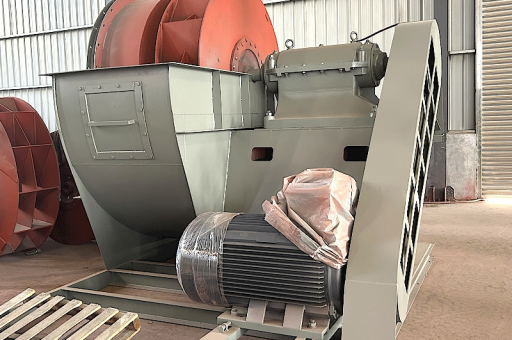
It appears you are looking for information on a specific type of industrial fan or blower. Based on your query, here is a detailed breakdown of what that description means and where such a blower is typically used.
The Component Breakdown
Let's analyze each part of your description:
-
Carbon Steel: This refers to the material of construction.
- What it is: An alloy of iron and carbon (typically up to 2%).
- Why it's used: It is strong, durable, and significantly less expensive than stainless steel. It performs well in temperatures up to about 400°C (752°F), making it a standard choice for industrial material handling.
- Limitation: Carbon steel is prone to rust. Therefore, these blowers are not suitable for corrosive fumes, moisture-laden air, or applications requiring high sanitation (like food processing).
-
Single Suction: This refers to the air intake design.
- What it is: Air enters the impeller (the rotating wheel) from one side only.
- Why it matters: This is the most common and standard design. A "Double Suction" fan pulls air from both sides and is used for massive airflows (like in HVAC systems). Single suction is ideal for most industrial ductwork and pollution control systems.
-
Backward Curved: This is the impeller blade design.
- What it is: The blades of the fan wheel curve away from the direction of rotation (the blade tips lean backward).
- Key Characteristics:
- High Efficiency: The most energy-efficient blade design.
- Non-Overloading Power Curve: This is critical. The motor's power draw (amperage) peaks at a specific point and drops off as airflow is restricted. This means you cannot "burn out" the motor by closing a damper or blocking the ductwork.
- Low Noise: Generally quieter than forward-curved or radial blade fans.
- Self-Cleaning (Limited): Better at handling dust than forward-curved blades, but not as good as radial or "paddle wheel" designs.
-
Material Handling Blower: This defines the application and design strength.
- What it means: The blower is specifically engineered to move air that contains solid particulates (dust, chips, granules, powders).
- Design Features:
- Heavier Construction: Thicker steel, a stronger shaft, and heavier bearings to withstand the vibration and impact of debris.
- Larger Clearance: The gap between the impeller and the housing (scroll) is larger than a standard fan, allowing small objects to pass through without jamming.
- Access Doors: Often include clean-out doors for maintenance.
- Shaft Seals: Specifically designed to prevent dust from entering the bearings.
Key Difference: Backward Curved vs. Radial (Paddle Wheel) for Material Handling
You often have to choose between these two for material handling. Here is the distinction:
| Feature | Backward Curved (Your Query) | Radial / Paddle Wheel |
|---|---|---|
| Efficiency | High | Low to Medium |
| Noise Level | Low to Medium | High |
| Handling Sticky Material | Average (blades can clog) | Excellent (open paddle design resists buildup) |
| Handling Heavy/Large Material | Fair | Excellent (heavy-duty blades throw debris) |
| Self-Cleaning Ability | Limited | High |
| Cost | Higher (due to complex impeller) | Lower to Medium |
Verdict: Your blower is for light to moderate dust loads (e.g., wood dust, plastic trim, light powders). For heavy debris or sticky materials (e.g., tramp metal, wet chips, sludge), a radial blade design is usually preferred.
Common Applications
This specific combination (Carbon Steel, Single Suction, Backward Curved) is a workhorse in many industries:
- Woodworking: Dust collection from sanders, saws, and planers.
- Plastics Processing: Conveying plastic pellets, regrind, and trim.
- General Manufacturing: Conveying paper trim, textile lint, and dry powders.
- HVAC & Fume Extraction: Moving hot air or light fumes (as long as they are non-corrosive).
- Agriculture: Grain dust handling.
Price & Availability
- Price: A fan of this type (e.g., a 15-20 HP unit with a 12-16" inlet) typically ranges from $3,000 to $8,000+ USD, depending on manufacturer (Cincinnati Fan, New York Blower, Chicago Blower, AirPro).
- Custom Options: Expect standard options like:
- Direct Drive (Belt Driven): Belt-driven is more common for material handling as you can change the speed (RPM) to adjust airflow/pressure for different materials.
- Bearings: Extended-length, pre-lubricated pillow block bearings.
- Seals: Labyrinth or lip seals to keep dust out.
Summary
If you are sourcing this blower, you are looking for a medium-efficiency, non-overloading fan built for continuous duty with dry, non-corrosive, non-sticky dust in an industrial environment. It is a robust, standard choice that offers a good balance between longevity and energy cost.





