
*Coupling Driving Technology in Industrial Anti-Explosion Induced Draft Fans: Engineering, Safety, and Performance Optimization*
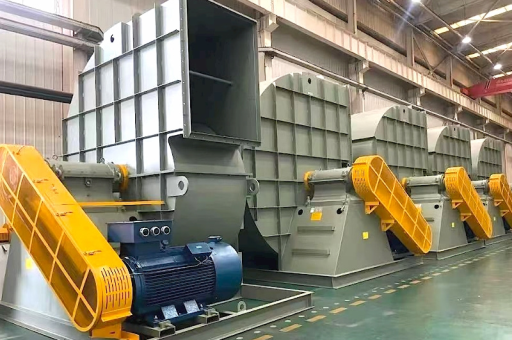
Table of Contents
- Introduction: The Role of Induced Draft Fans in Hazardous Environments
- Understanding Coupling Driving in Anti-Explosion Fans
- Critical Design Features for Explosion-Proof Induced Draft Fans
- Advantages of Coupling-Driven Anti-Explosion Fans Over Direct Drive Systems
- Q&A Section: Common Engineering Concerns
- Real-World Application Case Study
- Conclusion: Future Trends in Explosion-Proof Fan Technology
Introduction: The Role of Induced Draft Fans in Hazardous Environments
In industrial sectors such as petrochemical refining, coal chemical processing, offshore oil & gas platforms, and pharmaceutical manufacturing, the induced draft fan is a critical component for maintaining negative pressure, exhausting flammable gases, and regulating thermal environments. However, these fans must operate in potentially explosive atmospheres where flammable dust, vapors, or gases are present. This demands not only robust airflow performance but also strict adherence to international explosion protection standards such as ATEX, IECEx, and NEC.
The Coupling Driving Industrial Anti Explosion Induced Draft Fan represents a specialized solution where the fan impeller is driven by an electric motor through a mechanical coupling, rather than a direct shaft connection. This configuration offers unique benefits in terms of vibration isolation, maintenance access, and safety compliance—especially when handling explosive media.
Understanding Coupling Driving in Anti-Explosion Fans
A coupling is a mechanical device used to connect two shafts—in this case, the motor shaft and the fan impeller shaft—while allowing for limited misalignment, torque transmission, and dampening of shock loads. In explosion-proof induced draft fans, coupling systems are typically designed with non-sparking materials, such as bronze, stainless steel, or specialized polymers, to prevent ignition from mechanical friction.
Common coupling types used in this application include:
- Flexible elastomeric couplings – absorb vibration and tolerate minor angular offset; ideal for moderate-torque, high-speed fans.
- Grid couplings – metal spring grid design offers high torque capacity and excellent shock absorption for heavy-duty industrial fans.
- Disc couplings – all-metal, low-backlash design suitable for high-speed, high-temperature applications where elastomers would degrade.
The coupling is housed within a protective guard that prevents foreign objects from entering and also serves as a barrier to contain any potential debris in the event of coupling failure. In anti-explosion designs, the guard must be constructed from non-sparking material and properly grounded to eliminate static electricity buildup.
Critical Design Features for Explosion-Proof Induced Draft Fans
To achieve certification for Zone 1 or Zone 2 hazardous areas (gas/vapor groups IIA, IIB, IIC), the entire fan assembly—including the coupling, motor, bearings, and housing—must meet rigorous safety criteria:
| Component | Explosion-Proof Requirement |
|---|---|
| Fan housing | Cast iron or welded steel with reinforced flanges; maximum allowable surface temperature limited to gas ignition point (e.g., T3, T4 class). |
| Impeller | Non-sparking material (e.g., aluminum bronze, stainless steel 316L); balanced to ISO G6.3 grade; backward-curved blades to prevent dust accumulation. |
| Coupling | No ferrous-to-ferrous contact; anti-static conductive elements; crush-resistant elastomer for fail-safe torque transmission. |
| Motor coupling end | Ex-certified motor (e.g., Ex d IIB T4); shaft seal prevents gas ingress; IP56 or higher enclosure. |
| Bearings | Sealed, regreasable design; temperature monitoring probes connected to safety shutdown system. |
| Drain & ventilation | Condensate drain with flame arrester; pressure relief valve if positive pressure may develop. |
One critical aspect is the separation distance between the motor and the fan. In coupling-driven designs, the motor can be located outside the hazardous zone, while only the fan impeller and the coupling's driven end enter the classified area. This reduces the total Ex-certified components and simplifies maintenance.
Advantages of Coupling-Driven Anti-Explosion Fans Over Direct Drive Systems
While direct drive (shaft-mounted motor) fans offer simplicity, they introduce challenges in explosive environments:
| Factor | Coupling-Driven Fan | Direct Drive Fan |
|---|---|---|
| Motor location | External to hazardous zone (with extended shaft & coupling) | Inside hazardous zone; full Ex-certification required |
| Vibration isolation | Coupling absorbs misalignment & vibration | Motor bearings directly exposed to fan imbalance |
| Maintenance access | Motor easily separable for servicing without opening fan housing | Motor removal often requires draining gas lines or housing disassembly |
| Temperature control | External motor can be air-cooled; fan housing surface temp remains lower | Motor heat dissipates into fan housing, raising surface temperature |
| Noise & wear | Coupling dampens high-frequency noise | Direct connection transfers noise & wear particles |
However, coupling-driven systems require precise alignment during installation, regular coupling inspection (especially elastomer wear), and proper lubrication of any grid or disc coupling components. Torque transmission efficiency typically remains above 98% for properly aligned flexible couplings.
Q&A Section: Common Engineering Concerns
Q1: Can a coupling-driven fan be used in Zone 0 (continuous explosive atmosphere)?
A: Typically no. Zone 0 requires intrinsically safe or encapsulated systems. For Zone 0, a completely sealed magnetic drive or hydraulic drive is recommended instead. Coupling-driven fans are best suited for Zone 1 (likely to occur) and Zone 2 (not likely, but short duration).
Q2: What is the maximum operating temperature for coupling elastomers in explosion-proof fans?
A: Standard nitrile rubber (NBR) couplings are rated up to 80°C. For higher temperatures (up to 150°C), polyurethane or silicone-based elastomers are used. For >150°C, disc couplings (all-metal) are mandatory.
Q3: How often should coupling alignment be checked?
A: At initial installation, every 6 months during routine maintenance, and immediately after any bearing replacement or fan impeller rebalancing. Misalignment beyond 0.05mm angular or 0.10mm parallel can cause premature coupling failure and exceed vibration limits (ISO 14694, BV-3).
Q4: Do I need a flameproof enclosure for the coupling itself?
A: The coupling guard is not required to be flameproof if it is located in a safe area (outside the hazardous zone). However, if the coupling is within Zone 1, the guard must be constructed from non-sparking material and the design must prevent any hot particle projection. The coupling itself should be of a non-sparking type.
Q5: Can the coupling driving system handle variable speed operation?
A: Yes. Many modern anti-explosion induced draft fans use VFD (Variable Frequency Drive) with coupling-driven systems. Ensure the coupling is rated for the full speed range, including resonance avoidance. Grid and disc couplings generally handle variable speeds better than elastomeric types at low RPM.
Real-World Application Case Study
Scenario: A mid-sized petrochemical refinery needed to upgrade its existing induced draft fans for a naphtha cracking unit. The ambient gas classification was Zone 1, Group IIB (ethylene), temperature class T3 (200°C maximum surface temp). Existing fans were belt-driven, which caused frequent belt replacement and fire risk from static discharge.
Solution: The engineering team installed custom coupling-driven anti-explosion induced draft fans built by a specialized manufacturer (fan). Key specifications:
- Fan: Centrifugal, backward-curved, 316L stainless steel impeller
- Motor: 250 kW, Ex d IIB T3, placed 2 meters away from fan housing via extended shaft
- Coupling: Grid coupling with bronze grid elements and cast iron hubs (lubricated with conductive grease)
- Guard: Stainless steel mesh guard with anti-static grounding braid
- Bearing housing: Dual temperature probes connected to PLC alarm at 90°C, trip at 110°C
Results: After 18 months of operation, the fans demonstrated zero unplanned shutdowns, reduced vibration levels from 8.5 mm/s (belt-driven) to 2.1 mm/s (coupling-driven), and eliminated belt replacement costs. The refinery reported a 12% improvement in overall energy efficiency due to reduced mechanical losses. Annual maintenance hours dropped from 150 to 40 hours per fan.
This case validates that coupling-driven anti-explosion induced draft fans not only meet safety standards but also deliver measurable operational gains.
Conclusion: Future Trends in Explosion-Proof Fan Technology
The industrial landscape is moving toward intelligent integration of coupling-driven anti-explosion induced draft fans. Emerging trends include:
- IoT-enabled coupling wear sensors that transmit real-time torque and temperature data to predictive maintenance platforms.
- Magnetic couplings for zero-contact torque transmission, eliminating all mechanical wear—though limited to lower power ranges currently.
- Modular coupling designs that allow quick exchange without disturbing motor or fan alignment.
- Hybrid materials combining polymer composites with metal insert for reduced weight, non-sparking properties, and enhanced fatigue life.
For engineers designing or specifying explosion-proof fan systems, the coupling driving approach offers a compelling balance of safety, maintainability, and performance. By carefully selecting coupling type, material, and alignment tolerances, facility operators can significantly reduce risk exposure while optimizing process airflow. Future standards are likely to further emphasize condition-based monitoring and energy efficiency, making the coupling-driven anti-explosion induced draft fan a long-term sustainable choice for hazardous industrial environments.





