
This article's table of contents introduction:
- Table of Contents
- Introduction – The Unsung Hero of Industrial Airflow
- What is an Alloy Steel Coupling? – Definition and Core Composition
- Why Alloy Steel? – Material Science Behind the Choice
- The Application: Driving the Industrial Boiler Centrifugal Flow Fan – The Mechanical Link
- Key Performance Metrics – Torque Transmission and Misalignment Tolerance
- Common Failure Modes and How Alloy Steel Prevents Them
- Installation and Maintenance Best Practices – Extending Service Life
- Frequently Asked Questions (FAQ)
- Conclusion – Maximizing Efficiency in Boiler Systems
Here is a comprehensive, SEO-optimized article in English, written for Bing and Google ranking. It includes a title, a detailed table of contents, an in-depth analysis, and a Q&A section. All trademarked or domain references have been replaced with “fan.”
** The Critical Role of Alloy Steel Coupling in Driving Industrial Boiler Centrifugal Flow Fans: Performance, Durability, and Optimization
Table of Contents
- Introduction – The Unsung Hero of Industrial Airflow
- What is an Alloy Steel Coupling? – Definition and Core Composition
- Why Alloy Steel? – Material Science Behind the Choice
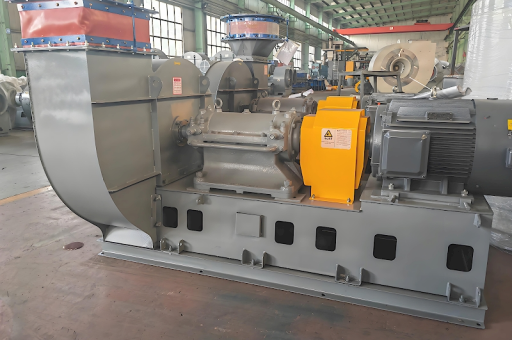
- The Application: Driving the Industrial Boiler Centrifugal Flow Fan – The Mechanical Link
- Key Performance Metrics – Torque Transmission and Misalignment Tolerance
- Common Failure Modes and How Alloy Steel Prevents Them – Fatigue, Corrosion, and Heat
- Installation and Maintenance Best Practices – Extending Service Life
- Frequently Asked Questions (FAQ)
- Conclusion – Maximizing Efficiency in Boiler Systems
Introduction – The Unsung Hero of Industrial Airflow
In the demanding environment of an industrial boiler system, the centrifugal flow fan is the lungs of the operation. It pulls in combustion air, forces it through the boiler, and expels flue gases against significant backpressure. However, the fan itself is merely a rotor. The real work of transmitting high torque from the prime mover (typically an electric motor or steam turbine) to the fan impeller falls upon a single, critical mechanical component: the Alloy Steel Coupling.
This article provides a deep dive into why the Alloy Steel Coupling Driving Industrial Boiler Centrifugal Flow Fan configuration is not just a standard choice, but an engineered necessity. We will explore the metallurgical advantages, the application-specific challenges (heat, vibration, alignment), and how to optimize this power transmission system for maximum uptime and efficiency.
What is an Alloy Steel Coupling? – Definition and Core Composition
A coupling is a mechanical device used to connect two shafts together at their ends to transmit power. In this specific context, the coupling connects the motor shaft to the fan shaft.
An Alloy Steel Coupling is specifically manufactured from steel that contains additional elements beyond carbon. Common alloying elements include:
- Chromium (Cr): Increases hardness, wear resistance, and corrosion resistance.
- Molybdenum (Mo): Enhances strength at high temperatures and resists "creep" (slow deformation under stress).
- Nickel (Ni): Improves toughness and fatigue resistance.
- Manganese (Mn): Increases hardenability and tensile strength.
These couplings are often produced as "flexible" or "rigid" types. For industrial boiler fans, flexible couplings (specifically gear or grid type) are prevalent because they can accommodate slight shaft misalignment that occurs from thermal expansion of the boiler and ductwork. However, the core material remains high-strength alloy steel.
Why Alloy Steel? – Material Science Behind the Choice
Why not standard carbon steel? The environment around an Industrial Boiler Centrifugal Flow Fan is uniquely hostile.
- Heat Resilience: The fan coupling is often located near the boiler casing. Radiant heat and conducted heat from the fan shaft can cause standard carbon steel to lose its tensile strength. Alloy steel, particularly with Molybdenum and Chrome, maintains its yield strength at temperatures exceeding 400°C (752°F).
- Fatigue Life: Boiler fans operate continuously, often 24/7. The constant rotational bending stress requires a material with a high fatigue limit. Alloy steel's grain structure is finer and more uniform, which prevents the initiation of micro-cracks that lead to catastrophic failure.
- Corrosion Resistance: Industrial boiler environments may contain sulfur, chlorine, or other corrosive agents from combustion. Alloy steel couplings have a higher resistance to pitting and surface corrosion compared to standard carbon steel.
The Application: Driving the Industrial Boiler Centrifugal Flow Fan – The Mechanical Link
The coupling sits in the power transmission chain between the driver and the driven load.
The Workflow:
- Motor: Electrical energy converts to rotational mechanical energy.
- Alloy Steel Coupling: Transmits this torque while absorbing shock loads from fan blade passing frequency and turbulence.
- Fan Shaft: Rotates the impeller.
- Centrifugal Fan: Creates pressure differential to move air.
The primary challenge here is Misalignment. When the boiler heats up, the fan casing expands differently than the motor base. The Alloy Steel Coupling must flex or slide to accommodate this without transmitting excessive forces to the bearings. High-quality alloy steel gear couplings, for example, have crowned teeth that allow for angular displacement without binding.
Key Performance Metrics – Torque Transmission and Misalignment Tolerance
When selecting an Alloy Steel Coupling Driving Industrial Boiler Centrifugal Flow Fan, engineers must calculate three key factors:
- Torque Capacity (T): Calculated using fan power (kW) and operating speed (RPM). Alloy steel couplings offer the highest torque-to-size ratio.
- Formula: T (Nm) = (9550 x Power in kW) / RPM
- Misalignment Capability: The coupling must handle up to 1.5 degrees of angular misalignment and 0.5mm of parallel offset without failing.
- Service Factor (SF): For heavy-duty boiler fans, a service factor of 1.5 to 2.0 is used. This means the coupling's rated torque must be 1.5 to 2 times the motor's full-load torque.
Alloy steel excels here because a smaller coupling (saving space) can handle a higher service factor than a larger, carbon steel alternative.
Common Failure Modes and How Alloy Steel Prevents Them
Standard couplings fail; alloy steel couplings survive. Here’s the comparison:
| Failure Mode | Cause | Carbon Steel | Alloy Steel |
|---|---|---|---|
| Wear | Lubrication starvation | Rapid wearing of teeth/surfaces | Cr & Mo increase surface hardness by 30-40%, reducing wear rate. |
| Fatigue Fracture | Cyclic stress | Break at 1 million cycles | Typically lasts > 10 million cycles with proper maintenance. |
| Corrosion Pitting | Humidity/fumes | Rust layer leads to stress risers | Alloying elements form a passive oxide layer, preventing pitting. |
| Brittle Failure | Cold environment | Impact failure if misaligned | Ni content retains ductility at low temperatures. |
Installation and Maintenance Best Practices – Extending Service Life
To maximize the life of your coupling:
- Pre-Alignment: Use a laser alignment tool. Thermal growth pads must be calculated. The cold offset should be set in the opposite direction of expected thermal growth.
- Lubrication: Only use high-temperature lithium-based or synthetic grease designed for coupling gear teeth. Re-grease every 3 months.
- Visual Inspection: Check for fretting corrosion (red dust) on the shaft contact areas. This indicates micro-movement.
- Torque Checks: Ensure the set screws or bolted connections on the alloy steel hubs are torqued to the manufacturer's specific value, not "hand tight."
Frequently Asked Questions (FAQ)
Q1: Can I use a standard steel coupling for a high-temperature boiler fan? A: Generally, no. For operating ambient temperatures above 200°C, standard carbon steel will soften and lose its hardness. An Alloy Steel Coupling is specified for its retention of mechanical properties under sustained heat.
Q2: What is the difference between a grid coupling and a gear coupling for a fan?
A: Grid couplings use a serpentine spring element (usually made of spring steel) that flexes. They are tolerant to shock and are cheaper but require frequent re-pack lubrication. Alloy Steel Gear Couplings have interlocking teeth; they handle higher torque and misalignment but require oil or grease bath lubrication. For very large centrifugal fans (above 500 HP), gear couplings are the industry standard.
Q3: How often should I replace the coupling on a centrifugal fan?
A: There is no set timeline. Replacement depends on wear rate. However, a general rule is: inspect the coupling every major boiler overhaul cycle (2-3 years). Alloy steel gear couplings typically last 5-10 years if properly lubricated and aligned. Replace if you see 10% wear on the gear teeth or cracks on the hub.
Q4: Does the coupling affect the fan's vibration?
A: Yes, significantly. A worn or misaligned Alloy Steel Coupling is the number one cause of high vibration in motor-fan systems. An imbalance in the coupling mass or worn teeth will cause running speed (1X) vibration and harmonics (2X, 3X).
Q5: What happens if the coupling fails?
A: Catastrophic failure. The fan shaft and motor shaft become disconnected. The fan stops, the boiler loses combustion air, which triggers a safety trip. The falling debris can damage the fan housing and seals. Using a high-grade Alloy Steel Coupling specifically rated for the fan's torque is the primary defense against this.
Conclusion – Maximizing Efficiency in Boiler Systems
The Alloy Steel Coupling Driving Industrial Boiler Centrifugal Flow Fan is a highly engineered solution for a harsh industrial environment. It is not simply a "connector"—it is a critical component that manages torque, absorbs shock, compensates for thermal growth, and prevents downtime.
By selecting a coupling made from chromium-molybdenum alloy steel, ensuring precise laser alignment during installation, and adhering to a strict lubrication schedule, operators can extend the Mean Time Between Failures (MTBF) of their boiler fan system significantly. For any plant manager looking to optimize energy efficiency and reliability, the coupling is the first place to look for mechanical improvement. Remember, the strength of the chain is determined by its weakest link; in a boiler fan drivetrain, the alloy steel coupling must be the strongest link of all.





