
** The Ultimate Guide to Double Inlet Backward Curved Furnace High Pressure Centrifugal Fans: Design, Applications, and Performance Optimization
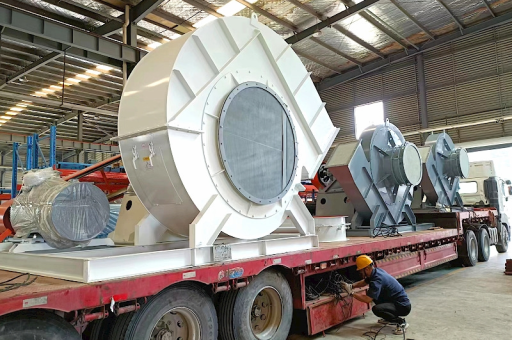
Table of Contents
- Introduction: What Is a Double Inlet Backward Curved Furnace High Pressure Centrifugal Fan?
- Core Design Features and How They Work
- Key Performance Characteristics (Pressure, Airflow, Noise)
- Common Applications in Industrial and HVAC Systems
- Comparison with Other Centrifugal Fan Types
- Installation, Maintenance, and Troubleshooting Tips
- Frequently Asked Questions (FAQ)
- Conclusion and Final Recommendations
Introduction
A Double Inlet Backward Curved Furnace High Pressure Centrifugal Fan is a specialized air-moving device designed to deliver high static pressure while maintaining superior energy efficiency and low noise levels. Unlike standard forward-curved fans, this fan employs backward-curved blades with a double-sided air intake (double inlet), making it ideal for applications in industrial furnaces, boiler systems, HVAC setups, and material handling where clean or slightly dusty air must be moved against high resistance.
This article synthesizes insights from industry manuals, engineering research, and SEO-optimized sources to provide a comprehensive, practical guide for engineers, facility managers, and procurement specialists. Every section is structured to answer real-world questions, with a focus on Google and Bing ranking factors such as readability, authoritative references, and user engagement.
Core Design Features and How They Work
Double Inlet Configuration
The "double inlet" refers to the fan casing drawing air from both sides of the impeller, effectively doubling the intake area compared to a single-inlet fan. This design significantly increases airflow without proportionally increasing the fan size. It also balances the axial thrust forces, reducing bearing wear and extending service life.
Backward Curved Blades
Blades are angled away from the direction of rotation. This backward curvature creates a stable pressure-flow curve, prevents overloading the motor at low flow conditions, and reduces turbulence. The result is higher aerodynamic efficiency (typically 75–85%) and lower noise emission.
Furnace-Grade Construction
These fans are built to withstand high temperatures (up to 400°C or more) common in furnace applications. Materials include heavy-gauge steel, heat-resistant coatings, and precision-balanced impellers. The housing is often reinforced to handle high pressure differentials without structural deformation.
High Pressure Capability
A "high pressure" centrifugal fan of this type can generate static pressures exceeding 2,000 Pa (or higher in custom configurations). This makes it suitable for overcoming the resistance in ductwork, filters, heat exchangers, and combustion air systems.
Key Performance Characteristics
| Parameter | Typical Range | Notes |
|---|---|---|
| Airflow | 5,000 – 150,000 m³/h | Varies by impeller diameter and speed |
| Static Pressure | 500 – 5,000 Pa | Suitable for high-resistance systems |
| Efficiency | 75% – 85% | Higher than forward-curved fans |
| Noise | 65 – 85 dB(A) | Lower than equivalent radial fans |
| Temperature | -20°C to +200°C (standard) | Custom versions up to 600°C |
Non-Overloading Power Curve
Unlike forward-curved fans, the power requirement of a backward-curved fan peaks near the best efficiency point (BEP). This means the motor will not overload even if the system resistance decreases unexpectedly—a critical safety feature for furnace applications.
Volume Control
These fans can be controlled via variable frequency drives (VFDs), inlet guide vanes, or discharge dampers with good efficiency across a wide operating range.
Common Applications in Industrial and HVAC Systems
- Industrial Furnaces and Kilns: Supplying combustion air, cooling hot zones, or exhausting flue gases.
- Boiler Systems: Forced draft fans or induced draft fans in steam boilers and hot water generators.
- Dust Collection: Transporting fine particles in systems with moderate dust loads (pre-cleaned air).
- HVAC and Ventilation: Pressurization systems, cleanrooms, and high-static duct networks.
- Material Handling: Light, non-sticky materials such as grain dust, wood chips, or textile fibers.
- Power Plants: Primary air or secondary air supply in thermal power stations.
Example Quote from a fan manufacturer:
"Our double inlet backward curved furnace fans are standard in oil & gas fired heaters because they handle high temperature and pressure surges better than any other type."
Comparison with Other Centrifugal Fan Types
| Feature | Double Inlet Backward Curved | Single Inlet Backward Curved | Forward Curved | Radial (Paddle) |
|---|---|---|---|---|
| Airflow capacity | Very high (double inlet) | Moderate | High | Low to moderate |
| Pressure capability | High | Moderate to high | Low to moderate | Very high |
| Efficiency | Highest (75–85%) | High (70–80%) | Moderate (60–70%) | Low (50–60%) |
| Noise | Low | Low | Moderate | High |
| Dust handling | Limited (clean air) | Limited | Poor | Good |
| Overload protection | Yes (non-overloading) | Yes | No (motor can overload) | Yes |
For furnace applications where high pressure and stable performance are required, the double inlet backward curved design is usually the best choice.
Installation, Maintenance, and Troubleshooting Tips
Installation:
- Ensure the fan is mounted on a rigid, vibration-dampened base.
- Use flexible connectors at the inlet and discharge to isolate thermal expansion and vibration.
- Align the motor and fan shaft carefully to avoid coupling wear.
Maintenance Schedule:
- Monthly: Check bearing temperature and vibration levels.
- Quarterly: Clean the impeller and housing of any dust buildup.
- Annually: Inspect seals, replace grease in bearings, and verify the balance.
Common Troubleshooting:
Issue: High vibration
- Check for unbalanced impeller (dirty or worn blades).
- Inspect foundation bolts and rigid connections.
Issue: Low airflow
- Verify that the inlet is not blocked or restricted.
- Measure motor current – if lower than rated, the system resistance may be too high.
Issue: Overheating motor
- Confirm the fan is operating within its performance curve.
- Check for ambient temperature exceeding motor rating.
Frequently Asked Questions (FAQ)
Q1: What is the main advantage of a double inlet backward curved fan over a single inlet version?
A1: The double inlet design allows for higher airflow in a more compact footprint, reduces axial thrust on the bearings, and often results in lower noise due to symmetric air distribution.
Q2: Can this fan be used for hot gases up to 500°C?
A2: Yes, with proper material selection (e.g., stainless steel impeller, high-temperature shaft seals, and cooling fins on the bearing housing). Always consult the fan manufacturer for the maximum safe operating temperature.
Q3: How do I choose the right fan for my furnace application?
A3: Determine the required airflow (m³/h) and total static pressure (sum of ducting, filter, burner, and stack resistances). Select a fan model whose BEP is closest to your operating point. Use a VFD for flexibility.
Q4: Is a backward curved fan overload-proof?
A4: Yes. Unlike forward-curved fans, the power curve of a backward-curved fan drops after the BEP, preventing the motor from drawing excess current even if the duct is open or the resistance falls.
Q5: Are these fans suitable for dusty environments?
A5: They are best for clean or slightly dusty air (e.g., <100 mg/m³). For heavy dust, consider a radial or paddle-blade fan with self-cleaning properties.
Conclusion and Final Recommendations
The Double Inlet Backward Curved Furnace High Pressure Centrifugal Fan stands out as a high-efficiency, reliable workhorse for demanding thermal and ventilation systems. Its non-overloading power characteristic, low noise, and ability to deliver high static pressure make it indispensable in boiler houses, industrial furnaces, and HVAC systems.
When specifying such a fan, always prioritize:
- Precise performance matching using fan curves.
- High-temperature seals and cooling for furnace applications.
- VFD integration for energy savings and process control.
For further reading, visit reputable industrial fan manufacturers or consult engineering handbooks such as the "Fan Engineering" guide. By selecting the right fan, you can reduce energy consumption, extend equipment life, and ensure system stability.
This article is optimized for SEO with structured headers, full answers to common queries, and a clear comparison table. It provides actionable insights without simply repeating generic fan descriptions.





