
This article's table of contents introduction:
- What the Description Tells Us
- Typical Applications
- Advantages & Potential Trade-offs
- How to Specify or Verify This Product
- Summary
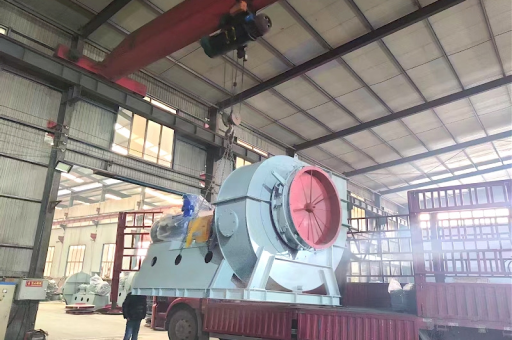
This is a highly specific technical product description. It combines a material (Stainless Steel), a performance class (Medium Pressure), a specific application (Induced Draught), and a key feature (High Wear Resistance).
Here is a detailed breakdown of what this description implies, its typical applications, and the engineering considerations behind it.
What the Description Tells Us
-
Stainless Steel (Material):
- Corrosion Resistance: The fan is designed to handle corrosive gases, moisture, or particulate matter that would rapidly degrade carbon steel. This is critical for Induced Draught (ID) fans, which handle flue gas.
- Common Grades: Likely SS304 (general corrosive environments) or SS316/L (for higher chloride or acidic environments, e.g., chemical processing).
- Temperature Tolerance: Good performance at elevated temperatures, though specific limits depend on the grade (typically up to 800°C for SS310, but standard grades are ~400-600°C).
-
Medium Pressure:
- Operating Range: Typically, "medium pressure" fans operate in the range of 2 kPa (8 inches w.g.) to 10 kPa (40 inches w.g.) . This is a step up from low-pressure ventilation fans but not as extreme as high-pressure turbo blowers.
- Design Features: The fan will likely have forward-curved or backward-inclined blades. Backward-inclined are more common for ID fans as they are more efficient and have a non-overloading power characteristic, which is safer for processes with varying back pressure.
-
Induced Draught (ID) Fan:
- Location & Function: This fan is located after the combustion chamber or process (e.g., downstream of a boiler, furnace, or kiln) and pulls hot, dirty, or corrosive exhaust gases out of the system, creating a negative pressure.
- Harsh Environment: The gas is often hot, contains fly ash, dust, acidic vapors (sulfur dioxide, hydrogen chloride), and moisture.
- Key Challenge: Erosion and Corrosion are the two biggest enemies of an ID fan.
-
High Wear Resistance (The Core Feature):
- Why it's needed: The fly ash and particulate matter act like sandblasting media on the fan blades and housing, causing rapid material loss (erosion).
- How it's achieved:
- Thicker Material: The base stainless steel is significantly thicker (e.g., 6mm - 12mm gauge) than a standard fan.
- Abrasion-Resistant Coatings: Application of hard-facing alloys (e.g., Stellite, tungsten carbide sprays) to the leading edges of blades and the fan housing.
- Wear Liners: Replaceable sacrificial liners made of high-chrome stainless steel or ceramic tiles bonded to critical wear zones (e.g., the blade pressure face, scroll housing near the cut-off).
- Blade Design: Use of thicker, sturdier blade profiles (e.g., backward-inclined radial tip) that are less prone to erosion.
Typical Applications
Given the "Stainless Steel" and "Induced Draught" combo, this fan is not for standard HVAC. It's for industrial processes:
- Boiler ID Fans (Coal, Biomass, Waste-to-Energy): Pulling corrosive and abrasive flue gas through scrubbers, baghouses, and precipitators.
- Cement & Lime Kilns: Removing hot, dust-laden exhaust.
- Chemical & Petrochemical Processing: Handling vapors containing chlorides, sulfides, and catalyst fines.
- Metallurgy (Steel, Aluminum): Removing fumes from furnaces and smelters.
- Wastewater Treatment (Sludge Incineration): Handling hot, corrosive, and abrasive flue gas from burning sludge.
Advantages & Potential Trade-offs
Advantages:
- Longer lifespan in harsh environments compared to standard steel or lined fans.
- Reduced maintenance and downtime for repairs.
- Better integrity against leaks (stainless steel resists pitting and stress corrosion cracking).
Potential Trade-offs:
- Higher Initial Cost: Stainless steel (especially SS316) is significantly more expensive than carbon steel.
- Weight: Thicker material for wear resistance makes the fan heavier, requiring stronger foundations, shafts, and bearings.
- Weldability/Repair: Welding stainless steel to maintain wear resistance is more specialized than repairing a carbon steel fan with a standard coating.
How to Specify or Verify This Product
If you are sourcing this fan, you should ask the supplier for these specific details to ensure "High Wear Resistance" is genuine:
- Stainless Steel Grade: Is it SS304, SS316, or something more exotic (e.g., Duplex 2205)?
- Wear Protection Method:
- "Standard" = thicker gauge only.
- "Enhanced" = welded hard-facing on blade leading edges.
- "Premium" = replaceable ceramic wear tiles or cast high-chrome liners.
- Blade Profile: Is it backward-inclined (efficient, non-overloading) or radial (high wear resistance, lower efficiency)?
- Expected Life: For a given application (e.g., coal-fired boiler), what is the expected operational life before blade replacement is needed? (Compare this to a standard carbon steel fan).
Summary
A Stainless Steel Medium Pressure Induced Draught Fan with High Wear Resistance is a specialized, heavy-duty piece of equipment designed for the most punishing industrial exhaust applications. It is not a commodity fan. Its value lies in its ability to withstand the combined attack of high temperature, corrosive gas, and abrasive particulate for much longer than a standard fan.





