
This article's table of contents introduction:
- Breakdown of the Description
- Typical Applications
- Key Considerations When Sourcing
- Example Model / Manufacturer Look-up
- Need a Specific Recommendation?
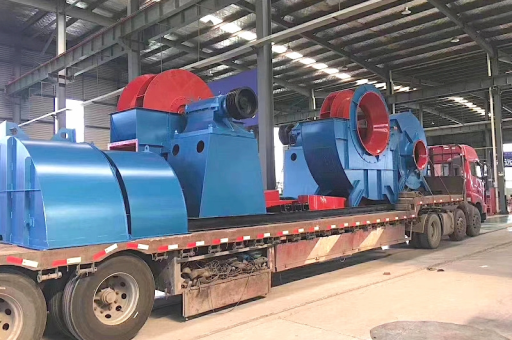
It appears you are describing a specific type of industrial equipment. This description combines several key engineering features designed for harsh environments.
Here is a breakdown of what each term means, the typical application, and what you should look for when sourcing this type of blower.
Breakdown of the Description
-
Double Suction (Double Inlet):
- What it means: The impeller draws air in from both sides of the housing (the front and the back).
- Benefit: This effectively doubles the air volume (CFM) for a given impeller diameter and speed compared to a single-suction blower. It also helps balance axial thrust, reducing bearing wear.
-
V-Belt Driven:
- What it means: The motor is not directly coupled to the fan impeller. Instead, pulleys and V-belts connect them.
- Benefit: Allows for speed adjustment (by changing pulley sizes), isolates motor from fan vibration, and protects the motor if the fan seizes (belts slip). It enables the use of a standard-speed motor to achieve a different fan speed.
-
High Pressure:
- What it means: Designed to generate significant static pressure (often measured in inches of water gauge - "wg, or kPa). This is typical of centrifugal blowers (specifically radial or backward-inclined blade designs).
- Benefit: Can overcome resistance in long ductwork, dust collection systems, pneumatic conveying lines, or high-density filter bags.
-
Industrial Air Blower:
- What it means: Robust construction (typically steel or cast iron housing and impeller) for heavy-duty, continuous operation in factories, mills, or processing plants. Not for residential or light commercial use.
-
Anti-Abrasive:
- What it means: This is the most critical feature for your application. The blower is designed to handle air containing particulate matter (dust, chips, powder, grit) without being destroyed.
- Typical features of an anti-abrasive blower:
- Thicker housing walls (e.g., 10-gauge steel or cast iron).
- Replaceable wear liners inside the volute/scroll.
- Hardened impeller (e.g., AR400 steel or with hard-facing weld overlay).
- Over-sized shaft to handle unbalance from uneven wear.
- Heavy-duty bearings (often pillow block with grease fittings).
Typical Applications
This specific combination is a workhorse for mid-duty abrasive conveying and ventilation. You'll find it in:
- Woodworking shops: Dust collection for planers, sanders.
- Grain handling: Moving shells, hulls, dust.
- Cement & Lime plants: Conveying dusty powder.
- Textile mills: Moving fibers, lint.
- Foundries & Stone cutting: Exhaust ventilation for abrasive dust.
Key Considerations When Sourcing
If you are looking to buy or are troubleshooting an existing unit, check these specifications:
-
Impeller Type:
- Radial / Paddle Wheel (Open): Best for highly abrasive materials (dust, chunks). Lower efficiency but maximum ruggedness.
- Backward Inclined (BI): Higher efficiency, but straight or vane tips are more susceptible to erosion from sticky or heavy particles. "Anti-abrasive" blades may have a thicker profile.
-
Housing Integrity:
- Look for a bolted split housing (allows access for internal repairs/liner replacement).
- Ask about replaceable wear plates or spiral strips on the inside of the housing.
-
Shaft Seal:
- A standard packing gland or labyrinth seal will leak dust. For truly "anti-abrasive" duty, you may need a shaft seal with a purge air port to keep dust out of the bearings.
-
Accessories:
- Abrasion resistant blast gate at the inlet or outlet.
- Flex connector with a chafe sleeve.
- Cone inlet (venturi) to improve efficiency.
-
Balance & Speed:
- V-belt drives allow speed changes, but running a heavy-duty impeller too fast for the bearing rating will cause failures. Confirm the FAN RPM (not motor RPM) and impeller diameter.
Example Model / Manufacturer Look-up
This description is very close to the generic specifications of a "Series 14" or "Series 15" heavy-duty material handling fan (e.g., from Chicago Blower, New York Blower, Air Handling Systems, or similar Chinese manufacturers like Zhangjiagang Yihao or Guangdong Xinbao).
Search terms to use:
- "Double inlet heavy duty material handling fan"
- "Radial blade industrial exhauster v-belt"
- "Abrasion resistant centrifugal blower"
Need a Specific Recommendation?
To give you a specific recommendation, I would need more details:
- Application: (e.g., "Moving sawdust from 10 sanders to a cyclone")
- Required CFM (Airflow): (e.g., 3,000 CFM)
- Required Static Pressure (SP): (e.g., 12" wg)
- Material being handled: (e.g., Dry wood dust, sand, or plastic pellets)
- Inlet/Outlet Size: (e.g., 8" diameter inlets)
- Motor Size (HP) & RPM:
Are you looking for a specific brand, or are you trying to repair/select a generic unit from a catalog? Provide those specs and I can give a more precise answer.





