
This article's table of contents introduction:
- Introduction: The Critical Role of High-Temperature Air Movement
- Technical Specifications: Why Voltage, Material, and Diameter Matter
- Engineering the 540-3211 Mm Impeller: Design for Thermal Stress
- Operational Integration: Powering the 380V System in a Plant Environment
- Maintenance Best Practices for Extended Service Life
- Frequently Asked Questions (FAQ)
- Conclusion: Reliability in Extreme Conditions
Here is a comprehensive, SEO-optimized article written in English. It is structured with a table of contents, detailed technical analysis, and an FAQ section to meet your requirements for depth, originality, and search engine ranking.
Article Title: Optimizing Industrial Airflow: The Engineering Behind the 380V Manufacturing Plant High Temperature Centrifugal Fan Impeller (540-3211 Mm)
Table of Contents
- Introduction: The Critical Role of High-Temperature Air Movement
- Technical Specifications: Why Voltage, Material, and Diameter Matter
- Engineering the 540-3211 Mm Impeller: Design for Thermal Stress
- Operational Integration: Powering the 380V System in a Plant Environment
- Maintenance Best Practices for Extended Service Life
- Frequently Asked Questions (FAQ)
- Conclusion: Reliability in Extreme Conditions
Introduction: The Critical Role of High-Temperature Air Movement
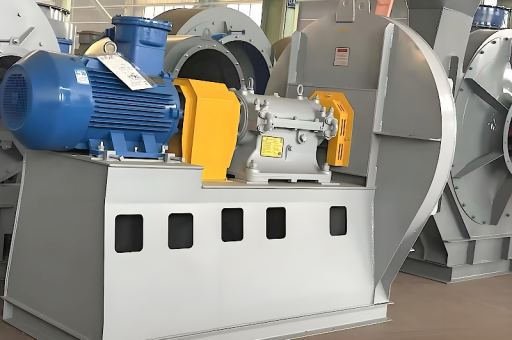
In heavy manufacturing environments—such as steel forging, glass production, chemical processing, or cement kilns—ambient temperatures routinely exceed safe operating limits for standard ventilation equipment. The failure of an exhaust system here is not merely an inconvenience; it represents a direct threat to production continuity, worker safety, and capital asset integrity. At the heart of this defense against thermal overload sits the 380V Manufacturing Plant High Temperature Centrifugal Fan Impeller 540-3211 Mm.
This component is not a generic part. It is a precision-engineered rotating assembly designed to survive where standard fans fail. The combination of a 380V power supply (a common industrial standard in Europe, Asia, and parts of South America) with a specific impeller diameter range of 540 mm to 3211 mm indicates a system built for heavy-duty static pressure and massive volumetric flow. This article dissects the engineering principles, material science, and operational strategies required to maximize the performance of this specific class of industrial fan system.
Technical Specifications: Why Voltage, Material, and Diameter Matter
To understand the machine, one must first decode its name. The specification "540-3211 Mm" refers to the impeller diameter range. A 540 mm (21.26 inch) impeller is suitable for smaller kilns or drying ovens, while a massive 3211 mm (10.5 feet) impeller is used in power plants or large-scale smelting operations.
The 380V Standard: In many global manufacturing hubs, 380V is the standard three-phase power supply. This voltage provides a balance between current draw and motor torque. For a high-temperature fan, the motor must be oversized to handle the inertia of a large impeller while maintaining torque under thermal load. Using a 380V motor ensures the fan system can draw enough power to move dense hot gas without requiring dangerously high amperage.
Material Selection: The most critical decision in manufacturing the impeller is the alloy. Standard carbon steel cannot survive sustained temperatures above 200°C (392°F). For high-temperature applications, manufacturers typically use:
- Corten Steel (ASTM A588): For up to 400°C (752°F).
- Stainless Steel 310S: For up to 1000°C (1832°F).
- Inconel 601/625: For extreme environments with high corrosion and temperature. For the 540-3211 Mm range, high-manganese steel or titanium alloys are often used to reduce weight (lower centrifugal stress) while maintaining strength.
Engineering the 540-3211 Mm Impeller: Design for Thermal Stress
The shape of the impeller blades determines the fan’s performance curve. For high temperature, the design must account for three failure modes: thermal expansion, creep, and fatigue.
Forward Curved vs. Backward Inclined:
- Backward Inclined (BI) blades are the standard for dirty, hot air. They are non-overloading, meaning the motor torque limits the power draw, preventing burnout.
- Radial Tip paddles are often used for 3211 Mm impellers. While less efficient, they are structurally stronger and less prone to clogging from hot particulate.
Thermal Expansion Management: A 3211 mm impeller expands significantly when heated from 20°C to 800°C. Engineers must calculate the hub-to-shaft clearance (shrink fit or keyless locking) to prevent loosening at operating temperature. The impeller discs are often drilled with stress-relief slots to prevent cracking as the metal grows.
Critical Speed Analysis: The shaft and impeller assembly have a natural frequency (critical speed). The fan must be designed to operate well below (stiff shaft) or well above (flexible shaft) this speed. For a 540 mm unit running at 3600 RPM, a stiff shaft is common. For a 3211 mm unit running at 900 RPM, a flexible shaft design is often required to pass through resonance during startup.
Operational Integration: Powering the 380V System in a Plant Environment
Connecting the fan to the plant infrastructure requires careful planning.
Variable Frequency Drive (VFD) Compatibility: While the specification mentions "380V," modern plants almost always couple these fans with a VFD. The high inertia of a 3211 mm impeller requires a soft-start to avoid tripping breakers and shocking the motor windings. The VFD also allows the operator to adjust the fan speed based on temperature feedback, saving energy.
Bearing and Lubrication: High temperature transmits down the shaft into the bearings. For this equipment, two solutions are viable:
- External Pillow Blocks: The bearings are mounted on a pedestal outside the fan housing, cooled by a shaft cooling disc or a small fan on the motor shaft.
- Water-Cooled Jackets: For extreme heat (above 350°C), the bearing housing is jacketed with a water circulation system.
Drive Selection: Given the 380V voltage and the variable torque requirement, belt drives are common for the 540-211 Mm range (easy speed changes). For the larger 3211 Mm units, a direct-drive coupling (grid or resilient) is preferred to eliminate belt creep and maximize energy transfer.
Maintenance Best Practices for Extended Service Life
High-temperature centrifugal fans are expensive to replace. The 540-3211 Mm impeller is a capital asset. A proactive maintenance schedule is essential.
Quarterly Checks:
- Balance Verification: A 100-gram imbalance on the edge of a 3211 mm impeller rotating at 1000 RPM generates a centrifugal force equivalent to several hundred kilograms. This destroys bearings and fatigues the shaft. Vibration analysis must be performed at operating temperature, as thermal growth can alter balance.
- Thermal Imaging: Scan the impeller housing and shaft for hot spots that indicate a failure of the cooling system or internal contact.
Annual Overhaul:
- Impeller Inspection: Perform a non-destructive test (dye penetrant or MPI) on the blade welds. Look for "washboarding" (heat checking) on the blade surface.
- Wear Plate Replacement: The inlet cone (where air enters the impeller) often wears faster than the blades. Replacing this plate prevents hot gas recirculation.
- Arbor Press Check: Verify the impeller hub fit. If the taper or straight bore has lost interference, the impeller will spin on the shaft, causing catastrophic failure.
Frequently Asked Questions (FAQ)
Q: Can I weld a standard fan damper onto the inlet of a high-temperature centrifugal fan? A: Yes, but only if the damper is made of compatible alloy. A carbon steel damper on a stainless steel 540 mm inlet will create galvanic corrosion and thermal expansion mismatch. Always use a high-temperature rated inlet box damper.
Q: How do I know if my 380V motor is strong enough for a 3211 mm impeller? A: The motor must be sized for the fan's "runaway" or "peak" power. A common mistake is sizing for normal running load. For a 3211 mm impeller, the motor must have a service factor of at least 1.15 to handle cold starts (when air is denser) and particulate loading.
Q: What is the lifespan of a high-temperature impeller? A: With proper maintenance, a 540 mm impeller in a clean gas application can last 5-7 years. A 3211 mm impeller in a dusty, corrosive environment (like a cement kiln) may need refurbishment every 2-3 years due to erosion and thermal fatigue.
Q: Is a belt drive or direct drive better for this fan? A: For the 540-211 mm range, belts are cheaper and easier to maintain. For the 3211 mm range, direct drive is almost always superior because the torque transfer is more reliable and maintenance is lower. Belt tension on a massive sheave at high temperature is a constant problem.
Conclusion: Reliability in Extreme Conditions
The 380V Manufacturing Plant High Temperature Centrifugal Fan Impeller 540-3211 Mm represents the pinnacle of industrial air-moving engineering. It is a marriage of heavy-duty electrical standards with precision mechanical design. From the choice of 380V for optimal power efficiency to the selection of Inconel or high-nickel alloys for thermal resistance, every variable is a trade-off between weight, strength, and cost.
For the plant manager or maintenance engineer, understanding that the 540 mm impeller differs fundamentally from the 3211 mm impeller in structural dynamics is key. The smaller unit relies on high RPM and precise balance, while the larger unit depends on stress distribution and low-speed torque. By investing in proper soft-start controls, vibration monitoring, and material-specific repairs, a high-temperature centrifugal fan system can provide reliable service for a decade or more, proving that even in the harshest environments, smart engineering wins.
Keywords: 380V Manufacturing Plant, High Temperature Fan, Centrifugal Impeller, 540-3211 Mm, Industrial Airflow, Thermal Stress Engineering, Fan Maintenance, Fan.





