
This article's table of contents introduction:
- Core Specifications Breakdown
- Typical Applications for This Spec
- Critical Performance Factors (What to check)
- Construction & Material Options (Assumptions)
- Comparison Chart: 50Hz vs 60Hz Performance
- Summary & Recommendation
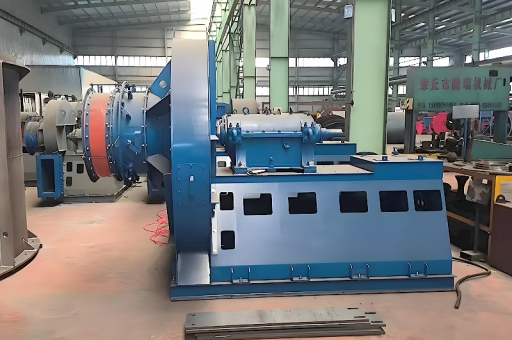
It sounds like you are looking for a technical specification or a product description for an Industrial Centrifugal Fan.
This type of fan is a workhorse in HVAC, ventilation, and industrial process systems. Based on the parameters you provided (50Hz/60Hz, IP55/IP56, 500-3000rpm), here is a detailed breakdown of what this specification typically means and how to interpret it.
Core Specifications Breakdown
- Type: Pressure Centrifugal Flow Fan (also known as a Centrifugal Blower).
- Function: It generates high static pressure by moving air radially (outward) via a rotating impeller. This is different from an axial fan (like a desk fan) which moves air parallel to the shaft.
- Frequency: 50Hz / 60Hz
- Meaning: The fan must work on both common global power grids. Crucial Note: A motor designed for 50Hz will run ~20% faster on 60Hz (i.e., 3000rpm at 50Hz becomes 3600rpm at 60Hz) unless it is a dual-winding or variable frequency drive (VFD) rated motor. The "500-3000rpm" range suggests a VFD is likely required to limit speed.
- Ingress Protection: IP55 / IP56
- IP55: Dust-protected (limited ingress, won't disrupt operation). Protected against low-pressure water jets from any direction. (Standard for factory/workshop use).
- IP56: Dust-protected. Protected against powerful water jets or heavy seas (rough weather). (Common for marine, outdoor, or wash-down environments).
- Difference: IP56 is more expensive and seals better against rain or hose washing.
- Speed Range: 500 - 3000 rpm
- Low End (500-1000 rpm): Minimal noise, low airflow for exhaust/gentle ventilation.
- Mid Range (1000-2000 rpm): High efficiency, standard operating point for continuous duty.
- High End (2000-3000 rpm): High pressure (e.g., 800-2000 Pa or more), maximum airflow, but higher noise and vibration. Most industrial fans run below 1800 rpm for longevity.
Typical Applications for This Spec
This fan is best suited for:
- HVAC Systems: Large duct systems, air handling units (AHU), clean rooms.
- Industrial Processes: Drying ovens, dust collection systems, pneumatic conveying, fume extraction.
- Marine & Offshore: IP56 rating is mandatory for engine rooms, ballast pump rooms, and deck ventilation on ships.
- Agricultural: Grain drying, barn ventilation (though often pressure is lower).
Critical Performance Factors (What to check)
When purchasing or designing with this fan, you need 3 specific data points:
- Airflow (CFM or m³/h): This is the volume requirement.
- Static Pressure (Pa, mmH2O, or inWG): This is the resistance the fan must overcome (ductwork, filters, dampers). A "Pressure" fan implies high static.
- Motor Power (kW / HP):
- Example: At 3000 rpm, a 15kW (20HP) motor might be needed for high pressure.
- Example: At 500 rpm, a 0.75kW (1HP) motor might suffice for gentle circulating air.
Construction & Material Options (Assumptions)
For a standard industrial unit meeting IP55/56, expect:
- Housing: Heavy gauge steel (usually SGCD or Corten) with a robust epoxy or polyester powder coating (RAL 7035 or similar). For IP56, silicone seals on the bolt holes are critical.
- Impeller: Backward Curved (most efficient, non-overloading) or Forward Curved (high volume, lower pressure). Material: Steel (for standard use) or Stainless Steel (304/316 - for corrosive or marine IP56 environments).
- Motor: AC Induction motor. Must be VFD-rated to handle the 500-3000 rpm range. Most standard motors die below 1200 rpm due to overheating. Look for "Inverter Duty" or "Vector Duty" motor.
- Bearings: Regreasable spherical roller bearings (SKF, FAG) for high radial load.
- Shaft Seal: Labyrinth seal or lip seal to prevent water ingress (for IP56).
Comparison Chart: 50Hz vs 60Hz Performance
| Parameter | 50Hz (e.g., Europe, Asia) | 60Hz (e.g., Americas) |
|---|---|---|
| Motor Pole Pairs | 2-pole (2850 rpm base) | 2-pole (3450 rpm base) |
| Max Speed (Uncontrolled) | ~2900 rpm (Nominal 3000) | ~3500 rpm (Nominal 3600) |
| Effect on Fan (same voltage) | Lower RPM = Lower flow & pressure | Higher RPM = ~20% more flow & ~44% more pressure (Fan Affinity Laws) |
| Motor Power Need | Base power | ~73% higher power required (Risk of overload) |
Summary & Recommendation
You are describing a highly versatile, rugged industrial pressure fan.
- For general workshop/factory use: Go with IP55.
- For outdoor, marine, or wet environments: Require IP56 with stainless steel impeller.
- For speed control (500-3000): You must use a Variable Frequency Drive (VFD) . The motor must be inverter-rated. Do not just change frequency via a switch – the motor will burn out.
Pro Tip: Ask the manufacturer for a Performance Curve chart. Look at the "Max Safe RPM" (usually stamped on the fan housing) and ensure the 3000 rpm does not exceed the impeller's structural limit.
Need a specific part number or price? You would need to contact vendors like Greenheck, New York Blower, Cincinnati Fan, Systemair, or Solaer with these exact specs.





