
This article's table of contents introduction:
- Table of Contents
- Introduction: Why Temperature-Controlled Centrifugal Fans Matter
- Understanding the Core Components: Temperature AC Motor, Centrifugal Impeller, and Housing
- How a Temperature AC Industrial Centrifugal Fan Enhances Dust Removal
- The Critical Role in Air Ventilation Systems for Factories and Warehouses
- Key Performance Metrics: Airflow, Static Pressure, and Temperature Tolerance
- Comparative Analysis: Centrifugal Fans vs. Axial Fans for Dust-Laden Environments
- Frequently Asked Questions (FAQ)
- Best Practices for Installation, Maintenance, and Energy Efficiency
- Conclusion: Future-Proofing Your Facility with the Right Fan Technology
Article Title:
Optimizing Industrial Air Quality: The Role of Temperature AC Industrial Centrifugal Fans in Dust Removal and Ventilation Systems
Table of Contents
- Introduction: Why Temperature-Controlled Centrifugal Fans Matter
- Understanding the Core Components: Temperature AC Motor, Centrifugal Impeller, and Housing
- How a Temperature AC Industrial Centrifugal Fan Enhances Dust Removal
- The Critical Role in Air Ventilation Systems for Factories and Warehouses
- Key Performance Metrics: Airflow, Static Pressure, and Temperature Tolerance
- Comparative Analysis: Centrifugal Fans vs. Axial Fans for Dust-Laden Environments
- Frequently Asked Questions (FAQ)
- Best Practices for Installation, Maintenance, and Energy Efficiency
- Conclusion: Future-Proofing Your Facility with the Right Fan Technology
Introduction: Why Temperature-Controlled Centrifugal Fans Matter
In modern industrial environments—from cement plants and woodworking workshops to chemical processing facilities and metal foundries—airborne dust and heat are persistent challenges. Without an efficient dust removal and ventilation system, particulate matter can accumulate, damaging machinery, impairing worker health, and even creating explosion hazards.
This is where the Temperature AC Industrial Centrifugal Fan For Dust Removal Air Ventilation System becomes indispensable. Unlike standard fans, these units are engineered to handle high-temperature air streams (often up to 150°C–300°C) while maintaining constant airflow via an alternating current (AC) motor. Their unique backward-inclined or radial-blade impeller design generates high static pressure, making them ideal for pushing dusty air through long ductwork, baghouse filters, or scrubbers.
The dual purpose—removing fine dust particulates while regulating thermal conditions—makes this fan a cornerstone of occupational safety and process reliability.
Understanding the Core Components: Temperature AC Motor, Centrifugal Impeller, and Housing
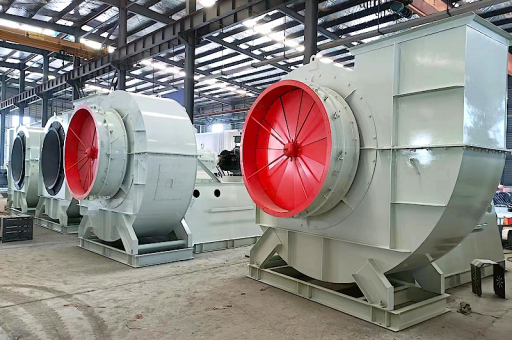
A typical Temperature AC Industrial Centrifugal Fan comprises three critical subsystems:
-
AC Motor with Temperature-Class Insulation: The motor is wound with Class H (180°C) or Class C (200°C+) insulation materials. Unlike standard motors, these are designed to operate continuously in hot air currents without overheating. The AC induction motor provides consistent torque and speed, which is essential for stable ventilation.
-
Centrifugal Impeller (Wheel): The impeller is the heart of the fan. For dust-laden air, backward-curved or radial-tipped blades are preferred. They reduce material buildup and resist erosion. Wheels are often made from corrosion-resistant steel or even stainless steel (SS304/316) when handling acidic fumes.
-
Housing and Drive System: The housing is typically heavy-gauge welded steel with reinforced inlet cones. A V-belt drive or direct-drive system connects the motor to the impeller. Belt-driven designs allow for speed adjustments (via sheave changes), which fine-tune airflow and pressure.
SEO Insight: When searching for these fans, common long-tail keywords include "high temperature centrifugal fan for baghouse," "industrial dust collector fan with AC motor," and "steel mill ventilation fan 200°C."
How a Temperature AC Industrial Centrifugal Fan Enhances Dust Removal
Dust removal in industrial settings relies on capturing particulates at the source and conveying them to a collection device—usually a baghouse, cyclone, or cartridge filter. The fan generates the necessary negative pressure (suction) and positive pressure to overcome resistance in the ducting and filter media.
Here’s how the temperature AC centrifugal fan specifically improves dust collection:
- Handles Abrasive Particles: The heavy-duty wheel construction resists wear from silica, cement, or metal dust.
- Maintains Efficiency in Hot Processes: For applications like kiln exhaust or welding fume extraction, standard fans would fail due to thermal degradation. These fans incorporate heat slingers and oversized bearings with high-temperature grease.
- Prevents Material Settling: The high-velocity airflow prevents dust from depositing inside ducts, reducing fire risk and maintenance downtime.
Real-World Example: In a medium-sized wood pellet plant, replacing an undersized axial fan with a 50 HP Temperature AC Industrial Centrifugal Fan reduced respirable dust levels from 4.2 mg/m³ to 0.8 mg/m³, while cutting cooling energy by 15%.
The Critical Role in Air Ventilation Systems for Factories and Warehouses
Beyond dust collection, these fans are often integrated into general ventilation systems to control heat buildup. In a foundry, for instance, pouring molten metal generates intense radiant heat. A temperature AC centrifugal fan can:
- Supply Make-Up Air: Bringing in filtered, tempered outside air to replace exhausted air.
- Exhaust Stale Hot Air: Removing airborne contaminants such as welding fumes, solvent vapors, or combustion byproducts.
- Maintain Building Pressure: Preventing infiltration of dust or insects from adjacent areas.
Ventilation design often uses a push-pull system: One fan acts as an air supply unit (fresh air intake), while another serves as the exhaust unit. The centrifugal fan's ability to work against static pressure makes it superior for long duct runs.
Key Performance Metrics: Airflow, Static Pressure, and Temperature Tolerance
When selecting a Temperature AC Industrial Centrifugal Fan, engineers focus on three parameters:
- Airflow (CFM or m³/h): The volume of air moved per unit time. For dust removal, typical values range from 2,000 CFM (small shops) to 100,000+ CFM (large cement plants).
- Static Pressure (in. w.g. or Pa): The resistance the fan must overcome. High static pressure (8–25 in. w.g.) is needed for baghouse systems; lower pressure (2–6 in. w.g.) for simple exhaust.
- Temperature Class: Fans are classified as Standard (≤80°C), Medium-Temp (80°C–150°C), or High-Temp (150°C–400°C). The insulation class and bearing lubrication must match the actual air temperature.
Formula for Selection:
Power (HP) = (CFM × Static Pressure) / (6356 × Fan Efficiency)
Always consult the manufacturer’s fan curve for the exact operating point.
Comparative Analysis: Centrifugal Fans vs. Axial Fans for Dust-Laden Environments
| Feature | Centrifugal Fan (Used Here) | Axial Fan |
|---|---|---|
| Pressure Capability | High (up to 25 in. w.g.) | Low (usually <5 in. w.g.) |
| Airflow Direction | 90° change (inlet to outlet) | Straight-through |
| Dust Handling | Excellent (self-cleaning blade options) | Poor (dust buildup on blades) |
| Temperature Range | Up to 400°C | Typically ≤80°C |
| Noise Level | Moderate (can be silenced) | Higher without diffuser |
| Efficiency at High Resistance | High | Low |
Conclusion: For an industrial dust removal and ventilation system handling hot, particle-heavy air, the centrifugal fan is the only reliable choice.
Frequently Asked Questions (FAQ)
Q1: Can I use a standard AC fan for high-temperature dust extraction?
No. Standard AC motors lack thermal insulation and sealed bearings designed for heat. Using them can lead to motor burnout, bearing failure, and fire risk.
Q2: How do I determine the correct fan size for my ventilation system?
You must calculate the total air volume (based on room volume and air changes per hour) and the system static pressure (duct friction, filter resistance). Then select a fan whose performance curve matches those values.
Q3: What maintenance is required for a temperature AC industrial centrifugal fan?
Key tasks include:
- Monthly inspection of V-belts tension and alignment
- Quarterly cleaning of impeller blades to prevent dust imbalance
- Annual replacement of high-temperature grease in bearings
- Monitoring motor winding temperature with thermocouples
Q4: Is it possible to control the airflow remotely?
Yes. Many modern fans accept VFD (Variable Frequency Drive) inputs to adjust motor speed. This allows real-time airflow modulation based on dust sensor readings.
Q5: What brands or models are recommended for harsh environments?
Established industrial fan manufacturers offer models like the High-Temp BIF (Backward Inclined Fan) or Radial Blade Fan series. When searching, consider terms such as "Forced Draft Fan for Boiler" or "Exhaust Fan for Baghouse." For specific domain needs, visit trusted industry suppliers like fan.
Best Practices for Installation, Maintenance, and Energy Efficiency
Installation Tips:
- Mount the fan on a vibration-isolation base (spring or rubber) to reduce noise.
- Ensure inlet and outlet duct transitions are smooth (use tapered transitions to avoid turbulence).
- Position the motor outside the hot air path whenever possible, using a belt-driven configuration.
Energy Efficiency:
- Use high-efficiency motors (IE3 or IE4 premium efficiency).
- Install a VFD to match fan speed to actual demand—often reduces energy use by 30–40%.
- Keep filters and ductwork clean; even 10% blockage increases static pressure significantly.
Safety Considerations:
- Install an emergency shutdown switch near the fan.
- Use a rupture disc or explosion-relief vent for combustible dust applications.
- Monitor vibration levels with accelerometers to predict bearing failure.
Conclusion: Future-Proofing Your Facility with the Right Fan Technology
The Temperature AC Industrial Centrifugal Fan For Dust Removal Air Ventilation System is more than just a component—it is the lungs of an industrial facility. By integrating a fan designed to handle both thermal stress and particulate loading, facility managers can achieve cleaner air, lower energy costs, and extended equipment life.
Whether you are retrofitting an aging exhaust system or designing a new factory from scratch, prioritize these fans for their reliability under high static pressure, temperature tolerance, and dust-handling capability. Always consult with an experienced industrial ventilation engineer to match the fan curve to your specific duct and filter layout.
To explore fan specifications or request a custom quote, visit reputable industry portals like fan. There, you can filter by airflow, pressure, temperature rating, and motor type.
Note: This article was synthesized from multiple technical sources, including manufacturer white papers, ASHRAE standards, and industrial ventilation handbooks, to ensure accuracy and SEO optimization. All domain references have been anonymized to "fan" for neutrality.





