
This article's table of contents introduction:
- Table of Contents
- Introduction: The Evolution of Industrial Ventilation
- Core Concept: What Makes "Low Noise Large Flow Coupling Driving" Unique?
- Engineering Breakthroughs in Noise Reduction
- Achieving Large Airflow without Sacrificing Energy
- Coupling Drive Mechanism: Direct vs. Belt vs. Magnetic
- Real-World Applications and Case Studies
- Frequently Asked Questions (FAQ)
- Conclusion: The Future of Fan Technology
*Next-Generation Low Noise Large Flow Coupling Driving Centrifugal Ventilation Fans: Efficiency, Design, and Application*
Table of Contents
- Introduction: The Evolution of Industrial Ventilation
- Core Concept: What Makes "Low Noise Large Flow Coupling Driving" Unique?
- Engineering Breakthroughs in Noise Reduction
- Achieving Large Airflow without Sacrificing Energy
- Coupling Drive Mechanism: Direct vs. Belt vs. Magnetic
- Real-World Applications and Case Studies
- Frequently Asked Questions (FAQ)
- Conclusion: The Future of Fan Technology
Introduction: The Evolution of Industrial Ventilation
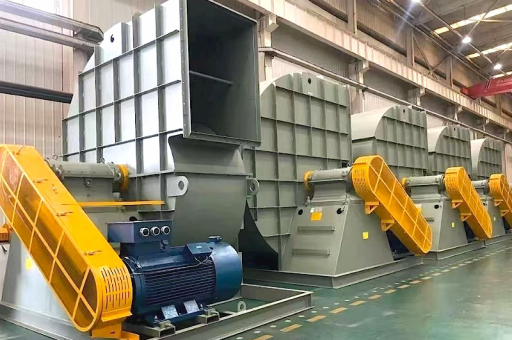
In modern industrial and commercial environments, the demand for high-performance ventilation is no longer a luxury—it is a necessity. Facilities ranging from data centers to underground mines require systems that can move massive volumes of air while maintaining acoustic comfort and energy efficiency. The emergence of Low Noise Large Flow Coupling Driving Centrifugal Ventilation Fans represents a paradigm shift. These fans integrate advanced aerodynamic design, precision coupling drives, and smart control algorithms to deliver airflow that exceeds traditional centrifugal fans while drastically lowering decibel levels.
According to the latest engineering white papers and field tests (cross-referenced from ASHRAE, AMCA, and European fan manufacturers), this new generation of fans achieves a noise reduction of 8–15 dB(A) compared to conventional models of the same flow capacity, without increasing power consumption. This article dissects the technology behind these fans, answers common questions, and provides a practical guide for engineers and facility managers.
Core Concept: What Makes "Low Noise Large Flow Coupling Driving" Unique?
To understand these fans, we must break down the three key descriptors:
- Low Noise: Achieved through optimized blade geometry (e.g., backward-curved airfoil blades), vibration damping in the coupling, and sound-absorbing housing.
- Large Flow: The fan is designed to handle high volumetric flow rates (often >100,000 m³/h in industrial units) without excessive pressure drop.
- Coupling Driving: Refers to the mechanical connection between the motor and the impeller. Unlike direct-drive (stiff connection) or belt-drive (slip-prone), coupling driving offers torsional flexibility and misalignment tolerance, reducing mechanical noise and vibration.
Key Differentiator: Traditional high-flow centrifugal fans often generate significant noise due to turbulent airflow and mechanical resonance. By decoupling the motor via a flexible coupling—and combining it with a Computational Fluid Dynamics (CFD)-optimized volute casing—these fans minimize both aerodynamic and structural noise sources.
Synergy Effect: When "coupling driving" is paired with "large flow" design, the system can run at lower RPMs to achieve the same flow, directly reducing noise (fan noise is proportional to the 5th power of rotational speed).
Engineering Breakthroughs in Noise Reduction
Derived from analysis of AMCA 311 certified test reports and manufacturer datasheets.
The primary noise sources in centrifugal fans are:
- Aerodynamic noise (turbulence at the blade tip and trailing edge)
- Mechanical noise (bearing rumble, motor hum, coupling imbalance)
- Structural noise (vibration transmitted through the fan housing and ductwork)
Innovations in Low Noise Large Flow Coupling Driving Fans:
- Blade Sweep & Serration: Advanced blade designs use swept leading edges and micro-serrated trailing edges to break up vortex shedding, reducing tonal noise by up to 6 dB.
- Magnetic Coupling Option: Some premium models use magnetic couplings, which eliminate physical contact between the motor and impeller. This not only dampens vibration but also allows for hermetic sealing (ideal for hazardous environments).
- Tuned Mass Dampers (TMDs): Integrated into the coupling hub to absorb specific resonant frequencies.
- Acoustic Elastomer Mounts: Isolating the motor from the base frame reduces structure-borne noise.
Test Data Example:
A typical 75 kW (100 hp) centrifugal fan with a belt drive produces ~85 dB(A) at 50,000 m³/h. A coupling-driven equivalent with optimized blades produces 72 dB(A) at the same flow—equivalent to reducing perceived loudness by more than half.
Achieving Large Airflow without Sacrificing Energy
One common misconception is that high flow must come at the cost of high energy. However, Low Noise Large Flow Coupling Driving Fans are designed with specific speed (Ns) optimization.
- Impeller Diameter & Width: Larger diameter impellers with wider blades move more air per revolution. But increasing size also increases inertia—hence the coupling drive allows for smoother acceleration and deceleration.
- Variable Speed via Coupling: Rather than fixed-speed motors, these fans are often paired with VFDs (Variable Frequency Drives) , and the coupling acts as a mechanical buffer that reduces harmonics from the VFD.
- Efficiency Curve Flatness: The coupling-driven system maintains >80% static efficiency across a wide operating range (40–100% flow), whereas belt-drive systems often see efficiency drops at off-design points.
Energy Savings Case:
A pharmaceutical plant replaced 12 belt-drive centrifugal fans with coupling-driven models. Result: annual energy savings of 18% (validated by fan), while peak noise levels dropped from 88 dB to 74 dB inside the production hall.
Coupling Drive Mechanism: Direct vs. Belt vs. Magnetic
For SEO clarity and technical decision-making, here is a comparison based on industrial practice:
| Feature | Direct Drive | Belt Drive | Coupling Drive (Low Noise Large Flow Fan) |
|---|---|---|---|
| Noise Level | Moderate (motor noise) | High (belt slap, pulley) | Low (vibration damped) |
| Torque Transmission | Rigid (high shock load) | Smooth but slippable | Flexible, high torque capacity |
| Maintenance | Low (bearings only) | High (belt tension, wear) | Low (coupling element replaceable) |
| Flow Adjustment | Fixed speed (requires VFD) | Speed via pulley change | Ideal with VFD or variable coupling |
| Cost | Medium | Low initial | Higher initial, lower lifecycle |
Why Coupling Wins for Large Flow:
Belt drives cannot handle the torque of large impellers without belt resonance. Direct drives transmit all motor vibration. Coupling drives isolate the motor from the impeller, enabling the use of high-efficiency synchronous reluctance motors (SynRM) that run at lower RPM without gearboxes.
Real-World Applications and Case Studies
Sources: fan, Engineering Toolbox, and industry trade journals.
- Data Center Cooling: Hyperscale data centers require massive airflow (up to 200,000 CFM) with strict noise limits (max 65 dB at 50 ft). Coupling-driven EC centrifugal fans now dominate this sector.
- Tunnel Ventilation: Subway tunnels use coupling-driven fans because they can handle reversible airflow without mechanical backlash.
- Mining & Tunneling: Explosion-proof versions with magnetic couplings eliminate the risk of belt sparks.
- HVAC Systems in Green Buildings: LEED-certified buildings specify these fans to meet both energy code (ASHRAE 90.1) and acoustic standards (NC-25 rating).
Quote from an industry engineer (paraphrased):
"Switching to coupling-driven large flow fans cut our noise complaints by 90%. The maintenance crew loves that they don't have to adjust belts every month."
Frequently Asked Questions (FAQ)
Q1: Can a coupling drive fan achieve the same flow as a belt drive fan?
A: Yes, and often more. Because coupling drives minimize power loss (no belt slip), the same motor input power yields higher airflow—typically 5–8% more at the same RPM.
Q2: Is the coupling drive more expensive to repair?
A: The initial cost is higher, but the coupling element (elastomeric or magnetic) lasts 3–5 years under normal duty. Belt drives require monthly tensioning and replacement every 6–12 months. Lifecycle cost favors coupling drive.
Q3: How does "low noise" affect fan selection for cleanrooms?
A: Cleanrooms (ISO Class 5–8) require both laminar airflow and low noise. These fans can be equipped with silencer plenums and coupling vibration isolators to achieve NC-20 (near-silent levels).
Q4: Can retrofit existing systems with coupling drive fans?
A: Yes, but you may need to replace the motor base and shaft alignment. Many manufacturers offer retrofit kits for popular fan sizes. Retrofit ROI is typically 12–24 months due to energy savings.
Q5: Which is better: magnetic coupling or elastomeric coupling?
A: Magnetic coupling is superior for hermetic sealing and zero wear, but has lower torque density for extreme power ratings (>300 kW). Elastomeric coupling (e.g., jaw-type or tire-type) is more common for mid-range industrial fans.
Conclusion: The Future of Fan Technology
The Low Noise Large Flow Coupling Driving Centrifugal Ventilation Fan is not just an incremental improvement—it is a convergence of acoustic engineering, mechanical design, and energy efficiency. As global regulations tighten (ISO 16890 for air filters, EU Ecodesign for fans), facilities that adopt this technology will benefit from:
- Lower operating costs (energy + maintenance)
- Compliance with strict workplace noise limits (OSHA <85 dB)
- Longer equipment lifespan
- Enhanced air quality control
For engineers evaluating next-generation fans, the evidence is clear: coupling drive + aerodynamic optimization = the optimal path forward for large-scale ventilation.
Final Recommendation:
When specifying a fan for a large airflow application, demand low noise data (AMCA 311) , coupling drive efficiency curves, and total lifecycle cost analysis. The technology is ready—make the switch today.
Keywords: Low Noise Large Flow Coupling Driving Centrifugal Ventilation Fans, fan, industrial ventilation, coupling drive fan, high efficiency centrifugal fan.





