
This article's table of contents introduction:
- Table of Contents
- Introduction – Why CE Certification Matters in High-Performance Fans
- Core Technical Specifications: Speed, Power, and Construction
- Design Features That Define "Heavy Duty" Performance
- Application Scope: Industries That Rely on These Fans
- Q&A – Common Buyer Concerns Answered
- Energy Efficiency and Compliance: Beyond the CE Mark
- How to Select the Right High Speed Centrifugal Fan for Your System
- Conclusion – Investing in Certified, Long-Lasting Air Movement
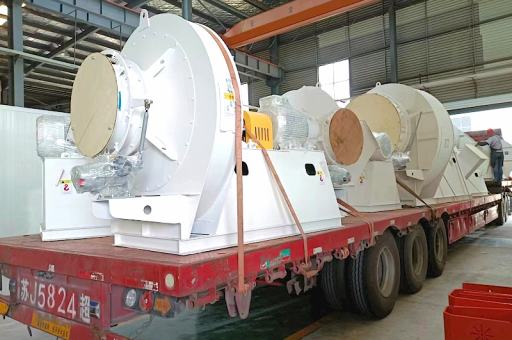
High Speed High Power Heavy Duty Centrifugal Fan With CE Certification: Engineering Excellence for Industrial Ventilation**
Table of Contents
- Introduction – Why CE Certification Matters in High-Performance Fans
- Core Technical Specifications: Speed, Power, and Construction
- Design Features That Define "Heavy Duty" Performance
- Application Scope: Industries That Rely on These Fans
- Q&A – Common Buyer Concerns Answered
- Energy Efficiency and Compliance: Beyond the CE Mark
- How to Select the Right High Speed Centrifugal Fan for Your System
- Conclusion – Investing in Certified, Long-Lasting Air Movement
Introduction – Why CE Certification Matters in High-Performance Fans
When we talk about a High Speed High Power Heavy Duty Centrifugal Fan, we are describing a machine that must withstand extreme rotational forces, handle high volumes of air or gas under elevated pressure, and operate reliably in demanding industrial environments. Among the most critical validation marks for such equipment is CE Certification.
The CE mark is not merely a sticker. It signifies that the fan complies with EU health, safety, and environmental protection directives—including the Machinery Directive 2006/42/EC, the Low Voltage Directive 2014/35/EU, and the EMC Directive 2014/30/EU. For industrial buyers, CE certification guarantees that the centrifugal fan has undergone rigorous testing for structural integrity, electrical safety, noise emission, and harmonic distortion. Without this certification, the fan cannot legally be placed on the European market, nor can it be integrated into CE-marked machinery.
Beyond legal compliance, CE certification often correlates with higher manufacturing quality, better documentation, and longer service life—essential factors when selecting a heavy-duty fan for critical processes.
Core Technical Specifications: Speed, Power, and Construction
A true High Speed High Power Heavy Duty Centrifugal Fan excels in three interrelated areas:
-
High Speed (Impeller Tip Speed)
Modern industrial fans operate at impeller tip speeds exceeding 100 m/s, sometimes reaching 150 m/s in specialized models. This high rotational velocity enables the fan to generate static pressures above 10,000 Pa without requiring an excessively large housing. High speed also reduces the physical footprint for a given airflow demand. -
High Power (Motor Rating)
These fans typically come with motors rated between 30 kW and 500 kW or higher. The power is necessary to overcome system resistance (ductwork, filters, heat exchangers) and maintain steady air movement in high-pressure applications. Motors are often IE4 (Super Premium Efficiency) or IE5 (Ultra Premium) to minimize electrical losses. -
Heavy Duty Construction (Material and Bearings)
The casing and impeller are fabricated from carbon steel, stainless steel (304/316), or abrasion-resistant alloys. Bearings are heavy-duty spherical roller bearings with temperature monitoring, designed for L10 life exceeding 100,000 hours. Shafts are oversized to minimize deflection under load.
Example Specification Table (for illustration):
| Parameter | Typical Range |
|---|---|
| Airflow | 10,000 – 300,000 m³/h |
| Static Pressure | 2,000 – 15,000 Pa |
| Impeller Diameter | 600 – 2,500 mm |
| Operating Temperature | -20°C to +450°C (with cooling) |
| Speed (RPM) | 750 – 3,000 RPM |
Design Features That Define "Heavy Duty" Performance
What separates a standard fan from a heavy-duty model? The following engineering elements ensure reliability under continuous operation:
-
Reinforced Casing with Split Housing
Heavy-duty centrifugal fans use thick-walled steel casings (6 mm to 20 mm) with internal stiffeners. Many designs include a split housing along the horizontal axis, allowing impeller removal without disconnecting ductwork—essential for plants requiring quick maintenance. -
Backward-Curved or Airfoil Blades
For high-speed, high-pressure applications, backward-curved blades (BC or BCI) reduce energy consumption by 15–20% compared to forward-curved designs. Airfoil blades further improve aerodynamic efficiency and lower noise generation. -
Dynamic Balancing (G2.5 or Better)
Every impeller is dynamically balanced to ISO 1940 G2.5 grade or higher. This minimizes vibration and bearing stress at operating speeds, extending the maintenance interval to 12–24 months even in dusty environments. -
CE-Compliant Safety Guards and Inlet Screens
All rotating parts are protected by wire mesh guards that meet the finger and hand penetration requirements of EN 953. Inlet screens prevent foreign objects from entering the impeller.
Application Scope: Industries That Rely on These Fans
The combination of high speed, high power, and heavy-duty construction makes these fans indispensable in:
-
Cement and Minerals Processing
Moving abrasive dust, kiln gases, and material conveying air at pressure drops of 6,000–12,000 Pa. -
Steel and Metallurgy
Fume extraction from electric arc furnaces, ladle refining, and blast furnace gas handling. Fans must withstand temperatures up to 350°C. -
Power Generation (Thermal and Biomass)
Primary air, secondary air, and induced draft fans for coal/wood/biomass boilers. High speed ensures compact design in tight plant layouts. -
Wastewater Treatment and Biogas
Aeration blowers and digester gas recirculation. Heavy-duty construction resists corrosive H₂S. -
Pharmaceutical and Chemical
Explosion-proof configurations (ATEX certified) for solvent and dust-laden air movement in classified zones.
Q&A – Common Buyer Concerns Answered
Q1: Is CE certification mandatory for all centrifugal fans sold in Europe?
A: Yes, for any fan placed on the EU market or integrated into a CE-marked system. CE certification covers electrical safety and mechanical safety. For ATEX (explosive atmosphere) applications, additional certification is required.
Q2: How does a high-speed fan affect energy consumption compared to a low-speed fan of the same duty?
A: Speed and power follow the affinity laws: doubling speed increases airflow by 2× but increases power by 8×. However, high-speed fans often allow a smaller impeller diameter, reducing material weight and initial cost. The overall system efficiency (fan + motor + drive) should be evaluated; VFD-controlled high-speed fans often achieve higher part-load efficiency.
Q3: What maintenance is required for a heavy-duty centrifugal fan?
A: Standard tasks include:
- Check bearing temperature and vibration (monthly)
- Re-grease bearings (every 3–6 months or per manufacturer spec)
- Inspect impeller for wear/corrosion (annually)
- Verify dynamic balance after any impeller repair (after imbalance event)
- Verify CE compliance labeling remains legible for audit purposes
Q4: Can I use a high-power fan in a corrosive environment?
A: Yes, if the fan is built with stainless steel impeller and casing, plus optional epoxy or rubber lining. Always request material certificates (EN 10204 3.1) for traceability.
Q5: What is the typical lead time for a custom-built heavy-duty fan with CE certification?
A: Standard models: 6–10 weeks. Custom-engineered fans (special materials, high temperature, ATEX): 14–20 weeks, including CE documentation and DoC (Declaration of Conformity) preparation.
Energy Efficiency and Compliance: Beyond the CE Mark
While CE certification confirms safety and basic efficiency, the EU also drives efficiency through Ecodesign Directive 2009/125/EC and Regulation (EU) No 327/2011 for fans. This means:
- Minimum Energy Efficiency Index (EEI) targets must be met for fans above 125 W input power.
- The fan’s overall efficiency (including motor and drive loss) must be calculated and declared on the rating plate.
- High-speed, high-power fans typically achieve nZ (static efficiency) above 75% when designed with modern airfoil blades and IE5 motors.
For buyers, this translates into lower total cost of ownership (TCO). A fan operating 8,000 hours/year at a power draw equivalent to 200 kW can save €15,000–€30,000 annually in electricity if efficiency is improved by 5–10%.
Note: Always request the fan’s energy efficiency report (including the EEI value) from the manufacturer. It is part of the CE technical file.
How to Select the Right High Speed Centrifugal Fan for Your System
To ensure your high speed high power heavy duty centrifugal fan meets both safety standards and process requirements, follow this checklist:
-
Define Operating Point – Specify target airflow (m³/h) and static pressure (Pa). Avoid oversizing; a fan 20% too large may operate in stall zone, causing vibration and premature failure.
-
Select Material for Gas Composition
- Clean air: carbon steel
- Abrasive dust: Hardox or white cast iron lining
- Corrosive gases: 316L or duplex stainless steel
-
Check Temperature Rating
- Standard: up to 100°C
- Medium: 100–250°C (high-temp grease, labyrinth seal)
- High: 250–450°C (water-cooled bearing housing, shaft cooling disc)
-
Specify Drive Type
- Direct drive (high speed, low maintenance)
- Belt drive (flexible speed adjustment, replaceable sheaves)
- VFD variable drive (best for automatic speed regulation)
-
Verify CE & ATEX Credentials
- Request the Declaration of Conformity (DoC) listing all directives applied.
- For ATEX: ensure fan is marked with Ex h II T temperature class and CE 0081 notification body number.
-
Review Installation Conditions
- Allow floor space for inlet box and silencers
- Ensure foundation anchors can handle dynamic loads (especially for high-power models)
Conclusion – Investing in Certified, Long-Lasting Air Movement
Selecting a High Speed High Power Heavy Duty Centrifugal Fan With CE Certification is an investment in operational reliability, legal compliance, and energy efficiency. Whether you are moving combustion air in a thermal power plant or extracting fumes in a steel mill, the combination of certified safety, high rotational speed, and robust construction ensures your ventilation system runs safely and efficiently for decades.
Always partner with a manufacturer that can provide full traceability—material certificates, balance reports, CE documentation, and performance testing data. Such a fan will not only meet today’s compliance requirements but will also provide a solid foundation for future capacity expansions or stricter emissions regulations.
Ready to discuss your specific fan requirements?
Contact a qualified engineer with your pressure, airflow, temperature, and gas data.
A properly selected, CE-marked heavy-duty centrifugal fan will pay for itself many times over in uptime and energy savings.





