
This article's table of contents introduction:
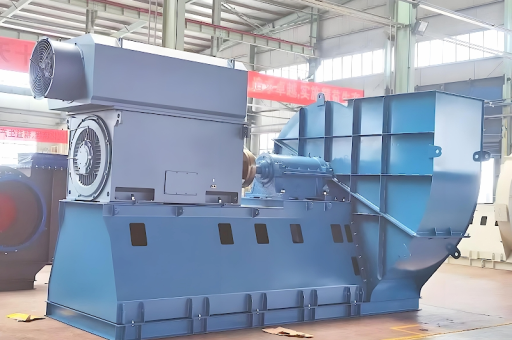
- Introduction: The Critical Role of Low-Noise, High-Performance Blowers
- Understanding "Up To 85 DBA": What This Noise Level Means for Your Facility
- Technical Deep Dive: Centrifugal Ventilation AC Motor Blower Fans
- CE Certification: Why It Matters for Safety, Compliance, and Global Trade
- Real-World Applications: Where These Fans Excel
- Performance & Selection: Key Specifications to Look For
- Frequently Asked Questions (FAQ) Section
- Conclusion: Making the Right Investment for Long-Term Ventilation Success
** Maximizing Airflow Efficiency with Up To 85 DBA Centrifugal Ventilation AC Motor Blower Fans: A Technical Guide for Industrial & Commercial Applications (CE Certified)
Directory / Table of Contents
- Introduction: The Critical Role of Low-Noise, High-Performance Blowers
- Understanding "Up To 85 DBA": What This Noise Level Means for Your Facility
- Technical Deep Dive: Centrifugal Ventilation AC Motor Blower Fans
- How the Centrifugal Mechanism Works
- Key Benefits of AC Motor Blower Fans
- CE Certification: Why It Matters for Safety, Compliance, and Global Trade
- Real-World Applications: Where These Fans Excel
- Performance & Selection: Key Specifications to Look For
- Frequently Asked Questions (FAQ) Section
- Conclusion: Making the Right Investment for Long-Term Ventilation Success
Introduction: The Critical Role of Low-Noise, High-Performance Blowers
In today’s industrial and commercial environments, ventilation is not merely about moving air—it is about moving air efficiently, quietly, and safely. Whether you are managing a manufacturing plant, a commercial kitchen exhaust system, a greenhouse, or a cleanroom, the choice of blower fan directly impacts operational costs, worker comfort, and equipment longevity.
The Up To 85 DBA Centrifugal Ventilation AC Motor Blower Fan has emerged as a gold standard for facilities that require powerful airflow without excessive noise pollution. With CE Certification, these fans ensure compliance with European health, safety, and environmental protection standards, making them a trusted choice for exporters and operators alike.
This comprehensive guide will help you understand the technical nuances of these blowers, from their decibel ratings to their aerodynamic design, so you can make an informed purchasing decision.
Understanding "Up To 85 DBA": What This Noise Level Means for Your Facility
The DBA Scale in Context
The term "Up To 85 DBA" is a critical performance metric. DBA (A-weighted decibels) is the standard unit for measuring sound pressure as perceived by the human ear.
- 60 DBA: Normal conversation
- 70 DBA: Busy office or vacuum cleaner
- 80–85 DBA: Heavy city traffic or a loud kitchen exhaust hood
- 90+ DBA: Requires hearing protection for prolonged exposure (OSHA regulation)
A fan rated up to 85 DBA operates at the threshold where continuous exposure (8 hours) is still generally safe without mandated hearing protection, but just barely. For many industrial settings, a fan running at 80–85 DBA offers an excellent balance between high static pressure and acoustic comfort.
Why Noise Control Matters
- Worker Safety & Productivity: Studies show that excessive noise (above 85 DBA) increases stress, fatigue, and error rates. A quieter blower improves focus and morale.
- Regulatory Compliance: Many countries have noise level restrictions for commercial and residential zones. Choosing a CE Certified fan helps you meet these limits.
- Equipment Signal: A lower noise level often indicates better dynamic balancing, higher-quality bearings, and smoother airflow—all signs of a durable motor.
Pro Tip: When evaluating a fan, look for the actual DBA at your specific operating point. The "Up To" claim is the maximum; optimal performance might be at 75–80 DBA.
Technical Deep Dive: Centrifugal Ventilation AC Motor Blower Fans
How the Centrifugal Mechanism Works
Unlike axial fans (like a desk fan) that move air along the shaft axis, centrifugal blowers draw air into the center of the impeller and then expel it at a 90-degree angle outward due to centrifugal force. This design achieves:
- Higher Static Pressure: Ideal for ducted systems with resistance (e.g., long ducts, filters, or bends).
- Stable Airflow: Less prone to pressure drops or stall conditions.
- Directional Control: Air can be directed precisely into specific ducts or vent openings.
Key Benefits of AC Motor Blower Fans
Robust AC Induction Motor
The AC (Alternating Current) Motor is the workhorse of industrial ventilation. Compared to DC motors:
- Lower initial cost for high-power applications.
- Simpler maintenance – no complex electronic controllers required.
- Higher tolerance for voltage fluctuations and harsh environments.
- Direct connection to mains power (single-phase or three-phase) without a converter.
Durable Construction
These fans typically feature:
- Steel or aluminum impellers for corrosion resistance.
- Sealed ball bearings for long life in dusty or humid conditions.
- Thermal overload protection to prevent burnout.
Versatile Configurations
Available in:
- Forward-curved (for high volume, low pressure) – ideal for HVAC.
- Backward-curved (for high pressure, efficiency) – for industrial exhaust.
- Radial/ paddle wheel (for heavy particulate or sticky materials).
CE Certification: Why It Matters for Safety, Compliance, and Global Trade
What Does CE Mean?
The CE mark (Conformité Européenne) indicates that a product meets EU health, safety, and environmental requirements. For a Centrifugal Ventilation AC Motor Blower Fan, this covers:
- Low Voltage Directive (LVD): Ensures electrical safety (insulation, grounding, short-circuit protection).
- Electromagnetic Compatibility (EMC): The fan does not emit excessive electromagnetic interference that could disrupt other equipment.
- Machinery Directive: Guards, warnings, and emergency stop considerations (if integrated).
- RoHS Compliance: Restriction of hazardous substances (lead, mercury, etc.).
Why It Matters to You
- Legal Requirement: If you sell or operate equipment in the European Economic Area, CE is mandatory.
- Quality Assurance: CE certification is not a checkbox; it involves a conformity assessment. It signals that the manufacturer has tested the product.
- Insurance & Liability: Using non-CE equipment could void insurance claims if an accident occurs.
- Third-Party Confidence: Buyers and inspectors trust CE as a mark of reliability.
Note: Always verify that the CE certificate corresponds to the specific model and serial number. Counterfeit CE marks exist.
Real-World Applications: Where These Fans Excel
The Up To 85 DBA Centrifugal AC Motor Blower Fan is not a one-size-fits-all device, but it fits a wide range of scenarios:
A. Commercial Kitchen Exhaust
- Challenge: Grease-laden air and high temperatures.
- Why it works: Centrifugal design handles heavy particulates; AC motor runs reliably under high heat; 85 DBA keeps the kitchen noise manageable.
B. Industrial Dust Collection
- Challenge: Wood chips, metal shavings, or textile fibers.
- Why it works: High static pressure (often 1–3 inches WG) overcomes filter resistance. CE certification ensures spark resistance if specified.
C. Greenhouse & Agriculture Ventilation
- Challenge: High humidity, corrosive fertilizers, continuous operation.
- Why it works: Sealed motor and coated impeller resist corrosion. The 85 DBA level is low enough not to disturb plant growth or livestock.
D. HVAC – Air Handling Units (AHU)
- Challenge: Need consistent airflow over variable loads.
- Why it works: AC motors can be paired with VFDs (variable frequency drives) for speed control. The centrifugal wheel provides stable performance.
E. Cleanrooms & Laboratories
- Challenge: Strict particle control and low noise.
- Why it works: Backward-curved impellers produce minimal turbulence, and the acoustics help maintain room classification.
Performance & Selection: Key Specifications to Look For
When choosing a fan, do not rely solely on "Up To 85 DBA." Evaluate these metrics:
| Specification | What It Means | Why It Matters |
|---|---|---|
| Airflow (CFM or m³/h) | Volume of air moved per minute. | Must match your room size and heat load. |
| Static Pressure (in WG or Pa) | Resistance the fan can overcome. | Critical for ducted systems with filters. |
| Motor Power (HP or kW) | Energy consumption and torque. | Affects operating cost and starting current. |
| RPM (Revolutions per Minute) | Speed of the impeller. | Higher RPM = more air but also more noise. |
| Sound Level (DBA) | Noise at 1 meter distance. | Search for 85 DBA or lower at your target RPM. |
| IP Rating | Ingress Protection (dust/water). | For outdoor use, aim for IP54 or higher. |
| Voltage & Phase | 110V/220V/380V; 1 or 3 phase. | Must match your facility's mains. |
Vendor Tip: Ask for a fan performance curve graph. This shows how CFM and static pressure interact at various speeds. It is the most honest tool for selection.
Frequently Asked Questions (FAQ) Section
Q1: Can I use a centrifugal AC blower fan for residential ventilation?
A: Yes, but with caution. These fans are powerful and can be noisy for a bedroom. You would need a speed controller to reduce RPM and sound to below 55 DBA. For most residential uses, a smaller inline duct fan is more practical.
Q2: Is "Up To 85 DBA" quiet enough for an office?
A: Not directly. 85 DBA is equivalent to a loud vacuum cleaner from 1 meter. For an office, you want 45–55 DBA. However, if the fan is placed in a mechanical room or outside, the noise isolation could make it acceptable.
Q3: How do I reduce the noise of my centrifugal fan further?
A:
- Use vibration isolators (rubber mounts) to prevent structure-borne noise.
- Install a muffler / silencer on the inlet or outlet.
- Enclose the fan in an acoustic cabinet (ensure airflow is not restricted).
- Use a Variable Frequency Drive (VFD) to run the fan slower when full speed is not needed.
Q4: Does CE Certification cover electrical safety for 220V?
A: Yes. The Low Voltage Directive (2014/35/EU) covers equipment with input voltage between 50V and 1000V AC. A CE Certified fan has passed tests for insulation, leakage current, and thermal limits.
Q5: What is the typical lifespan of a centrifugal AC motor blower?
A: With proper maintenance (bearing lubrication, cleaning of impeller), these motors often run 20,000–40,000 hours. Premium models with sealed bearings can exceed 60,000 hours.
Q6: Can I use a single-phase AC fan in an industrial three-phase system?
A: Yes, if the fan is designed for single-phase. However, you must ensure the power supply matches. For heavy-duty applications, three-phase is recommended for better torque and lower inrush current.
Conclusion: Making the Right Investment for Long-Term Ventilation Success
Choosing the Up To 85 DBA Centrifugal Ventilation AC Motor Blower Fan is a smart decision for any facility manager who values reliability, compliance, and operator comfort. The combination of a robust AC induction motor, high-efficiency centrifugal impeller, and CE Certification creates a product that is not just a machine—it is a long-term asset.
Key Takeaways:
- Low Noise, High Performance: 85 DBA is the maximum; actual operational noise may be lower for your specific air volume.
- AC Motor Durability: Perfect for continuous duty in industrial environments where DC motors might fail.
- CE Certification is Non-Negotiable: For export or safety-critical applications, it guarantees legal compliance and peace of mind.
- Application Versatility: From kitchens to cleanrooms, these fans handle dust, humidity, and thermal stress.
- Always Check the Curve: Do not select by DBA alone; match static pressure and airflow to your system.
When you search for "Up To 85 DBA Centrifugal Ventilation AC Motor Blower Fans CE Certified" in Bing or Google, you will find many results. Use this guide to filter the noise—literally and figuratively—so you purchase a fan that delivers the right airflow, stays within noise regulations, and lasts for years.
Whether you are retrofitting an old system or designing a new one, the right blower is the heart of your ventilation network. Choose wisely, maintain regularly, and your facility will breathe better than ever.





