
This article's table of contents introduction:
- Table of Contents
- Introduction: The Backbone of Industrial Air Movement
- What Defines a "High Speed Large Heavy Duty Centrifugal Fan"?
- Why Carbon Steel? Material Selection and Durability
- Key Design Features for High-Speed Operation
- Critical Performance Parameters: Pressure, Flow, and Efficiency
- Common Industrial Applications
- Frequently Asked Questions (FAQ)
- Maintenance Best Practices for Longevity
- Conclusion: Choosing the Right Fan for Your System
** The Ultimate Guide to High Speed Large Heavy Duty Centrifugal Fans in Carbon Steel: Performance, Design, and Industrial Applications
Table of Contents
- Introduction: The Backbone of Industrial Air Movement
- What Defines a "High Speed Large Heavy Duty Centrifugal Fan"?
- Why Carbon Steel? Material Selection and Durability
- Key Design Features for High-Speed Operation
- Critical Performance Parameters: Pressure, Flow, and Efficiency
- Common Industrial Applications
- Frequently Asked Questions (FAQ)
- Maintenance Best Practices for Longevity
- Conclusion: Choosing the Right Fan for Your System
Introduction: The Backbone of Industrial Air Movement
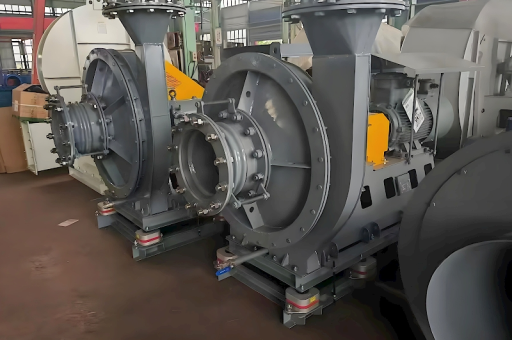
In demanding industrial environments—from steel mills and cement plants to power generation and marine ventilation—the movement of large volumes of air against high system resistance is a critical necessity. This is where the High Speed Large Heavy Duty Centrifugal Fan in Carbon Steel becomes indispensable. Unlike standard fans, these machines are engineered to operate continuously under extreme stress, delivering reliable performance where failure is not an option.
This guide synthesizes technical standards from leading manufacturers and engineering resources to provide a comprehensive overview of these powerful air movers. We will explore their construction, material advantages, performance metrics, and selection criteria, ensuring you have the knowledge to optimize your industrial ventilation or material handling system.
What Defines a "High Speed Large Heavy Duty Centrifugal Fan"?
A centrifugal fan, by design, uses a rotating impeller to increase the velocity of an air stream, converting kinetic energy into pressure. However, the "High Speed Large Heavy Duty" designation adds specific constraints:
- High Speed: Typically implies direct-drive or belt-driven systems operating at 1,500 RPM, 1,800 RPM, or even 3,000 RPM (50/60 Hz mains frequency). This rotational speed generates high pressure (static pressure often exceeding 20 inches w.g. or 5 kPa).
- Large: Refers to impeller diameters usually exceeding 1.5 meters (60 inches). These fans are designed to move air volumes over 100,000 CFM (cubic feet per minute).
- Heavy Duty: Construction adheres to industry standards like AMCA (Air Movement and Control Association) Class III or IV, indicating a robust shaft, oversized bearings, and heavier-gauge housings capable of withstanding high stress and continuous 24/7 operation.
Summary: A High Speed Large Heavy Duty Centrifugal Fan is a high-pressure, high-volume air mover built with a massive, reinforced structure to handle the toughest industrial conditions.
Why Carbon Steel? Material Selection and Durability
The choice of material is not arbitrary. While stainless steel or aluminum have their places, Carbon Steel is the gold standard for heavy-duty fans due to several mechanical and economic reasons:
- Strength & Rigidity: Carbon steel (e.g., Q235, A36, or S235JR) offers excellent tensile strength (typically 400–550 MPa). This is crucial for large-diameter impellers rotating at high speeds, where centrifugal forces can cause blade deformation in less rigid materials.
- Weldability & Fabrication: Carbon steel is easily welded, allowing for the fabrication of complex, reinforced scroll housings and thick plate impeller blades. This is essential for custom engineering solutions like backward-inclined or radial-tip blades.
- Wear Resistance: In applications involving dust, particulates, or abrasive materials (e.g., pneumatic conveying), carbon steel can be line-hardened or fitted with wear plates (hardox or AR plate), extending service life significantly compared to softer metals.
- Cost-Effectiveness: For the required volumetric capacity and structural integrity, carbon steel provides the best strength-to-cost ratio.
Note: For corrosive environments, manufacturers often apply epoxy coatings, galvanization, or rubber lining over the carbon steel substrate.
Key Design Features for High-Speed Operation
Engineering a fan for high-speed, heavy-duty service requires specific design elements:
- Impeller Design: The blade profile is paramount.
- Backward Inclined (BC/BI): Highly efficient (75-85% static efficiency). Used for clean air and general ventilation. Excellent non-overloading power characteristic.
- Radial Tip (RT): Strongest blade design. Handles high dust loads and sticky materials. Lower efficiency but highest structural integrity.
- Forward Curved (FC): High volume at low speed (usually not "high speed" heavy duty, but used in some HVAC applications).
- Shaft & Bearings: Must be oversized. Heavy-duty fans typically use spherical roller bearings housed in split pillow blocks for easy maintenance. The shaft diameter is calculated to avoid critical speeds during the fan's operational range.
- Housing (Scroll): A volute design with tangential discharge. For high speed, the housing is often reinforced with external steel ribs to prevent flexing and vibration.
- Dynamic Balancing: The entire rotating assembly (impeller and hub) must be balanced to ISO 1940 G6.3 or even G2.5 quality to ensure smooth, vibration-free operation at high RPM.
Critical Performance Parameters: Pressure, Flow, and Efficiency
To select the right fan for your system, you must understand this performance triangle:
- Volume Flow (CFM or m³/h): The total amount of air moved per unit time.
- Static Pressure (SP - Inches w.g. or Pa): The resistance the fan must overcome. High-speed fans excel here, generating very high SP for long duct runs or through dense filter media.
- Brake Horsepower (BHP - kW): The power required at the fan shaft.
Formula Simplicity:
- Power ∝ (Flow) × (Pressure) / Efficiency
The efficiency curve is critical. An Air Performance Curve plots Power, Static Pressure, and Efficiency against Volume Flow. The best operating point is on the right side of the peak static pressure, within the "peak efficiency island."
Example Calculation: A typical High Speed Large Heavy Duty Centrifugal Fan Carbon Steel moving 150,000 CFM at 30" w.g. static pressure might require a 1,500 HP (1,120 kW) motor at 1,800 RPM, working at 78% static efficiency.
Common Industrial Applications
These fans are not for comfort ventilation; they are for process-critical functions:
- Power Generation: Induced Draft (ID) fans pulling combustion gases through boilers; Forced Draft (FD) fans pushing air into the furnace.
- Cement & Mining: Baghouse dust collectors; kiln exhaust systems; pneumatic material conveying of clinker and raw mix.
- Steel Manufacturing: Fume extraction for electric arc furnaces; oxygen lancing; cooling of cast products.
- Wastewater Treatment: Aeration blowers for biological treatment (especially in large plants).
- Marine & Offshore: Engine room ventilation; ballast tank ventilation; HVAC for large vessels.
Frequently Asked Questions (FAQ)
Q1: What is the maximum temperature a Carbon Steel fan can handle? A: Standard carbon steel is suitable for continuous operation up to approximately 400°C (750°F). For higher temperatures (up to 650°C), specialized high-chrome stainless steel (like 310S) or alloy steel must be used to retain strength and resist scaling. The fan housing may also require expansion joints.
Q2: How do I reduce vibration in a high-speed centrifugal fan? A: Vibration usually originates from three sources.
- Imbalance: Re-balance the impeller to G2.5 grade.
- Resonance: Check if the fan's operating speed matches a natural frequency of the base or foundation (stiffen the base).
- Bearing Wear: Replace spherical roller bearings immediately. Always use soft foot checks and laser alignment before coupling the motor.
Q3: Can I use a variable frequency drive (VFD) on a High Speed Large Heavy Duty Centrifugal Fan? A: Yes, VFDs are highly recommended for energy savings. However, the fan/motor system must be verified to avoid operation at the fan's lateral critical speed (LCS). The VFD should lock out the critical speed range (e.g., 600-800 RPM) to prevent destructive vibration.
Q4: What is the difference between a High Speed and a Low Speed heavy duty fan? A: Primarily pressure output. A high-speed fan (e.g., 1,800 RPM) uses a smaller impeller diameter to achieve the same pressure as a lower speed fan with a very large impeller. High speed is chosen when space is limited, but it requires higher horsepower and generates more noise unless proper acoustic enclosures are used.
Q5: How thick is the carbon steel used for heavy-duty impellers? A: For large fans, the impeller backplate is often 12 mm (0.5 inch) or thicker. Blades can range from 6 mm to 16 mm, depending on the application's pressure requirements and wear potential. In extreme cases, blade thicknesses of 20 mm are used in cement crushing plants.
Maintenance Best Practices for Longevity
To achieve a 20+ year service life from your High Speed Large Heavy Duty Centrifugal Fan Carbon Steel unit, follow these maintenance schedules:
- Weekly: Check vibration levels using accelerometers; listen for bearing noise; inspect for belt wear (if belt-driven); measure motor current draw.
- Monthly: Grease bearings as per manufacturer specification (do not over-grease); inspect internal housing for dust buildup (which can cause imbalance); check for corrosion on the carbon steel housing.
- Annually: Dynamic balance the impeller; conduct a shaft alignment check; inspect and tighten all foundation bolts; perform a non-destructive test (NDT) on the impeller welds for cracks.
Common Failure Cause: The #1 failure mode is corrosive pitting or erosion on the leading edge of the blades. Applying a sacrificial wear coating (e.g., ceramics or tungsten carbide) to this area can triple the fan's life.
Conclusion: Choosing the Right Fan for Your System
Selecting a High Speed Large Heavy Duty Centrifugal Fan in Carbon Steel is a significant investment that directly impacts your plant's production efficiency and safety.
Your Action Plan:
- Define your system: Calculate total static pressure (duct friction, filters, dampers) and required volume flow.
- Specify materials: Confirm that carbon steel with an appropriate paint/coating is suitable for your gas temperature, humidity, and corrosive elements.
- Check AMCA Certification: Ensure the fan has been tested in accordance with AMCA 210 standards for guaranteed performance.
- Partner with an expert: Work with a manufacturer like fan to customize the impeller design (BC vs RT) and housing reinforcements to your specific needs.
By understanding the design, material science, and performance parameters outlined in this guide, you can confidently specify a fan that delivers unmatched reliability for your most demanding applications.





